
How a Southern Russian Bulk-Material Operator Kept the Bag Square Before Sewing
A local plant handling bulk solids did not need more filling speed. It needed a steadier handoff: the sack had to stay flat, centered, and predictable long enough to reach the sewing head and then the pallet without extra manual correction.
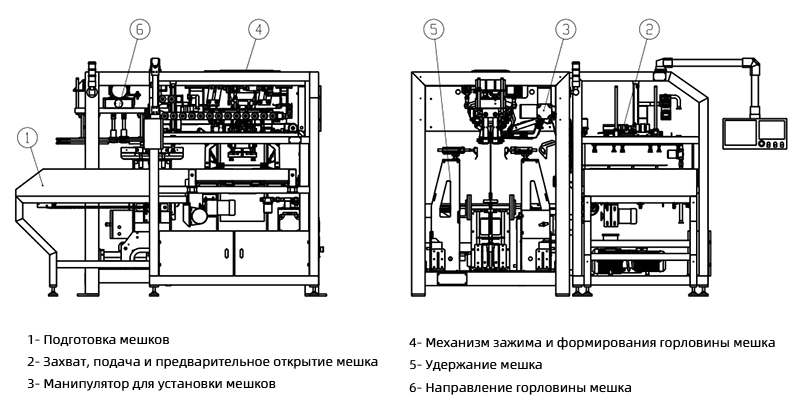
What was going wrong on the old line
When bulk products move from filling to closure, the real problem is often not the scale or the filler. It is the bag posture. In this case, woven sacks were arriving with a slight twist, which made the sewing operator spend time correcting the mouth before each stitch. That meant more handling, slower cycles, and more variation from one shift to the next.
The plant also had a logistics issue downstream. Once the bags left the closure point, any skew tended to carry into the conveyor and pallet area. The result was familiar: one operator straightening the bag, another rechecking the top seam, and a line that looked busy but did not stay stable for long.
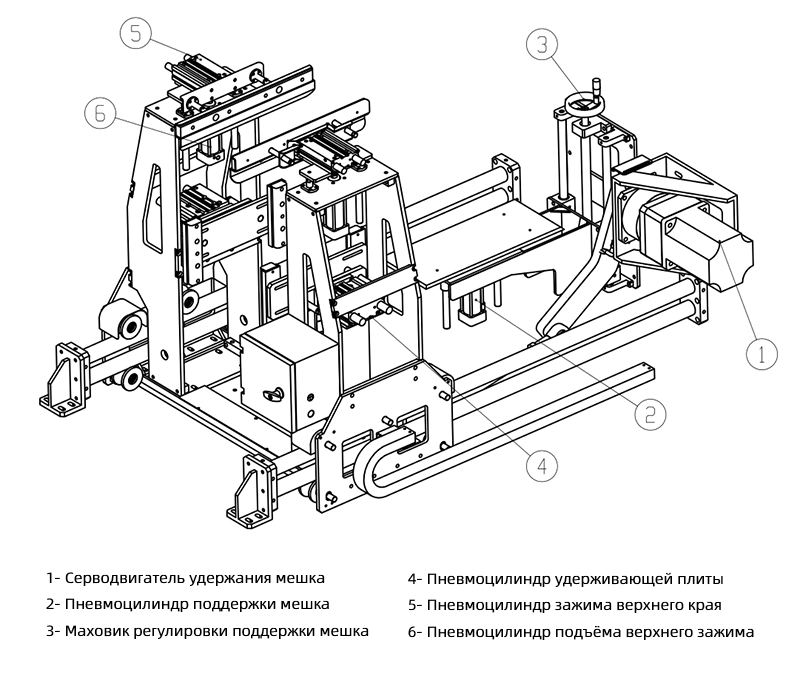
The line did not fail at filling; it failed at bag control. If the sack is not held square, the whole downstream sequence becomes manual recovery instead of repeatable production.
Why PPLINE fits this bulk-solids duty
PPLINE is a better match when the priority is controlled transfer rather than only throughput. For bulk products, the machine has to keep the bag mouth aligned, stabilize the body of the sack during movement, and support the transition into sewing or other closure work. That is why the clamping and bottom-support design matters as much as the conveyor itself.
The CAD detail shows the practical reason. The bag is not left to hang freely; it is guided by a structured holding assembly with pneumatic action and a servo adjustment element. In a bulk-material environment, that means the bag can be kept flatter, the mouth can be presented more consistently, and the operator spends less time correcting the same problem over and over.
Engineering note: The line is strongest when the handoff is designed as a mechanical control problem. Once the bag is squared before the sewing point, the rest of the line becomes easier to run, easier to train, and easier to keep consistent across shifts.
Structure, parameters, and the evidence behind the result
The visual proof from the imported images is simple: the first image shows a bagging system designed around controlled transfer, while the second image shows the clamp-and-support logic that keeps the sack in position. Together they explain why the line is suited to bulk solids where bag shape matters before closure.
The field result is not a marketing claim about speed alone. It is a process result: less hand correction, a straighter bag before sewing, a cleaner handoff to the conveyor, and a more orderly palletizing flow. For plants handling bulk products, that is the difference between a line that only fills and a line that actually stays stable in production.
| Line issue | PPLINE response | Expected result |
|---|---|---|
| Bag mouth drifts before sewing | Clamping and guided positioning keep the sack square | Cleaner stitch start and less rework |
| Operator keeps correcting bag posture | Pneumatic support reduces free-hanging instability | Lower manual intervention on each cycle |
| Downstream flow becomes uneven | Controlled discharge helps the bag move into conveyor and pallet handling | More predictable line rhythm and easier logistics |
Need a steadier bulk-bag handoff?
If your line handles bulk solids, the best upgrade is often not higher speed. It is a better controlled transfer before sewing, so the bag stays aligned, the operator handles less rework, and the line becomes easier to keep stable in real production.
Request a PPLINE line review English
 Русский