
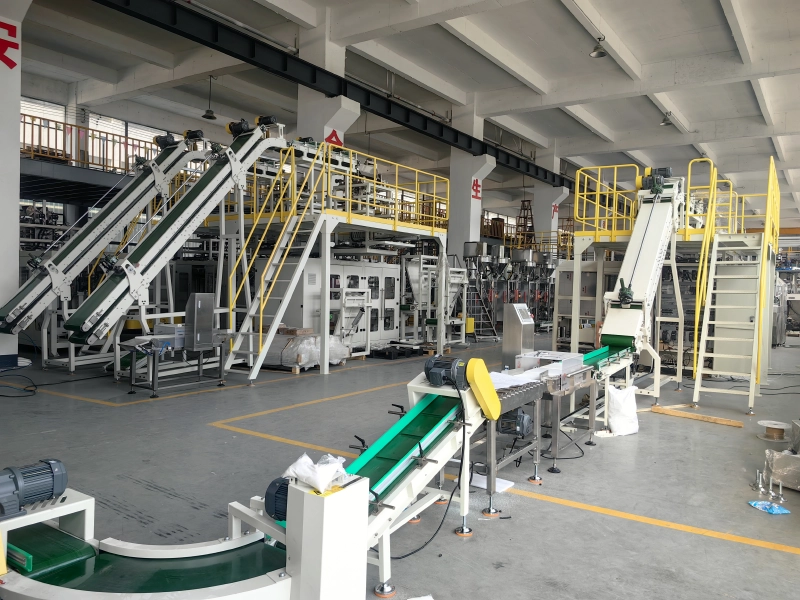
машина для вторичной упаковки пакетов в мешок Китай
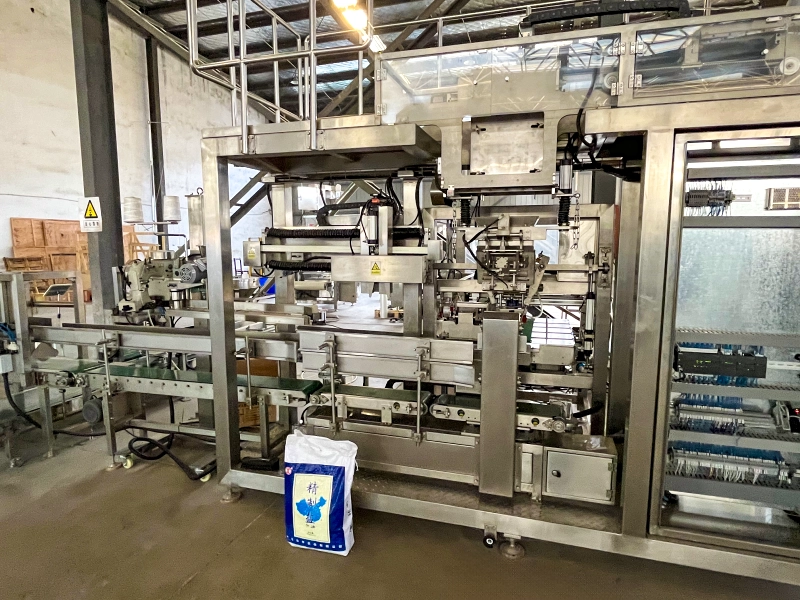
Вторичная Упаковочная Машина
Stop Packaging “Bricks” and Shipping Air: The Salt & Chemical Producer’s Guide to Automation
Your product is hygroscopic, corrosive, and unforgiving. If your current packaging line relies on manual labor, you are losing tons of product to “giveaway” and facing rejection from supermarkets due to caked “pink bricks.” It’s time to upgrade from a rust-prone setup to a 316L Stainless Steel fortress.
In the aggressive environment of salt mining and chemical processing, standard equipment doesn’t just fail; it dissolves. You are looking for a машина для вторичной упаковки пакетов в мешок Китай that can withstand the chloride attack while delivering the speed required by the harvest season.
We aren’t just selling a machine; we are engineering a defense system against moisture, corrosion, and the Russian labor shortage. Here is how we turn your “bag-in-bag” bottleneck into your strongest logistics asset.
The “Rust” Factor: Why 304 Steel Isn’t Enough
Salt is alive. It absorbs moisture, it corrodes, and it destroys carbon steel frames within months. A standard packaging line in a salt plant is a ticking time bomb of maintenance costs.
Our Defense Strategy: We utilize 316L Medical-Grade Stainless Steel for all contact parts. This isn’t an option; it’s a necessity for longevity. Furthermore, we address the “leakage” reality. Salt bags break. In a manual setup, this creates a mess. Our system integrates a Salt Filtering Conveyor with diamond-pattern rollers that actively shake off leaked granules, ensuring that only clean, perfect bags enter the master sack.
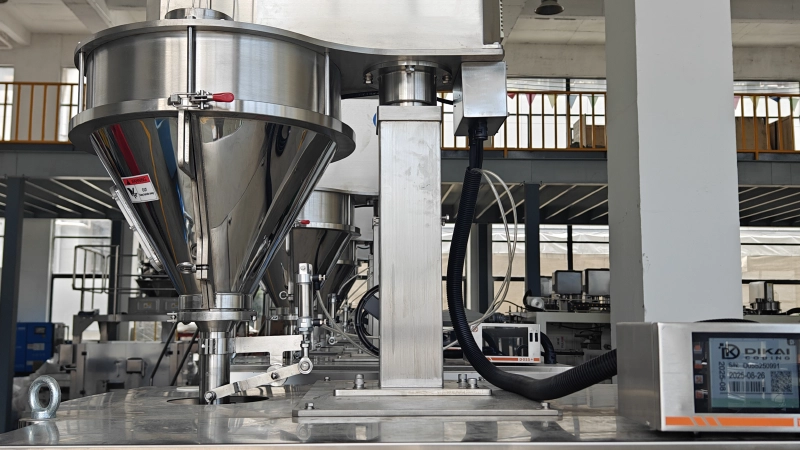
The 316L Stainless Steel Auger Dosing System: Built to resist chloride corrosion and ensure hygiene.
From “Balloon” to “Brick”: Stabilizing Your Pallets
The biggest headache in secondary packaging for granulars is aeration. A 1kg bag of salt or chemicals comes off the VFFS machine full of air—like a balloon. If you throw these directly into a woven sack, you get a round, unstable master bag.
The Logistics Nightmare: Round bags don’t stack. They slide. This creates the “Flowering” effect on your pallets, where the stack blooms outward and collapses during truck transit. You end up shipping 25% air and paying full freight.
The Mechanical Fix: We implement a Double-Deck Shaping Conveyor. Before the small bags are counted, they are physically compressed between two belts. This mechanical pressure forces the air out (de-aeration) and flattens the product into a uniform “brick.”
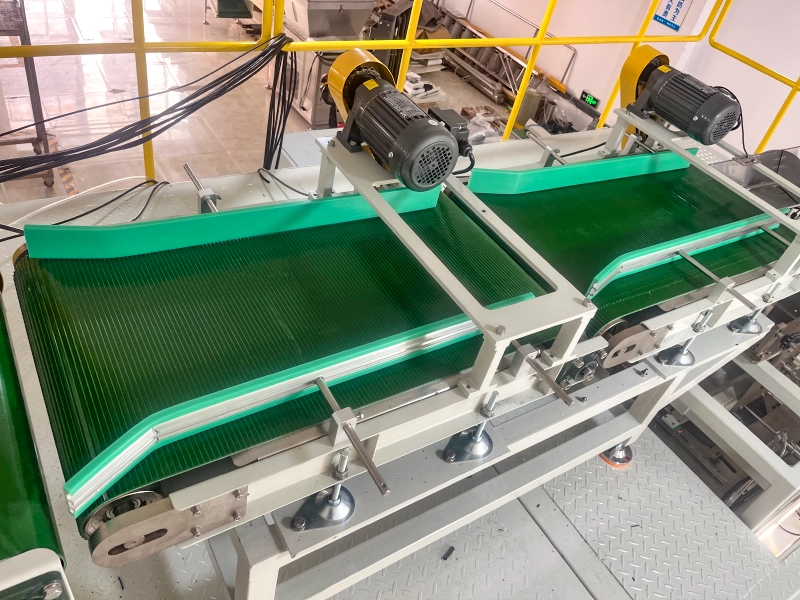
Double-Deck Shaping Conveyor: Squeezing air out to transform “balloons” into stackable “bricks.”
The “Bag-in-Bag” Mechanism: Zero Human Contact
Finding reliable staff to lift 50kg sacks in a dusty, salty environment is becoming impossible. Our машина для вторичной упаковки пакетов в мешок Китай replaces the entire manual bagging crew.
How it works:
- 1. Auto-Fetching: Vacuum suction cups grab the woven PP sack from the magazine.
- 2. Mechanical Opening: Mechanical grippers force the bag open (essential for stiff woven bags).
- 3. Precise Filling: The pre-counted consumer packs (e.g., 20 x 1kg) drop into the sack. A servo-controlled buffer ensures no jamming.
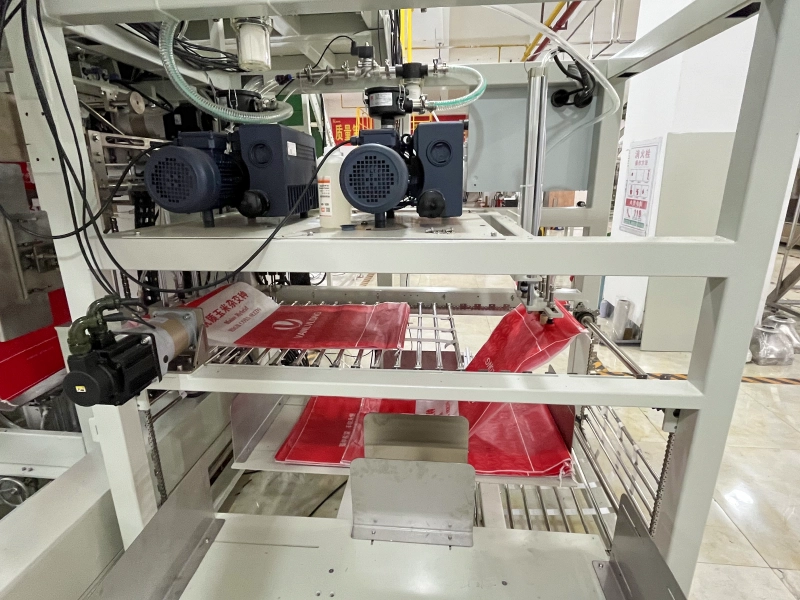
The Heart of the System: Automatic Bag Fetching and Opening Mechanism handling woven sacks.
Logistics Victory: 50% More Load
When your secondary packaging is tight and your palletizing is robotic, the geometry changes. You move from a sloppy, hand-stacked pallet that risks collapse, to a dense, industrial cube.
By automating the secondary packaging and using a robotic palletizer, our clients typically increase their truck load from 750kg per pallet to 1.2 Tons per pallet. You are shipping product, not air. The stability allows for long-distance rail transport across Russia or export via sea containers without the fear of cargo damage.
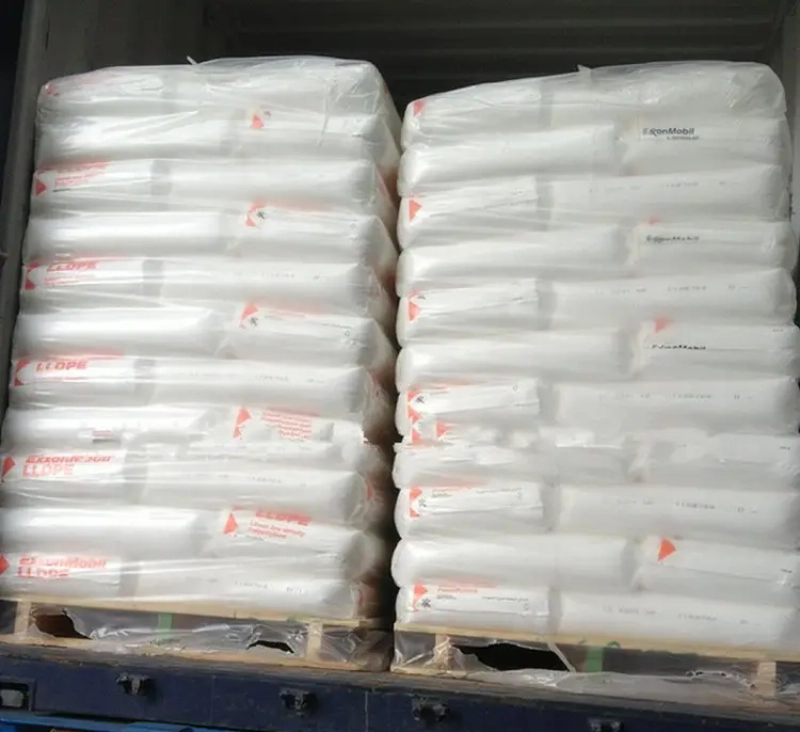
Export Ready: High-density, stable pallets loaded into a container, maximized for space efficiency.
FAQ: Secondary Packaging for Salt & Chemicals
Q1: Can this machine handle woven PP bags that are not perfectly flat?
Yes. Unlike paper bags, woven PP bags can be stiff or warped. Our system uses a combination of vacuum cups and mechanical “duckbill” grippers to forcibly open the bag mouth, ensuring reliable filling even with lower-quality sack materials.
Q2: How do you prevent the salt from rusting the machine?
We offer a specific “Anti-Corrosion Package.” This includes 316L stainless steel for all product contact parts, specialized epoxy powder coating for the carbon steel frame, and IP65-rated electrical cabinets to seal out conductive dust.
Q3: What happens if a 1kg bag breaks inside the machine?
We install a “Salt Filtering Conveyor” before the counting station. Its diamond-patterned rollers allow loose granules to fall through into a collection tray, preventing broken bags from entering the master sack and contaminating the final batch.
Q4: Can we change the pack count (e.g., from 20 bags to 25 bags) easily?
Absolutely. The counting and arrangement logic is controlled via the Siemens PLC. You can switch recipes on the HMI touchscreen in seconds without mechanical tool changes.
Q5: Does the machine sew or heat seal the master bag?
The system is versatile. For woven PP bags (common in salt/fertilizer), we integrate an industrial sewing head (e.g., Newlong). For PE or laminated bags, we use a heavy-duty heat sealing bar. Both can be equipped with automatic thread cutting.
Need a consultation on packaging equipment?
CONTACT US → English
 Русский
Leave a Reply