
Why a Belarusian Dairy Powder Producer Chose a Cleaner Bag Handoff Before Sewing
On a 25 kg powder line, the hard part is not filling the sack. It is handing the bag over in a straight, calm position so the sewing head can work without manual correction. Mipline was selected to solve that transfer point first.
The old handoff problem was mechanical, not cosmetic
For a dairy powder producer, the bag rarely fails at the filling point. The real trouble starts after filling, when a kraft paper sack must travel from the bagging station to the next operation without twisting, folding, or dropping out of square. If the mouth is skewed, the operator has to correct it by hand. If the bag body bends too early, the sewing head loses consistency. If the transfer is rough, the whole rhythm of the line slows down.
This is why the customer brief was not just about higher output. It was about a more disciplined interface between the powder packaging line and the downstream sewing step. The goal was simple: keep each 25 kg bag supported, aligned, and ready for the next motion without extra touching.
When the sack arrives crooked, the sewing head becomes the bottleneck. Manual straightening adds labor, introduces small timing errors, and creates a wider quality gap between the first good bag and the tenth bag. In powder packaging, that gap is expensive because it shows up as wasted motion, unstable line speed, and avoidable rework.
Why Mipline fit this line
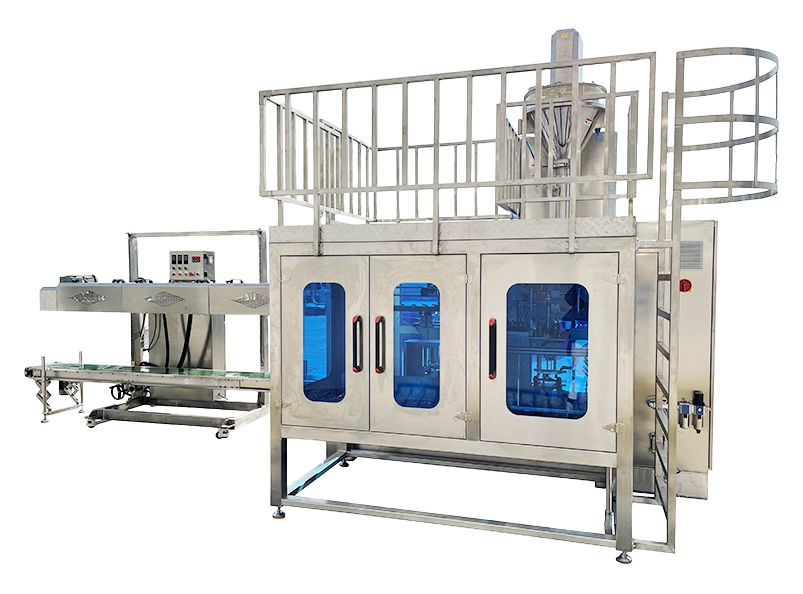
Mipline matched the job because the machine is built around the transfer point itself. The enclosed bagging station with inspection windows protects the working area. The bag magazine conveyor and guided transfer section present the sack in a controlled way. The top access platform makes maintenance practical without turning the line into a cluttered manual station.
Just as important, the structure is not a loose collection of frames. The guide rails, conveyor interface, and clamp zone are arranged to keep the bag mouth square and the bag body stable. That is the difference between a line that simply moves product and a line that prepares product for the next step.
Engineering point: the line does not win by brute speed. It wins by removing the small misalignments that slow down sewing and create operator intervention.
What the floor images prove
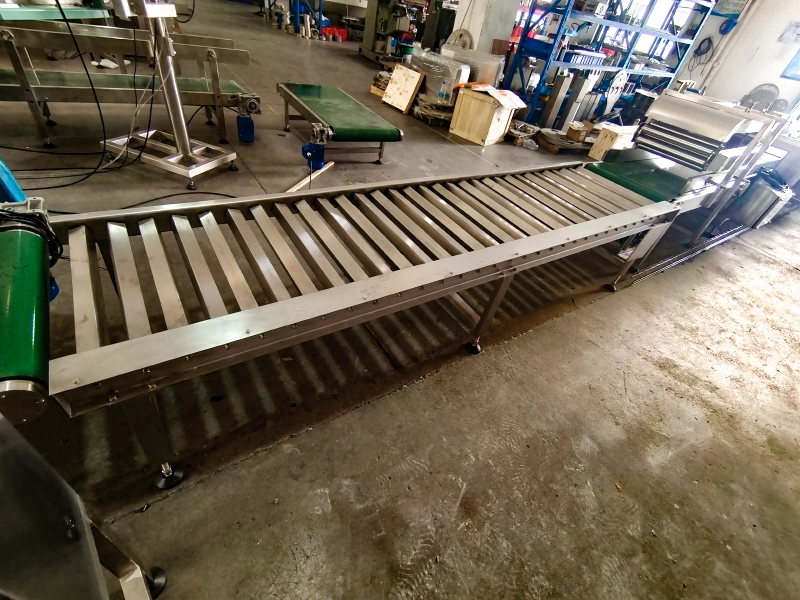
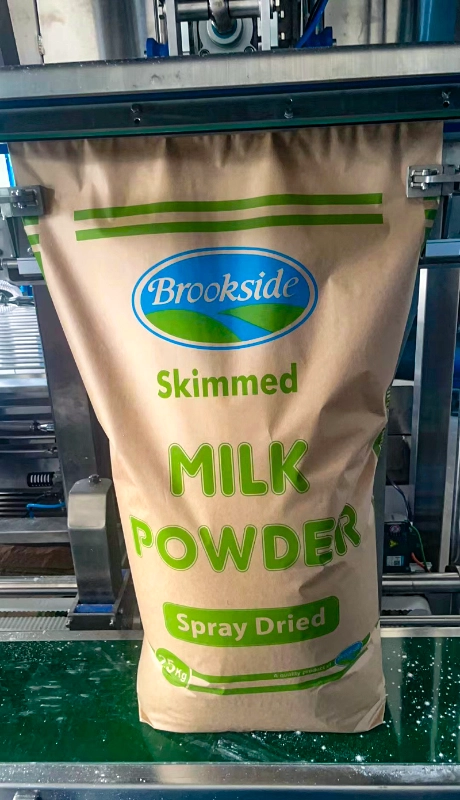
The transfer conveyor image shows the real job of the middle section: move a heavy powder bag while keeping the body straight and the base supported. The clamp-station image shows the other half of the story: once the sack is held correctly, the operator or downstream device can finish the cycle without fighting the bag shape.
That is why the final result was not just a prettier machine layout. The production team got a cleaner handoff, less manual rework, and a more predictable rhythm between filling, transfer, and sewing. On a powder line, that usually means the line feels quieter, easier to supervise, and more repeatable shift after shift.
| Line point | Mipline adaptation | Result on the floor |
|---|---|---|
| Bag transfer | Guided conveyor handoff with stable support | Less skew and less manual straightening |
| Bag mouth presentation | Controlled bagging station and clamp zone | Cleaner alignment before sewing |
| Maintenance and safety | Enclosed frame with access platform and inspection windows | Safer service and easier line oversight |
Need a cleaner 25 kg bag handoff on your powder line?
Send us the bag type, target throughput, and the next operation after filling. We will map the transfer, clamp, and guarding section to the line you already have, then show where Mipline can remove manual correction.
Contact BPM English
 Русский