
Mipline Powder Bagging Line for Stable 25 kg Handoff Before Sewing in Belarus
A Belarus dairy powder site needs more than filling speed. Mipline is built to keep the filled bag square through the last transfer, so the sewing head receives a cleaner mouth and operators spend less time straightening sacks by hand.
Why the last meter before sewing decides line stability
In a dry powder line, the bag can be fully filled and still fail at the final handoff. If the mouth arrives skewed, the sewing head becomes harder to stabilize, the operator compensates manually, and the bag may twist, sag, or collapse before closure. That is where throughput is lost: not in the filling itself, but in the final transfer.
Mipline addresses this transition with an enclosed stainless steel bagging station, a bag magazine conveyor, guided transfer sections, roller handling, and a clamping path that holds the bag in position while it moves from filling toward sewing or sealing. The goal is simple: keep the bag square, keep the mouth controlled, and reduce last-meter rework.
Operators manually straighten 25 kg kraft or woven bags at the last meter because the bag body arrives uneven, the mouth drifts off center, or the transfer section leaves too much freedom before sewing.
What Mipline changes between filling and stitching
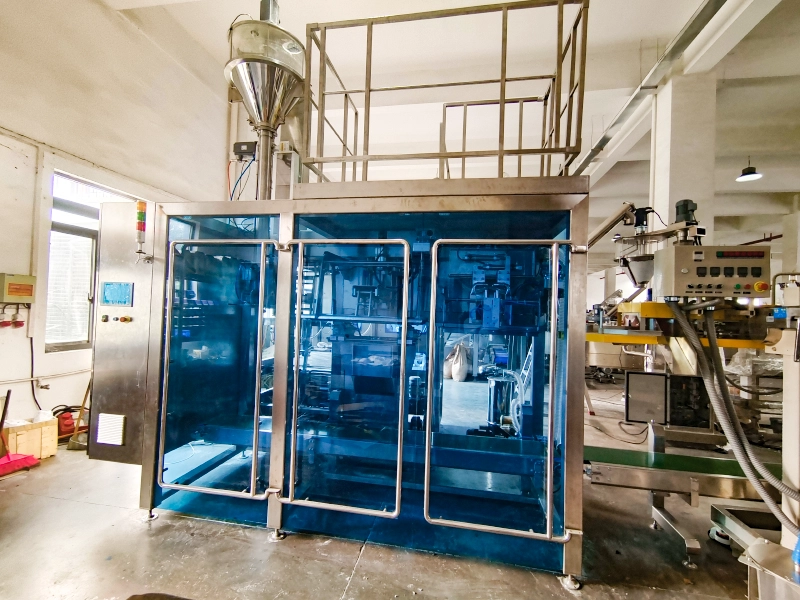
The visible machine evidence matters. The blue inspection windows show an enclosed bagging station that protects the process while still allowing line observation. The stainless steel guarding and top access structure support cleaner maintenance. More important, the bag clamp and transfer path keep the bag aligned instead of letting it flop into the next unit.
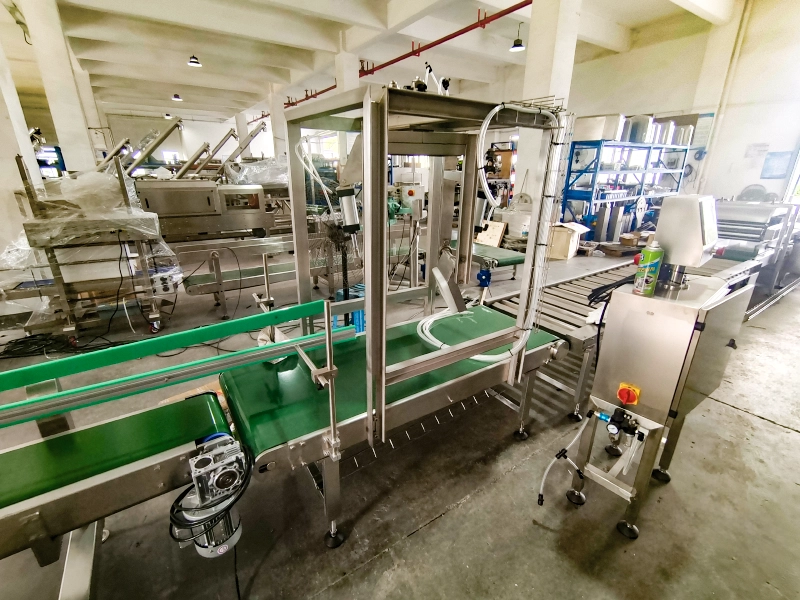
The green transfer conveyor and roller sections are not decorative detail. They are the physical handoff that keeps the bag moving in a controlled way before the sewing head takes over. That is why the line fits dairy powder, flour, starch, and other dry powder products where final bag shape is more important than raw fill speed alone.
bpmpack Engineering Insight: the real quality risk in powder packaging is often the transition, not the filler. Once the bag is filled, the line still has to preserve geometry. A guided conveyor handoff, bag clamp alignment, and a rigid stainless steel enclosure keep the bag square until the next machine step is ready.
What the images confirm about the line design
The first image shows a fully enclosed bagging station with blue safety windows, a top hopper, and a control cabinet. That combination tells you the line is designed for controlled automatic operation, not a loose open-frame transfer point. For a plant that cares about hygiene, maintenance access, and visibility, this is a practical layout rather than a cosmetic shell.
The second image shows the conveyor side of the job: green belts, a vertical guide frame, and a visible emergency-stop box. That tells the buyer exactly how Mipline manages the final bag handoff. It is a guided transfer environment, which is what a powder plant needs when the objective is a cleaner sewing entry and fewer bags corrected by hand.
| Visible evidence | Functional role | Plant result |
|---|---|---|
| Blue inspection windows | Enclosed bagging area with process visibility | Safer supervision and cleaner maintenance access |
| Bag magazine conveyor and guided transfer path | Stable bag delivery before sewing | Less manual straightening at the last meter |
| Green conveyor sections and rigid guide frame | Controlled handoff between machine stages | More square bags at the sewing head |
Need a powder bagging line that keeps bags straight before sewing?
Send us your bag size, target output, and closing method. We will map the filling-to-sewing handoff and suggest a Mipline layout that matches your powder product and plant flow.
Request a line layout English
 Русский