
How BibPU Keeps Salt Bags Flat Before Sewing on a Secondary Packaging Line
At a Russian salt plant, the trouble was not filling alone. The real failure point came after small bags were collected into woven sacks: trapped air, bulging sack faces, poor sewing alignment, and unstable stacks at the end of the line. BibPU addresses that handoff with controlled grouping, side compression, and a sewing-ready discharge path built for salt packaging.
Why the old handoff failed before sewing
The plant needed a cleaner way to move salt pouches from primary packing into the secondary bag. Manual collection and loose transfer left too much air inside the woven sack, so the load arrived at the sewing head uneven, springy, and hard to square up. Once the sack face ballooned, the operator had to fight the bag instead of stitching it.
BibPU was a fit because the line is built around controlled collection, guided transfer, and compression before closure. The process is not just “move bags into a sack.” It is designed to keep the sack shape stable from the moment the pouches drop in until the bag reaches the stitch head.
Bulging woven sacks create bad sewing angle, unstable stacking, and more rework at the end of the line. In salt packaging, that also means more risk of product dusting, bag slippage, and poor pallet shape.
Why BibPU fits salt secondary packaging
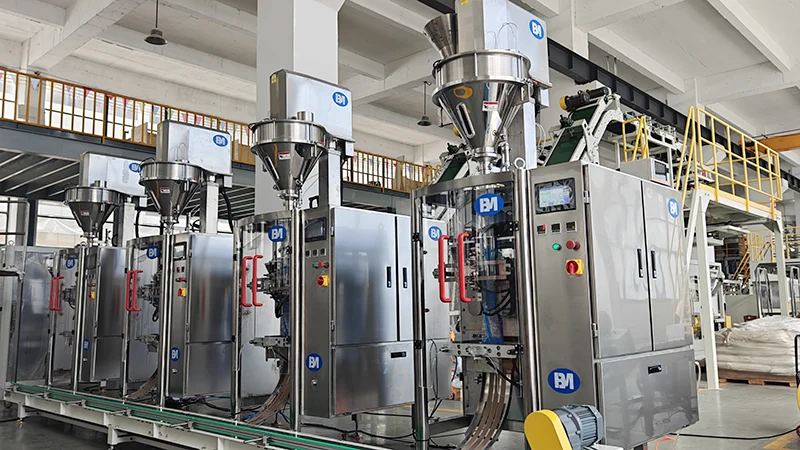
BibPU matches this job because its design supports both the product and the handling pattern. The product pool uses stainless steel and corrosion-resistant contact parts, which matters when salt exposure and humidity are part of the daily environment. The machine group is arranged to keep the flow compact, controlled, and easy to align before the sack is closed.
The line also shows the right type of operator-facing control. The indexed control console includes a HMI and clear parameter display, which helps the crew keep transfer, sealing, and line rhythm consistent without overcorrecting by hand. For a salt plant, that consistency matters more than raw speed alone.
bpmpack Engineering Insight: the key advantage is not only in packing the pouches, but in removing air and shaping the sack before sewing. Side compression, guided feeding, and a stable discharge path reduce the load’s spring-back effect, so the bag enters the stitch station flatter and more predictable.
Structure and process evidence from the machine set
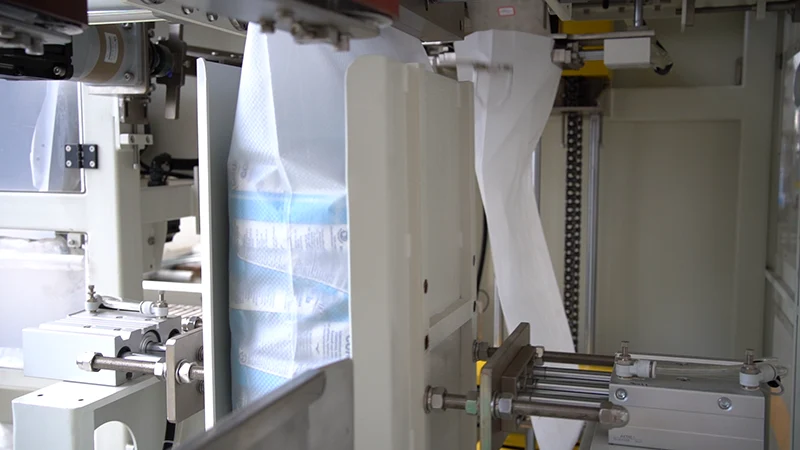
The visual evidence behind the line is straightforward. The VFFS section uses stainless steel hoppers for stable filling. The transfer and grouping sections use guided conveyors and controlled spacing. The secondary bag section then compresses the woven sack so the load does not arrive puffed up at the sewing station. That sequence is what turns a messy handoff into a repeatable packaging step.
We also see the details that support the result: corrosion-resistant contact surfaces for salt duty, anti-static and moisture-aware film handling, stable guide rollers, and a sewing head built to close the bag after the sack body has been flattened. The process is designed around the real failure mode, not around a generic packaging checklist.
| Line step | What it solves | Evidence in the BibPU set |
|---|---|---|
| Primary filling | Keeps salt pouches consistent before secondary packing | Stainless hopper VFFS row |
| Grouped transfer | Controls spacing and reduces random pile-up | Guided conveyor and compact transfer layout |
| Secondary sack compression | Removes air and flattens the woven sack before sewing | Pneumatic side clamping plates |
| Final closure | Improves sewing angle and stack stability | Industrial sewing head and aligned sack mouth |
Need a salt line that stays flat before sewing?
BibPU is a strong fit when the problem is not filling speed alone, but what happens after the pouches enter the woven sack. If you need flatter bags, cleaner sewing, and a more stable pallet shape, this is the line logic to look at.
Talk to BPM English
 Русский