
Cleaner Woven-Sack Release Before Sewing at a Southern Russian Grain Plant
When a grain plant keeps seeing dust, bag-mouth skew, and slow handoff at the sewing station, the problem is usually not the operator. It is the way the sack is released, aligned, and transferred. This ppline layout is built to make that transfer more stable, more visible, and easier to keep in rhythm.
Why the plant needed a cleaner handoff
The customer scenario is familiar in bulk grain handling: the line may already be filling sacks, but the last transfer into sewing still creates waste. Bags arrive slightly twisted, the mouth is not fully settled, or the operator has to pause to straighten the sack before it reaches the next station. That creates small delays that add up fast over a full shift.
For a southern Russian grain plant, the weak point was not the product itself. It was the transition between filling and closing. Once the sack left the fill point, the handoff had to stay predictable so the sewing team could work without extra repositioning. That is exactly where a purpose-built ppline layout becomes valuable.
Loose sack transfer usually comes from a mix of poor bag presentation, weak mouth alignment, and an outfeed path that does not hold the bag in a steady position. If the plant has to rely on repeated manual correction, output becomes operator-dependent and the sewing station becomes a bottleneck.
Why ppline fits the job
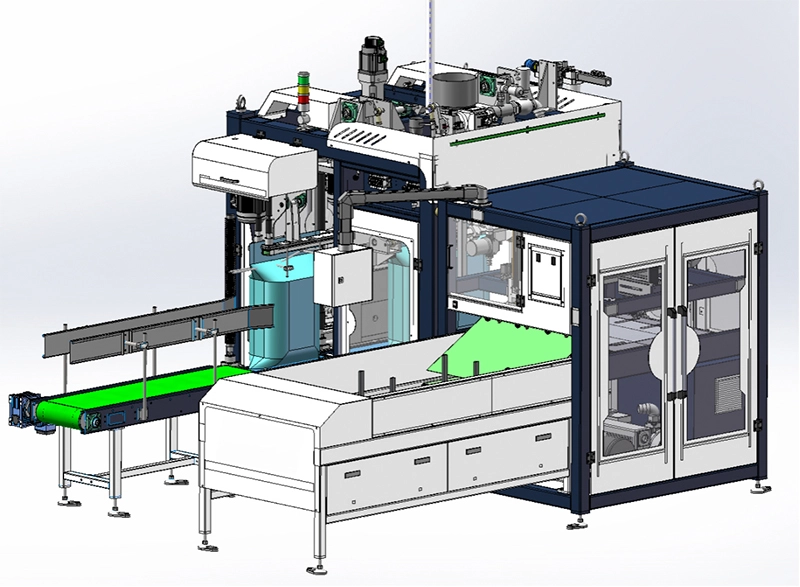
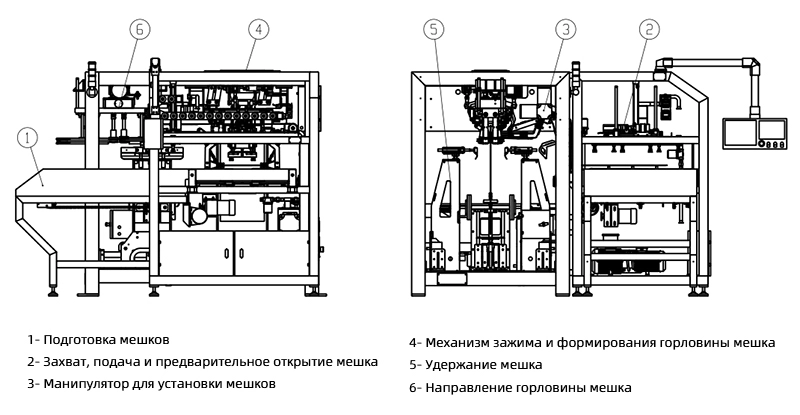
This line is a good match because it does not treat the bag transfer as a side effect. The hopper feeder gives the upstream supply a stable source point, while the inclined conveyor helps keep material movement smooth and controlled. In the visible machine layout, the bag magazine, clamping point, and outfeed conveyor are arranged to support repeatable sack presentation before sewing.
That matters in real factory use. A cleaner handoff means less twisting at the bag mouth, less stopping to correct position, and less dependence on one experienced operator. The steel frame, enclosed machine body, and clear access points also make the line easier to place inside a working plant where maintenance, cleaning, and safety all matter.
bpmpack Engineering Insight: The value is not just automation. It is control over the last meter before sewing. When the hopper feed is consistent, the conveyor movement is stable, and the bag clamp keeps each sack in a repeatable position, the sewing station receives a more predictable workload and the whole line becomes easier to balance.
What the structure and photos show
The hero image shows a modular industrial layout with a hopper feeder, control cabinet, and inclined conveyor. That is important because the plant does not need a loose collection of machines. It needs a connected transfer path that supports the bag from filling through the next action. The second image makes the transfer logic even clearer: the bag magazine, clamp zone, and outfeed conveyor are all visible in one machine view.
Those visuals support the operating goal of the project. The line is not trying to be flashy; it is trying to make the sack path cleaner. For a grain plant that ships woven sacks, the practical result is more stable downstream sewing, fewer interventions, and a smoother rhythm between filling and closing.
| Evidence point | What the photos show | Operational result |
|---|---|---|
| Upstream feed control | Hopper feeder and inclined conveyor are integrated into one modular line | More stable material flow into the bagging process |
| Bag presentation | Bag magazine and clamp zone are visible in the machine layout | Cleaner sack positioning before sewing |
| Transfer stability | Outfeed conveyor supports the bag after filling | Less manual correction at the sewing station |
| Plant fit | Enclosed machine body and control cabinet are built into the frame | Easier integration into an active production area |
Need a cleaner sack handoff line for sewing or palletizing?
Share the bag size, the material, the target output, and the point where the sack currently loses alignment. We can map the ppline layout to the exact transfer problem and propose a practical arrangement for feeding, clamping, and outfeed control.
Discuss your line layout English
 Русский