
Automatic Powder Packing Machine for Cleaner 25 kg Bag Handoff Before Sewing in a Belarus Dairy Plant
For a Belarus dairy powder producer, the key issue was not filling speed alone. The last meters before sewing were creating unstable bag mouths, manual bag straightening, and avoidable variation on 25 kg kraft paper bags. This Mipline powder packaging line uses an enclosed stainless steel automatic bagging machine, guided conveyors, and stable bag transfer logic to keep bags square before sewing and reduce manual correction at the end of the line.
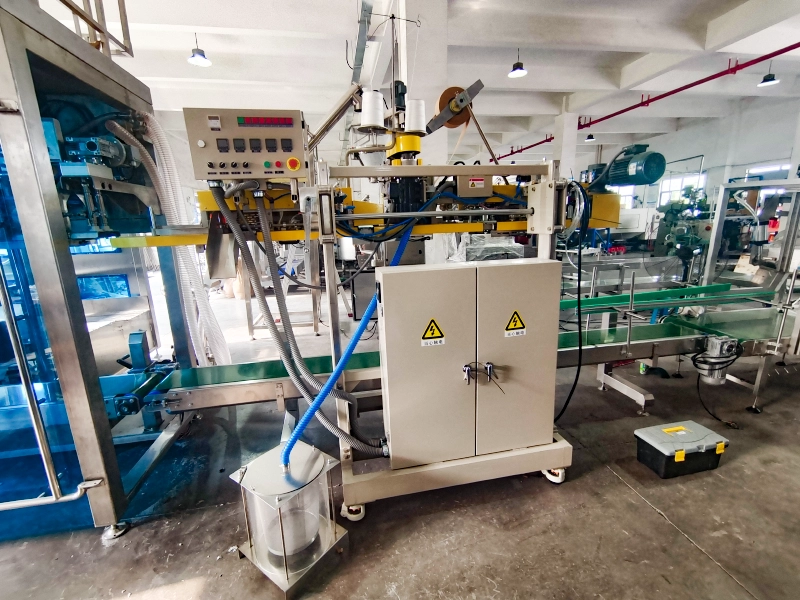
Customer scene: dry milk powder packed into 25 kg industrial bags
The application fit a typical dairy powder bagging line: dry product, repeated 25 kg bag format, and a production team that needed the powder bagging line to stay clean, guarded, and predictable around the filling and sewing handoff. In this kind of plant, operators usually watch the final bag path closely because even a small skew at the bag mouth can affect sewing consistency and downstream handling.
Instead of relying on open transfer points and operator intervention, Mipline is arranged as an automatic powder packing machine with a stainless steel enclosed bagging station, visible control access, and a connected conveyor path. That matters for food powder packaging because the line must balance automation with cleaner structure, inspection visibility, and easier coordination between bag pickup, filling, conveying, and sewing.
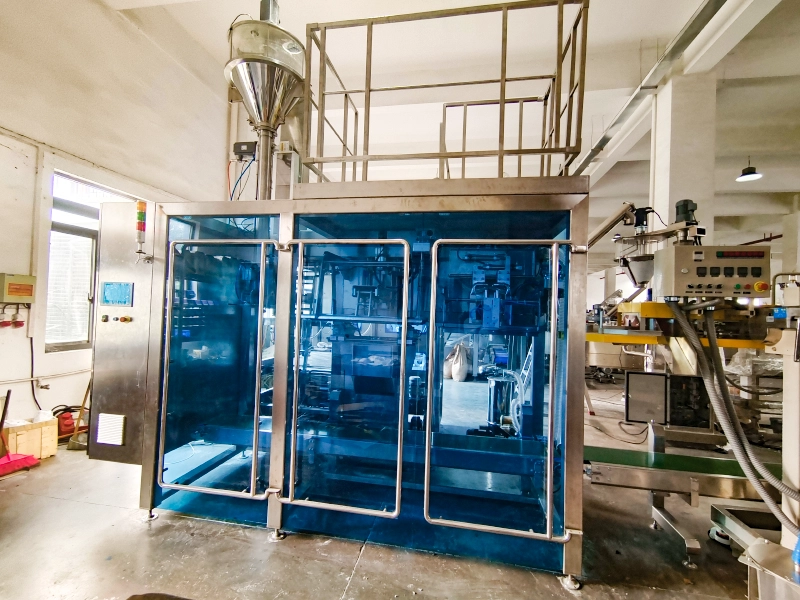
On many older powder bagging layouts, the filled bag twists or softens before sewing, so operators manually straighten the last meter, hold the bag mouth, or re-square the bag body before it reaches the sewing head.
Why the old transfer method caused unstable bag mouths before sewing
When a 25 kg bag leaves the filling point without enough guidance, the bag body can rotate slightly, collapse at one side, or arrive with an uneven top edge. That creates exactly the buyer problems common in milk powder packaging machine projects: unstable sewing head entry, manual bag straightening, and reduced line calmness at the handoff point. The issue is not only the filler. It is the transition logic between bag holding, release, and conveyor control.
Mipline addresses that point directly. The product is not presented as a generic conveyor add-on, but as a powder packaging line with guided conveyor handoff and bag clamp alignment built into the process path. The enclosed automatic bagging station supports cleaner operation at the filling area, while the linked transfer path is intended to reduce uncontrolled bag movement before sewing. For dairy powder, flour, or starch powder packaging, that means a straighter bag presentation and less dependence on manual correction.
Engineering note: In powder filling and bag sewing line layouts, the most expensive small problem is often the unstable last handoff. A steadier bag mouth before sewing improves not just seam appearance, but also line rhythm, operator workload, and reject prevention.
What made Mipline the right fit: enclosed structure, guided transfer, and visible evidence on the line
The visible machine evidence supports the selection. The bagging station uses a stainless steel enclosed body with blue inspection windows, integrated conveyor interfaces, and control access suited to food-oriented dry powder packaging equipment. The line layout also shows multiple conveying stages rather than a loose discharge point. That is important because stable bag transfer before sewing depends on how the bag is supported after filling, not only on the bagging head itself.
On the transfer side, the line uses modular conveyor sections and guided movement to keep 25 kg bags square before sewing. The factory-floor image of connected transfer conveyors shows why this matters in practice: the bag path is controlled, the handoff is calmer, and the operator does not need to keep correcting each bag at the final approach. For a buyer comparing automatic bagging machine for powder options, this is the difference between simple automation and process-ready automation.
| Observed requirement | Mipline evidence on this project | Expected result |
|---|---|---|
| Cleaner food-powder line layout | Stainless steel enclosed bagging station with inspection windows and guarded access | More controlled powder packaging area and easier visual inspection |
| Stable bag transfer before sewing | Connected conveyor path with guided handoff between bagging and downstream sections | Reduced bag twisting and cleaner bag alignment before sewing |
| Less manual bag straightening | Automatic bagging machine structure plus conveyor-based bag support after filling | Lower operator intervention at the last meter of the line |
| 25 kg dairy powder bag compatibility | Industrial bagging layout shown handling kraft paper powder bag applications | More repeatable bag presentation for sewing and palletizing |
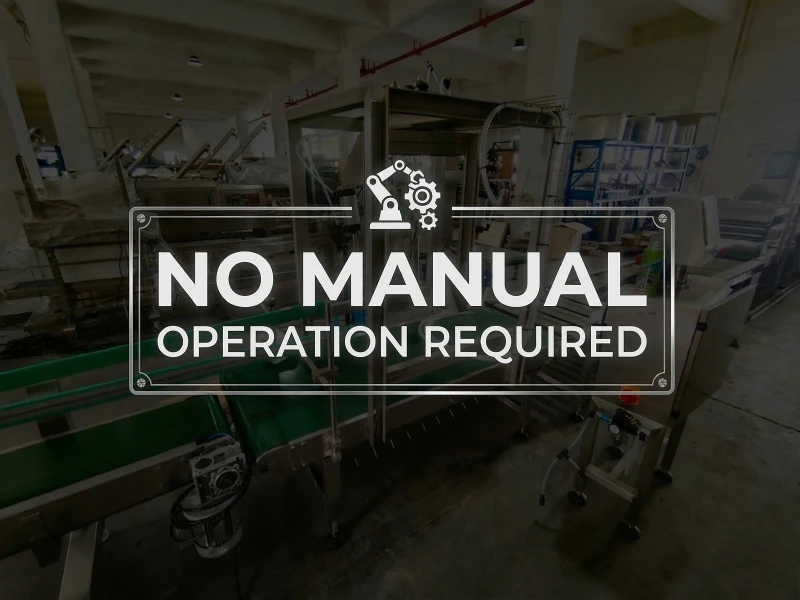
Result: steadier powder bagging with less correction before sewing
For this Belarus dairy application, the value of the Mipline powder packaging line is clear: the customer gets an automatic powder packing machine designed around cleaner bag handoff before sewing, not just bag filling in isolation. If your project also involves milk powder, flour, starch, or other dry powder packaging in 25 kg bags, BPM can help map the right bagging station, transfer conveyor, and sewing handoff configuration for your line.
Talk to BPM about your powder bagging line English
 Русский