
Bibpu Secondary Packaging Automation for Cleaner Salt Transfer Before Sewing
When small salt packs move into a woven secondary sack, the handoff must stay straight, compact, and easy to sew. Bibpu is built to control that transition with guided transfer, pneumatic holding, side compression, and a heavy-duty sewing finish.
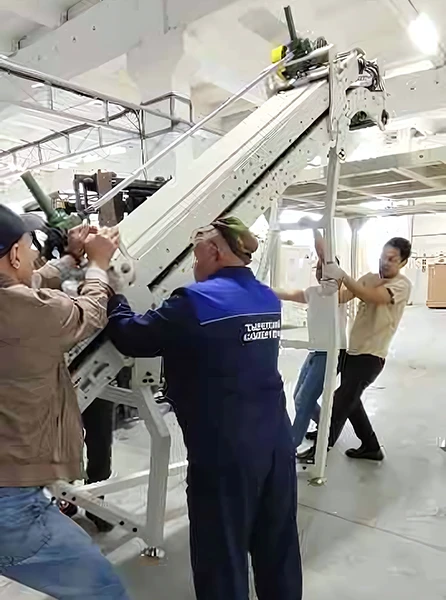
Why the transfer point becomes the weak link
In a salt line, the primary packs are usually neat enough at the VFFS stage. The problem starts later, when those packs are dropped into a woven secondary bag and then moved toward sewing. If the bag is not held square, the load shifts. If the trapped air is not managed, the sack bulges. If the mouth is not aligned, the sewing head has to fight the bag instead of closing it cleanly.
Bibpu is aimed at exactly that problem. It is not only a packaging machine set; it is a controlled handoff sequence. The line brings the filled pouches into the bagging station, keeps the woven sack open with pneumatic clamps, then uses side compression to shape the load before the bag reaches the sewing head.
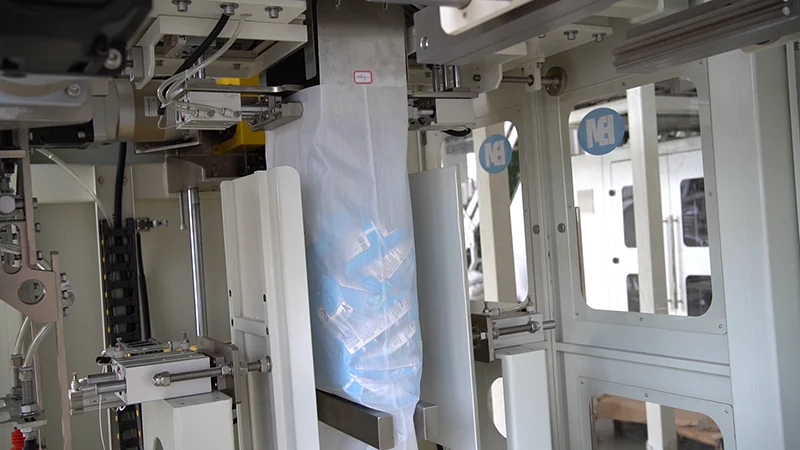
Without controlled holding and compression, secondary sacks arrive at sewing with uneven fill, loose corners, and air pockets. That leads to unstable handling, harder stitching, and a less compact finished bag for palletizing.
Why Bibpu fits the secondary packaging job
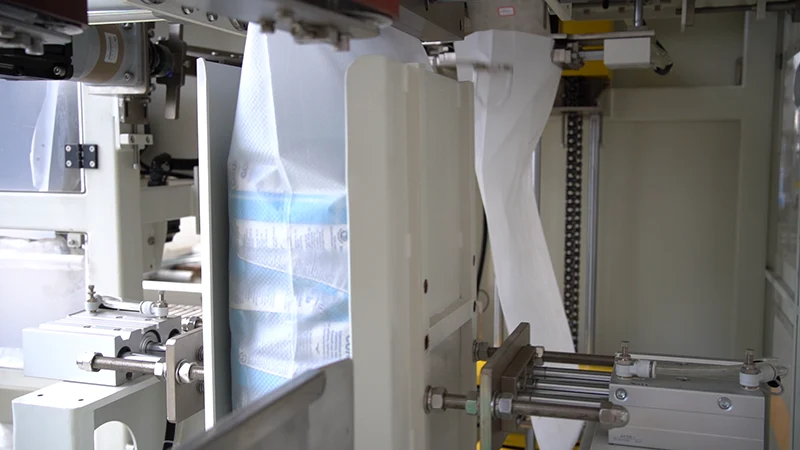
The strength of the Bibpu concept is mechanical simplicity at each critical point. The woven PP sack is held by pneumatic clamps, which gives the operator a stable opening. The loaded sack is then compressed from the side, so the bag body becomes flatter and more regular before closure. This helps the sewing head do one thing well: stitch a predictable mouth line.
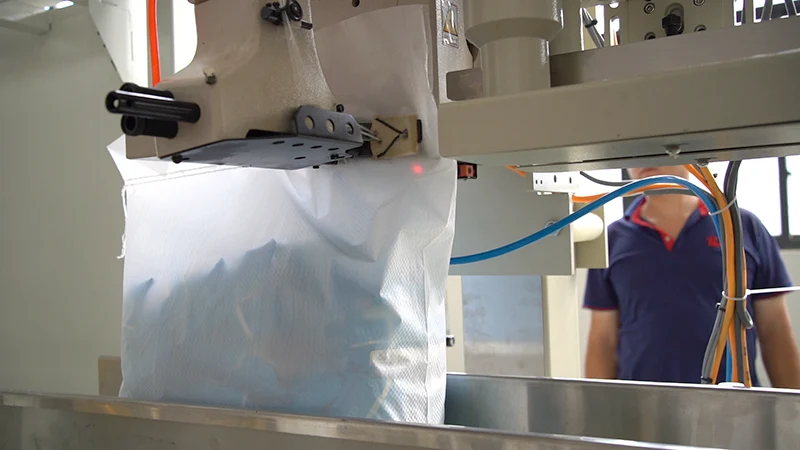
The line also reflects practical factory discipline. The image set shows the workshop layout, the bag-holding stage, the compression stage, and the Newlong sewing head. That sequence matters because the result is not only a closed sack; it is a cleaner, more transport-ready secondary package with fewer shape defects and less rework downstream.
Process note: Bibpu is strongest when the line is tuned as a flow from transfer to hold, from hold to compression, and from compression to sewing. Each stage protects the next one.
Structure-to-result evidence from the line
The photos do more than illustrate the machine. They show the actual logic of the secondary packaging sequence: guided infeed, stable bag opening, load shaping, and final sewn closure. That is what makes the line suitable for salt plants that want more consistent handoff quality before palletizing.
Below is a simple breakdown of how each stage supports the final result.
| Stage | What the image shows | Operational result |
|---|---|---|
| Infeed and workshop layout | Inclined conveyors, platform access, and centralized control cabinets | Cleaner line control and easier transfer coordination |
| Bag filling and holding | Pneumatic clamps supporting the woven sack while salt packs enter | Stable opening and less bag distortion during loading |
| Load shaping | Side compression on the filled secondary sack | Flatter bag body and better pre-sew geometry |
| Closure | Industrial Newlong sewing head finishing the sack mouth | Reliable seam closure for the next handling step |
Need a cleaner secondary bagging handoff for salt or similar products?
Bibpu is a practical fit when the main target is stable transfer, controlled bag shaping, and a sewing stage that does not need to compensate for a poorly formed load. If you want the line to move from loose transfer to compact final sack with less rework, this structure is worth reviewing.
Talk to BPM about the line layout English
 Русский