
Why a Polyethylene Bag FFS Line Fits Cleaner Handoffs and Safer Access
For plants that package polyethylene bags, the real pain is rarely the bag itself. It is the handoff rhythm around it: feed, form, fill, transfer, stack, and dispatch. An FFS line helps when the workshop needs a clearer flow, safer platform access, and fewer loose points between packaging and the next step.
When the old layout creates too many bag moves
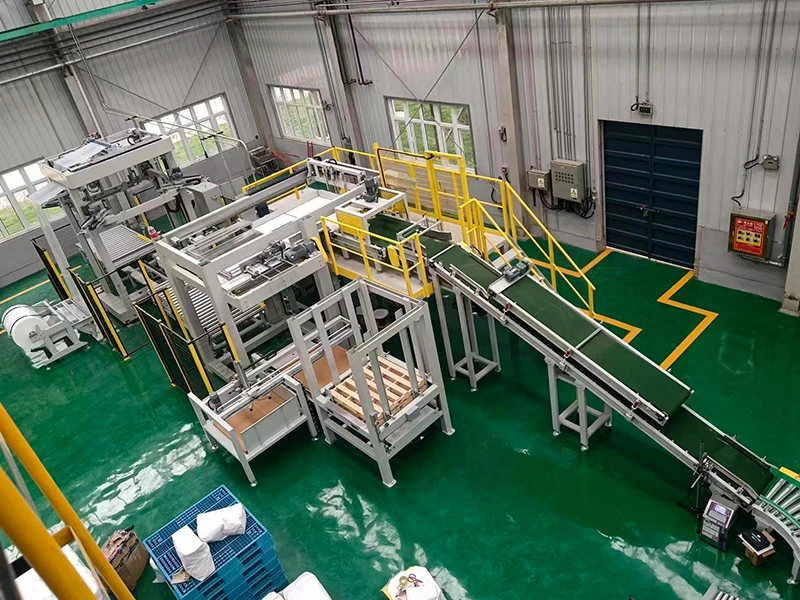
In many polyethylene bag packaging workshops, the old setup grows around the machine instead of around the flow. Operators walk too far between the filling point and the discharge lane, access paths get narrow, and bags collect in places where they should already be moving downstream. That is where time is lost, and where handling damage starts to show up.
An FFS line is a better fit when the plant needs the process to stay visible from above. The overhead factory view shows conveyors, platforms, palletized materials, and forklift lanes in one field of view, which is exactly what a busy packaging workshop needs: clear separation between machine movement, bag movement, and material movement.
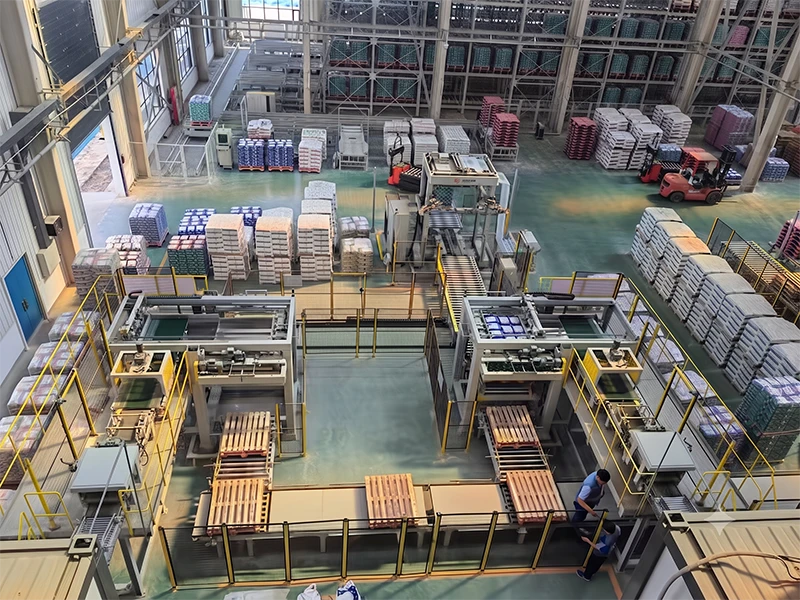
Manual bag transfer often creates the most friction: the line looks busy, but the output is not steady, access is not comfortable, and the dispatch lane keeps getting interrupted by small handling tasks.
Why the FFS line structure solves it
The front view makes the core reason obvious. The machine is built around an elevated platform, yellow safety rails, a hopper, and an enclosed cabinet. That combination is practical, not decorative. The platform gives operators a defined working height, the rails make access more controlled, and the enclosed cabinet keeps the main body visually and physically organized.
The line section view adds the next layer: white machine frames, guard rails, conveyors, and downstream handling units. That means the bag does not stop at a single point and wait for attention. It moves as part of a linked line. For a polyethylene bag workshop, that linked movement is what turns packaging from a pile of tasks into a repeatable production path.
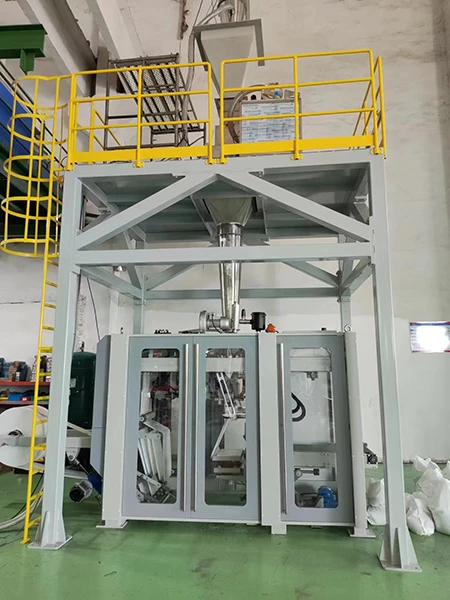
Practical fit: when the workshop needs cleaner handoffs and safer access, the line works best as a system. The machine frame, the platform, the guard rails, and the downstream conveyor are all doing a specific job in the same chain.
What the structure and process evidence show
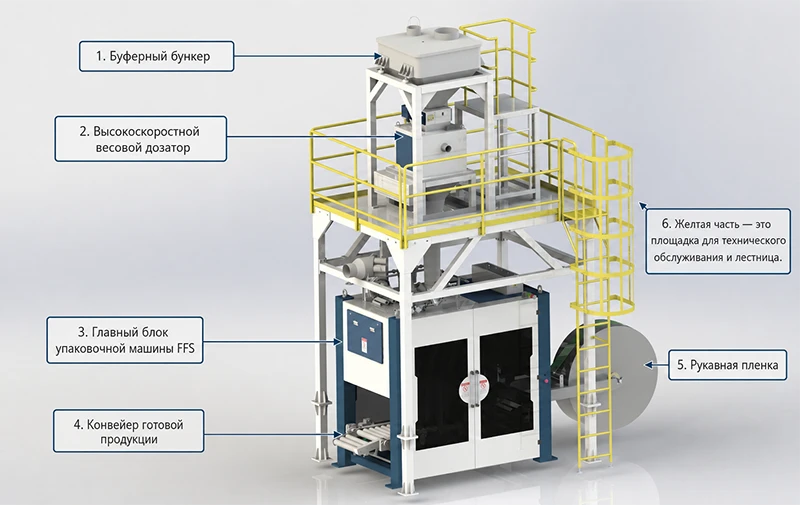
The annotated machine diagram is useful because it shows the line as modules instead of a single box. Process modules, machine frame, control area, film handling, and service points all appear as separate parts of the same system. That matters for maintenance, because a workshop can locate the working zones faster and avoid treating the whole machine like one blocked area.
The result is easier to see in the line-wide workshop photo as well. The packaging system sits with white frames, yellow rails, green conveyors, pallets, and a bag output area. In other words, the machine is not only packaging bags; it is organizing the workshop’s next move. The output is easier to stage, the path to the forklift lane is easier to protect, and the dispatch rhythm is steadier.
| Workshop need | What the FFS line shows | Why it matters for polyethylene bags |
|---|---|---|
| Clear access | Elevated platform and safety rails | Operators work around a defined zone instead of crossing the flow |
| Stable line movement | Connected conveyors and downstream handling | Bags move with fewer pauses between packaging and transfer |
| Organized workshop layout | Separated pallets, forklifts, and machine lanes | Dispatch stays cleaner and the workshop stays easier to run |
Need a line that keeps bagging flow steadier?
If your polyethylene bag workshop is still losing time on manual handoffs, cramped access, or uneven dispatch, an FFS line can turn the layout into a cleaner working system. The best next step is to review the workshop flow first, then match the packaging line structure to that flow.
Request a line proposal English
 Русский