
Why an FFS Line for Polypropylene Granules Keeps Handoffs Cleaner and Dispatch Steadier
For polypropylene granule packing, the real job is not just filling bags. It is keeping hopper feed stable, protecting access around the machine, and moving finished bags toward palletizing without crowding the floor. This FFS line layout shows how a controlled bagging flow can do all three at once.
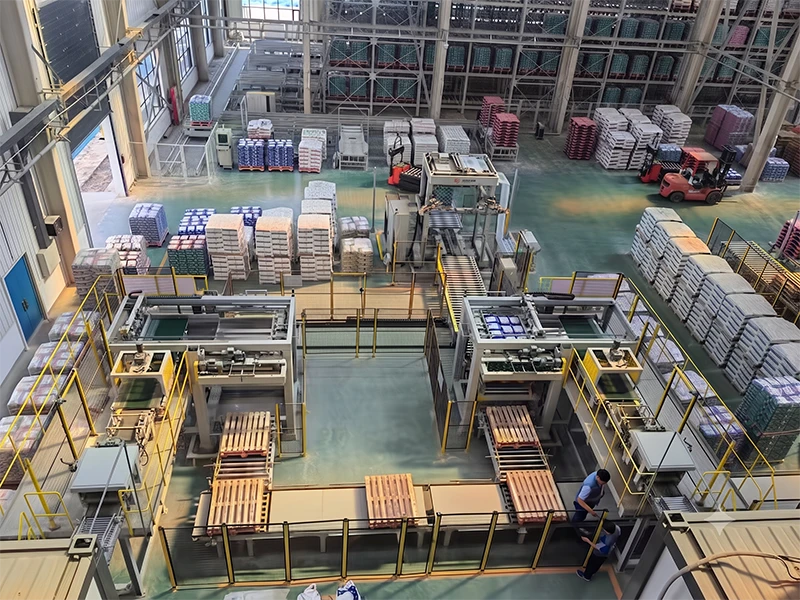
From bulk granules to bagged output without cluttering the aisle
Polypropylene granules are usually packed in a high-throughput workshop where the line has to stay open, the feed has to stay consistent, and finished bags need a clean exit path. If the layout is too tight, operators lose room around the hopper, the bagging point becomes harder to service, and the downstream flow starts to stack up around forklifts and pallets.
The first image shows the practical answer: a line built with clear platform access, a defined material route, and enough separation between the packaging section and the warehouse traffic lane. That is what makes an FFS setup useful for granule packing. It is not only about sealing a bag. It is about keeping the whole transfer sequence predictable from feed to outfeed.
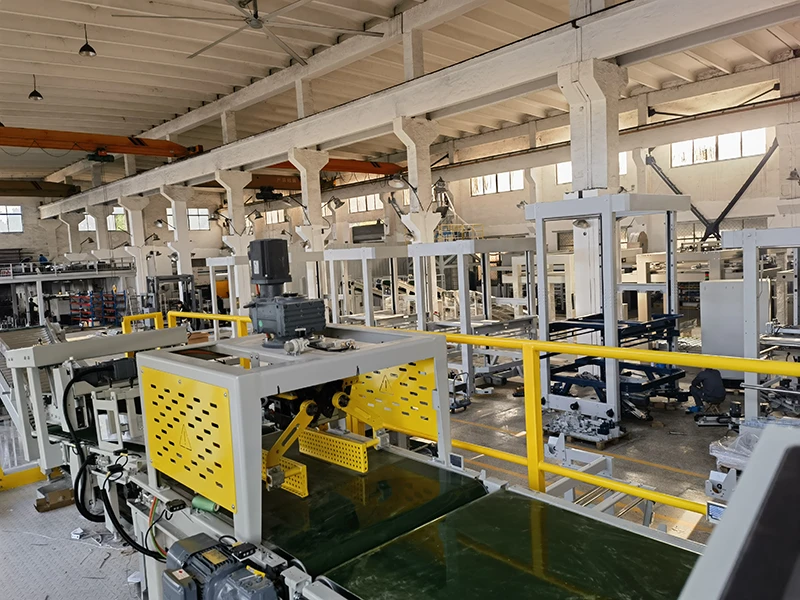
When a granule packing line mixes filling, access, and pallet handling in one crowded zone, operators spend more time navigating the machine than keeping the output steady.
Why this FFS layout fits polypropylene granule packing
The structural logic in this line is easy to read. The hopper and enclosed main cabinet keep the front end compact. The elevated platform and yellow guard rails create a safer service zone. The downstream conveyor then carries packed bags away from the filling area, which helps preserve order around the machine while the warehouse side keeps moving.
That is why this layout suits polypropylene granules well: it supports continuous bagging, gives operators safer reach points, and reduces the chance that finished bags will block the next shift of output. The robot palletizing station shown here also matters, because the line does not end at bag discharge. It continues into a cleaner end-of-line handoff, which is where many plants lose time if the layout is not planned correctly.
What the photos prove: the combination of platform, guard rails, conveyors, and robotic palletizing shows a line built for controlled transfer, not just a single packing machine.
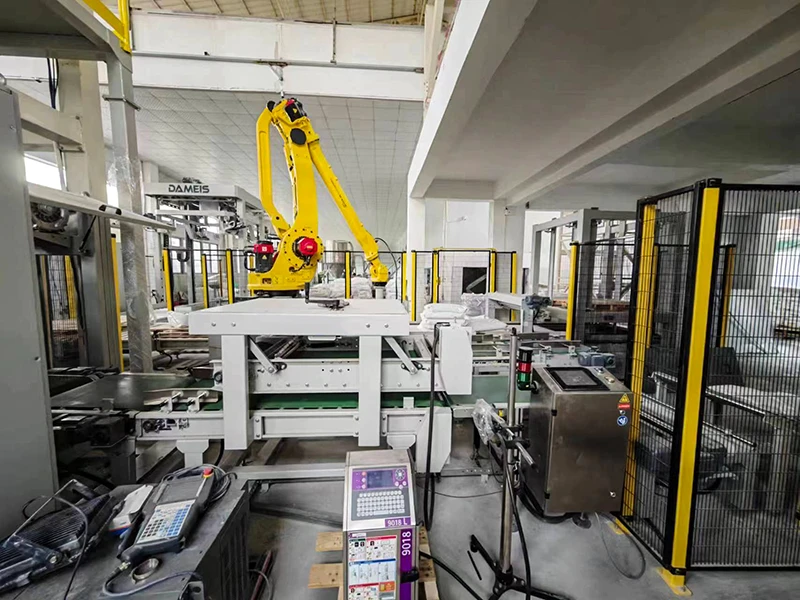
What the line changes from feed to finished pallet
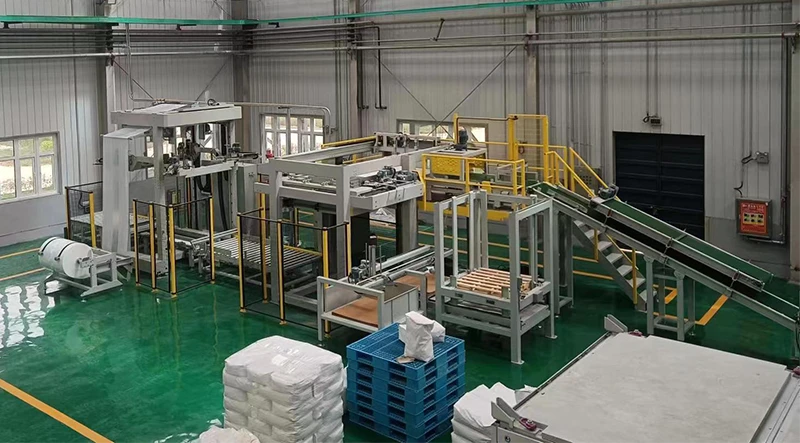
For a polypropylene granule producer, the result is a clearer material path. The feed area stays defined, the bagging section stays accessible, and the transfer zone stays less exposed to congestion. This improves routine work in three ways: operators can inspect the line more easily, the outfeed remains easier to organize, and the finished-bag area is ready for pallet handling instead of manual reshuffling.
The workshop panorama makes that outcome visible. You can see the white machine frames, yellow rails, green conveyors, pallet area, and bag output zone all working as one system. That is the value of an FFS line in this application: it ties the packaging machine to the rest of the plant instead of isolating it as a single island of equipment.
| Scene | Problem | What the FFS line changes |
|---|---|---|
| Hopper feed | Unstable flow and hard access | Compact front end and clear service access |
| Bagging and outfeed | Clutter around discharge and transfer points | Defined conveyor route and cleaner bag handoff |
| End-of-line handling | Pallet congestion and slow dispatch | Robot palletizing zone and better downstream order |
Need a polypropylene granule packing line that stays orderly in daily production?
This FFS layout is a good fit when you want cleaner handoffs, safer access around the machine, and steadier movement from filling to palletizing. If the goal is to keep the line compact without sacrificing flow, this structure is built for that job.
Request a packing line proposal English
 Русский