
How an FFS Line for PP Granules Keeps Hopper Feed, Bag Transfer, and Dispatch Steadier
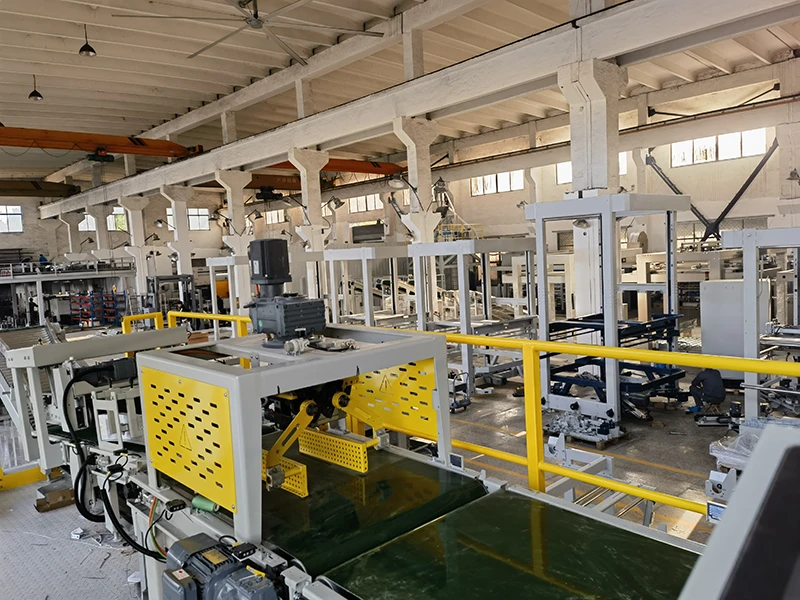
For PP granules, the weak points are usually not the material itself. The real pressure shows up at hopper feeding, bag forming, transfer stability, access around the machine, and clean handoff into downstream handling. This FFS line is built to keep those points under control with a compact frame, elevated platform, guarded working zones, and a line layout that supports steadier output.
Why PP granules expose the weak points in a packing line
PP granules are easy to recognize on paper, but they can be demanding on the floor. The flow has to stay even at the hopper, the bag must form cleanly, and the transfer into the next unit cannot become loose or inconsistent. When the line is built only for basic filling, the operator ends up compensating for vibration, access problems, or a layout that forces too many manual touches.
That is why the first question is not the bag size. It is whether the line can keep the feed steady, protect the operator, and move product toward the next stage without breaking the rhythm of the shift.
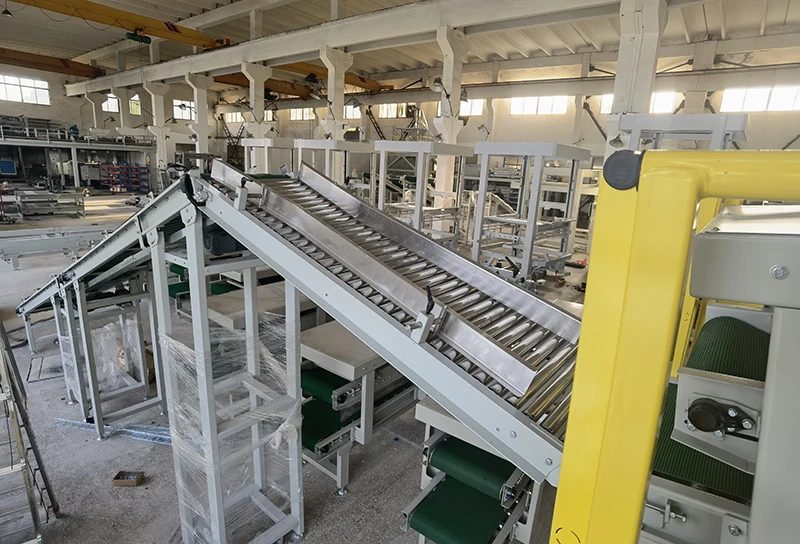
PP granules often move through a line faster than the surrounding layout can support. If the transfer height, platform access, and downstream handling are not planned together, the result is uneven loading, slower intervention, and more operator fatigue.
Why this FFS line fits PP granules better
This layout works because it treats the packaging line as a system, not as a single machine. The elevated structure gives the operator better access, the guarded frame keeps the working zone organized, and the conveyor sequence supports a cleaner handoff from filling to dispatch. For PP granules, that means the machine is not only measuring and filling; it is also preserving flow stability across the whole sequence.
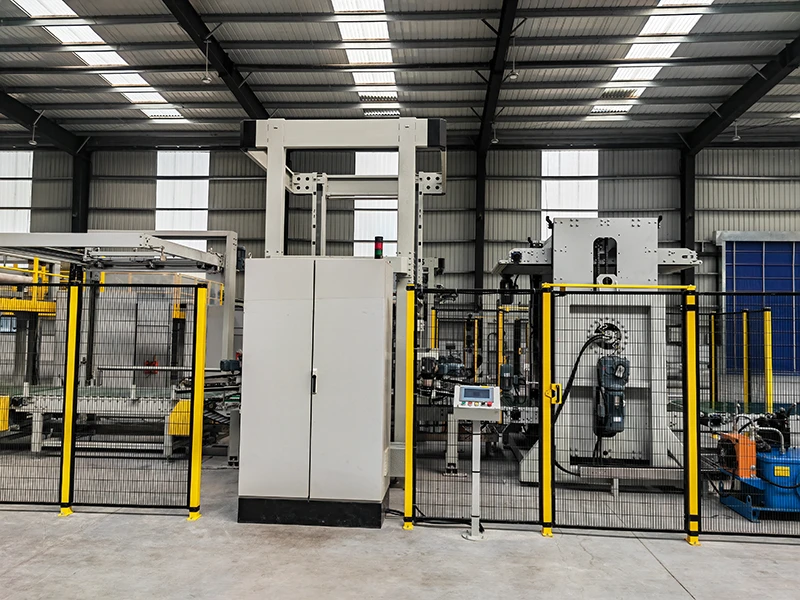
The enclosed main body and the service platform help the line stay practical in a real workshop. Maintenance access is visible, the handling route is clear, and the end-of-line section can be matched with palletizing or further conveying without turning the area into a crowded bottleneck.
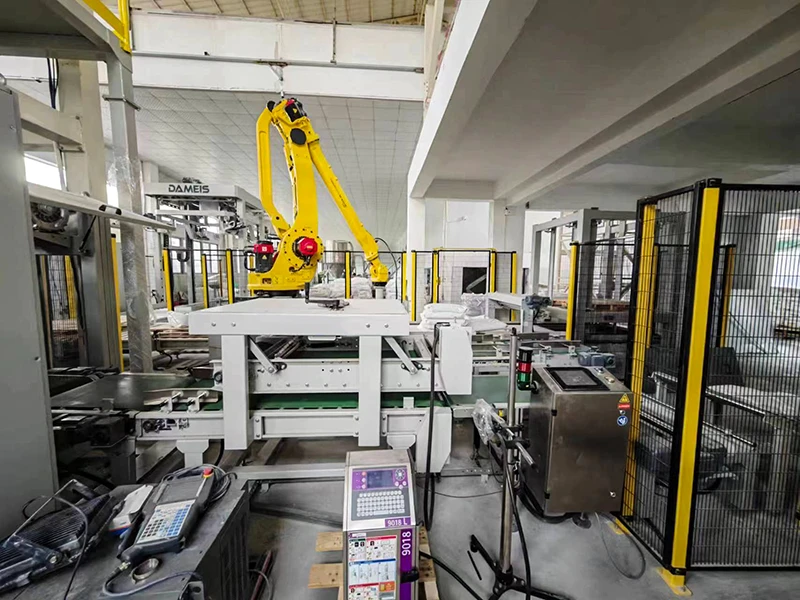
Engineering note: For granule packing, the strongest layout is usually the one that reduces unnecessary manual touches. Once the filling point, discharge path, and palletizing zone are aligned, the line becomes easier to run at a steady rhythm.
What the workshop layout proves on the floor
The wide workshop view shows the line as it really operates: machine body, service platform, safety posts, auxiliary equipment, and room for the next stage of handling. That matters because PP granules do not benefit from a narrow, overpacked installation. They benefit from a layout that keeps access clean and allows the machine to do its work without crowding the aisle.
The annotated diagram adds another layer of proof. It makes the process modules visible, including frame, control area, film handling, and service points. For buyers comparing options, that kind of visibility matters because it shows where the line is controlled, where it is serviced, and where the bagging process is physically separated from routine access.
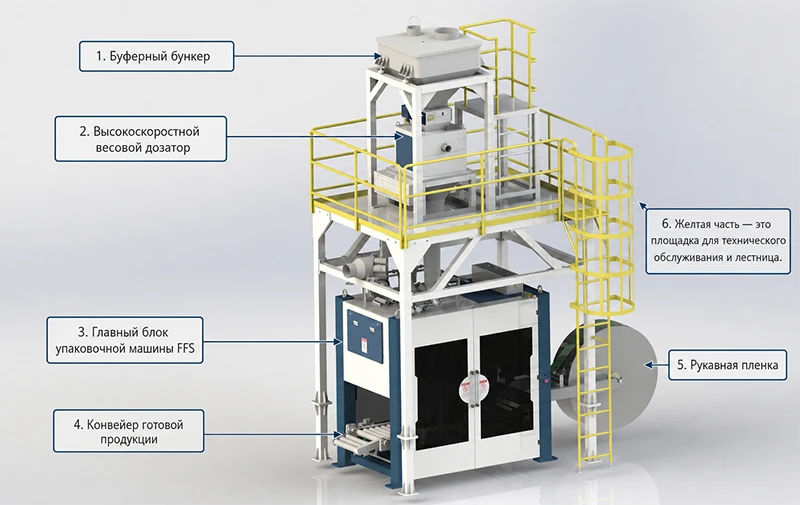
| Image evidence | What it proves | Why it matters for PP granules |
|---|---|---|
| Line section with conveyors and guarded frames | Stable module-to-module transfer | Keeps product movement consistent during filling and discharge |
| Inclined conveyor and elevated platform | Clear operator access and elevation control | Reduces crowding around the bagging area and improves service access |
| Robot palletizing station | Clean end-of-line automation path | Helps the packed bags leave the line without manual stacking pressure |
| Annotated machine diagram | Visible control, film handling, and service points | Makes the process easier to understand, maintain, and standardize |
Need a PP granule packing line that stays steady in real production?
If you are planning a new line for PP granules, BPM can help you match the hopper feed, transfer layout, service access, and end-of-line handling to the way your workshop actually runs.
Talk to BPM about your FFS line English
 Русский