
How a Stainless Steel Powder Packaging Line Prevents Bag Twist Before Sewing
In a 25 kg powder bagging line, the last meter matters. Mipline keeps the bag straight, protected, and easier to hand off before sewing, so dairy powder, flour, starch, and other dry powder plants spend less time fixing crooked bags by hand.
When the bag arrives skewed, the sewing station pays for it
A powder plant does not usually lose time in the filling step itself. The real problem appears after discharge, when a filled bag twists, sags, or drifts off center before it reaches the sewing head. Operators then straighten each bag manually, one by one, and the line slows down every time a bag comes in crooked.
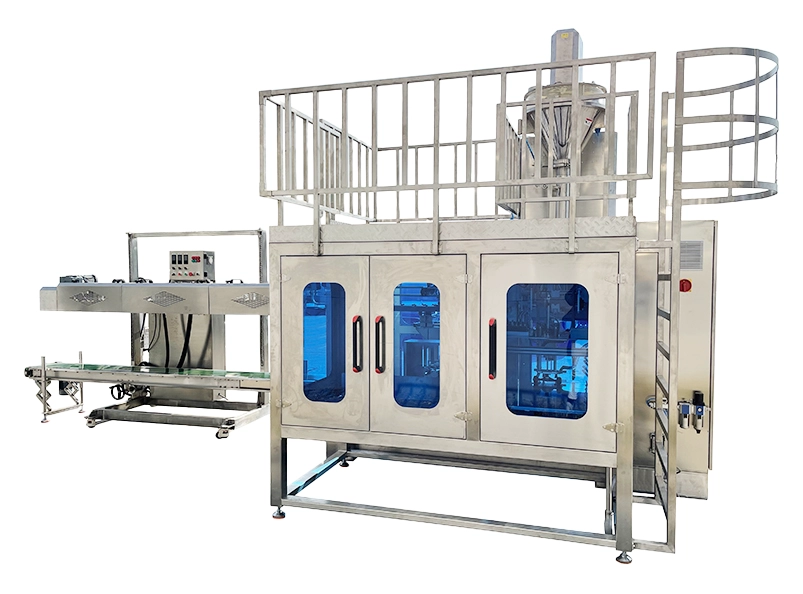
That is why the visible evidence on Mipline matters. The enclosed stainless steel bagging station, the bag magazine conveyor, the blue inspection windows, and the guided transfer path all point to the same goal: keep the bag controlled from the handoff point to the sewing point, not just filled.
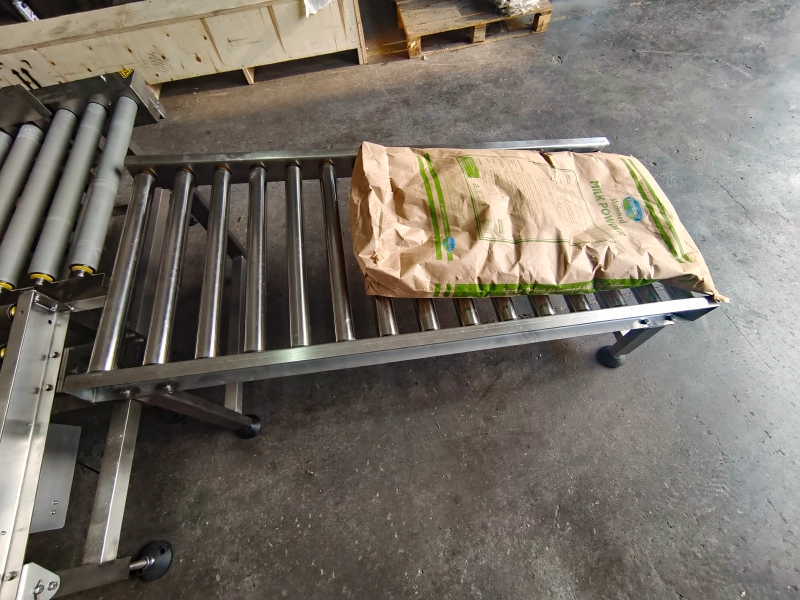
Manual straightening near the sewing station creates unstable flow, more operator touchpoints, and a greater chance that the bag mouth reaches the sewing head skewed.
Why Mipline fits dry powder lines better
Mipline is built as an automatic powder packaging and bagging line for industrial bags, especially 25 kg kraft paper or woven bags. That product definition already tells us what the line is trying to solve: not only filling, but also stable bag handoff before sewing, cleaner alignment, and less manual correction at the end of the line.
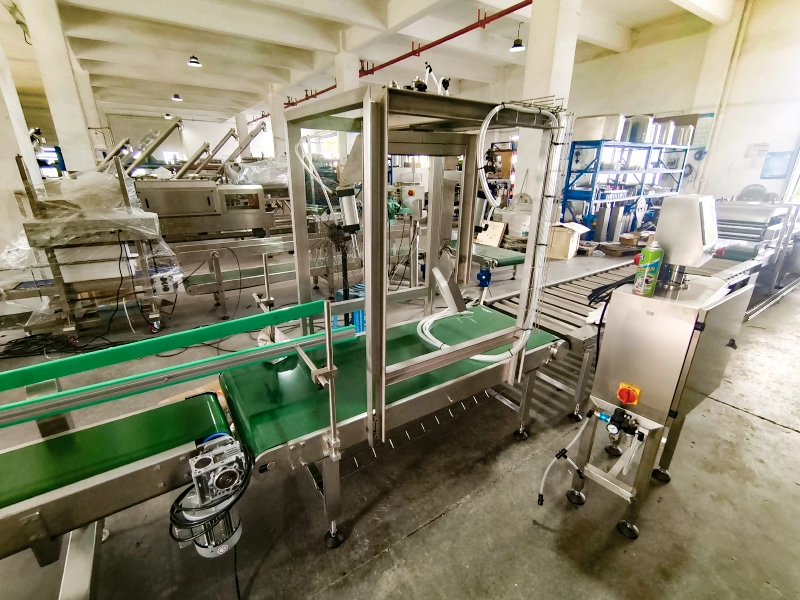
The machine architecture supports that intent. A stainless steel enclosed bagging station protects the working area. A bag magazine conveyor feeds bags in sequence. Green transfer conveyors and roller conveyor sections move the filled bag in a guided way. Bag clamping helps keep the mouth controlled, while the handoff path before sewing or sealing reduces the chance of twist and collapse.
Engineering takeaway: if the bag is not kept square before sewing, the sewing head has to compensate for a bad arrival. Mipline reduces that risk by controlling the transfer geometry, not by hoping the operator fixes it later.
Structure evidence from the line itself
The photos show a real industrial layout, not a concept sketch. The enclosed bagging station uses stainless steel guarding and blue inspection windows, which is a practical combination for visibility and maintenance access. The transfer sections show green belt movement, roller support, and adjustable guides. Those details matter because dry powder bags need a stable path, not a rough drop.
For a dairy powder plant, flour line, or starch powder line, this kind of structure solves three common production pain points: the bag stays aligned, the bag mouth stays easier to present to the sewing unit, and the end of the line becomes less dependent on hand correction. The result is a cleaner transfer between filling, conveying, and sewing.
| Visible evidence | What it does | Buyer problem solved | Result on the line |
|---|---|---|---|
| Blue inspection windows | Let operators watch the working zone without opening the enclosure | Safer access and better maintenance visibility | More controlled operation |
| Bag magazine conveyor | Feeds bags in an orderly sequence | Less manual handling at the intake | Steadier bag flow |
| Roller conveyor and green transfer belt | Moves filled bags through a guided handoff path | Bag twist and collapse before sewing | Cleaner bag alignment |
| Bag clamping and guide frame | Controls the bag mouth and body position | Skewed arrival at the sewing head | More stable sewing handoff |
What the buyer gets in the end
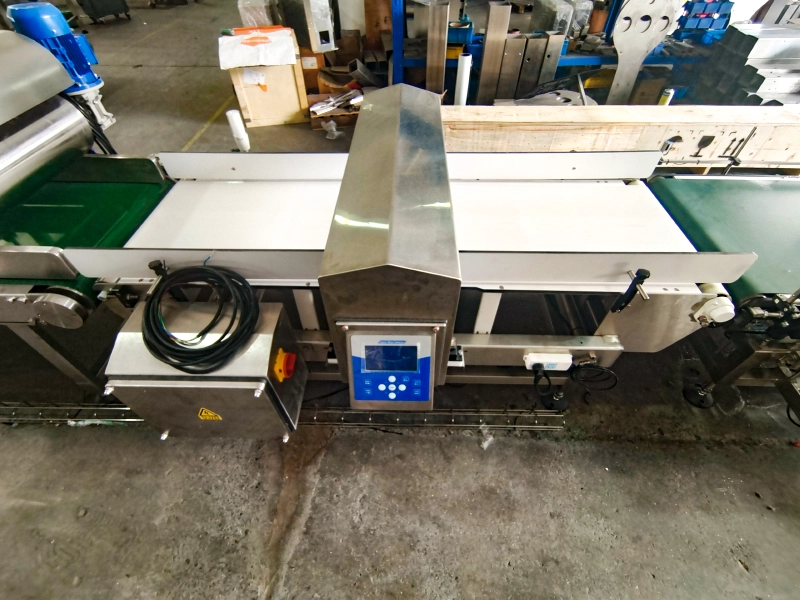
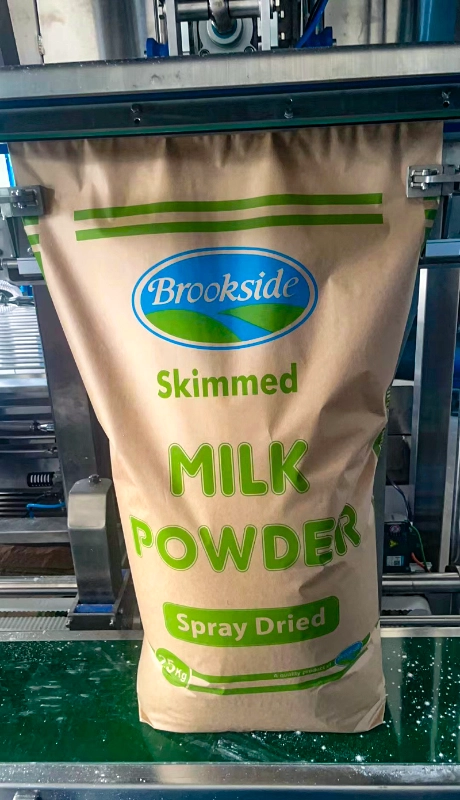
Instead of a filled bag that arrives twisted and needs to be straightened by hand, the line delivers a cleaner handoff before sewing, a steadier bag path, and a more consistent 25 kg powder bagging operation. That is the practical result of using a stainless steel powder packaging line designed around transfer control, not just filling speed.
Discuss your powder bagging line English
 Русский