
Automatic Packaging Line for Bulk Products: Cleaner Handoff and Steadier Dispatch
For a workshop that needs an automatic line for bulk product bagging, the real job is not only filling bags. It is keeping the handoff clean, the weighing stable, the closure unit aligned, and the outfeed moving without repeated manual correction.
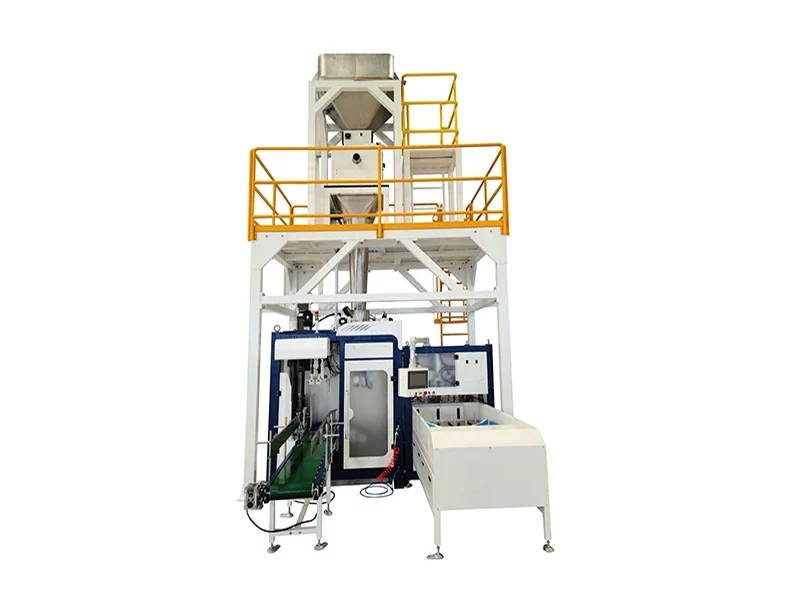
Where this line fits in a bulk-products workshop
Most customers come to this kind of project after the old setup starts creating the same complaints every day: operators are chasing bag alignment, the discharge point is too low or too cramped, and pallet flow slows down as soon as the team has to recover from one bad fill. In that situation, the line must do more than package material. It must organize the work area.
That is why the elevated steel platform, hopper, inclined conveyor, and safety railings matter. The platform gives the machine a clean working height, the hopper creates a steady feed point, and the inclined conveyor reduces the amount of material handling between upstream storage and the bagging station. For bulk product workshops, that layout is often the difference between a line that looks busy and a line that actually stays steady.
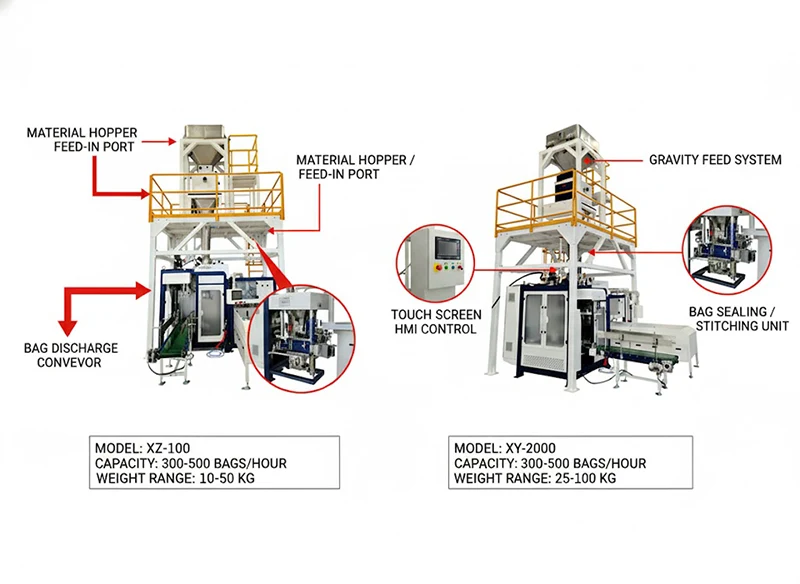
When the filling point, bag clamp, and discharge conveyor are not coordinated, the operator ends up doing the machine’s job by hand. That creates dust, slower output, and more rejected sacks at the end of the shift.
Why this automatic packaging line matches the job
The machine structure shown here is built to reduce that handwork. Hopper feed and gravity dosing keep the material moving in a controlled way. The HMI touchscreen gives the operator one place to manage the job instead of walking around the machine. The bag sealing and stitching unit, together with the outfeed conveyor, helps the finished sack leave the station in a cleaner direction instead of twisting or dropping awkwardly.
For bulk product packaging, that matters because the result is not only a full bag. The result is a bag that can be transferred, stacked, and dispatched with less rework. In other words, the packaging line is solving the workshop problem, not just the weighing problem.
What the structure proves: the swing-arm HMI, enclosed platform, and guided outfeed path show that the line is designed for repeatable operator control and steadier sack transfer, not for single-point filling alone.
Structure, parameters, and image evidence
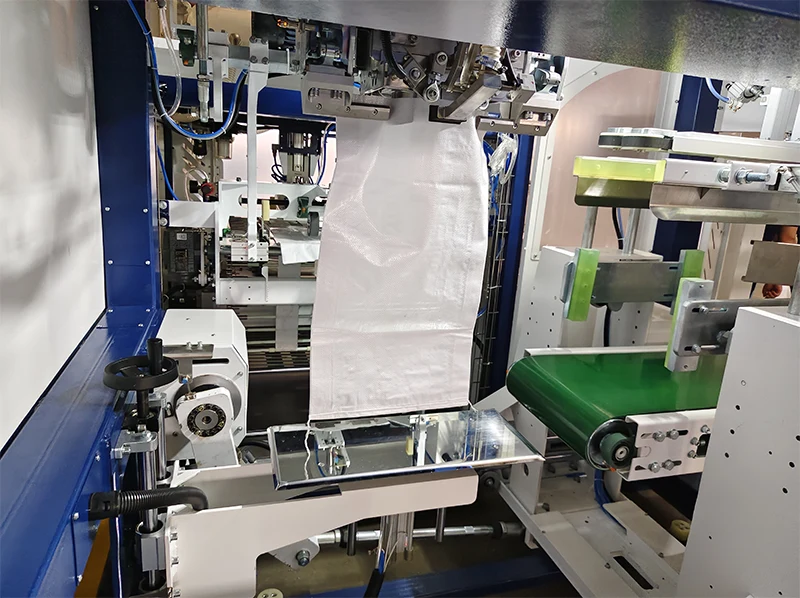
One reason buyers ask for technical images is simple: a bagging line can sound similar on paper while behaving very differently on the floor. The isometric machine view shows the panel position, the platform layout, and the outfeed conveyor relationship. The internal close-up shows how the vacuum suction cups, bag placer, and green belt cooperate at the critical moment when the bag is being picked, held, and moved into position.
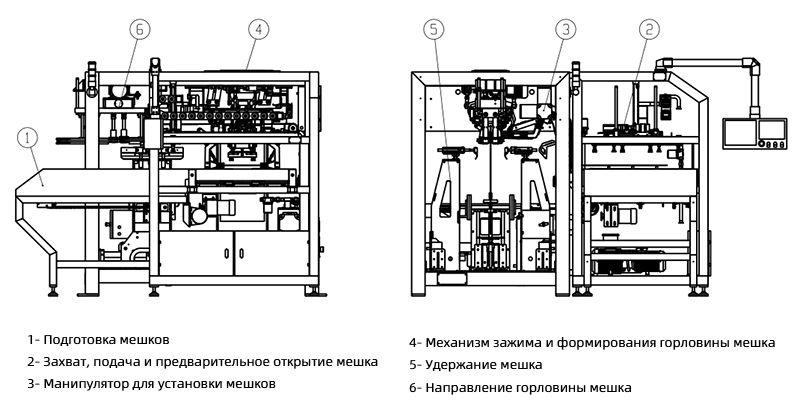
The CAD blueprint adds another layer of proof. It shows the bag magazine, robot arm, and component arrangement in a way that helps the team judge service access, motion path, and installation logic. Together, these images support the same conclusion: the line is designed for stable bag handoff, practical maintenance access, and cleaner dispatch flow.
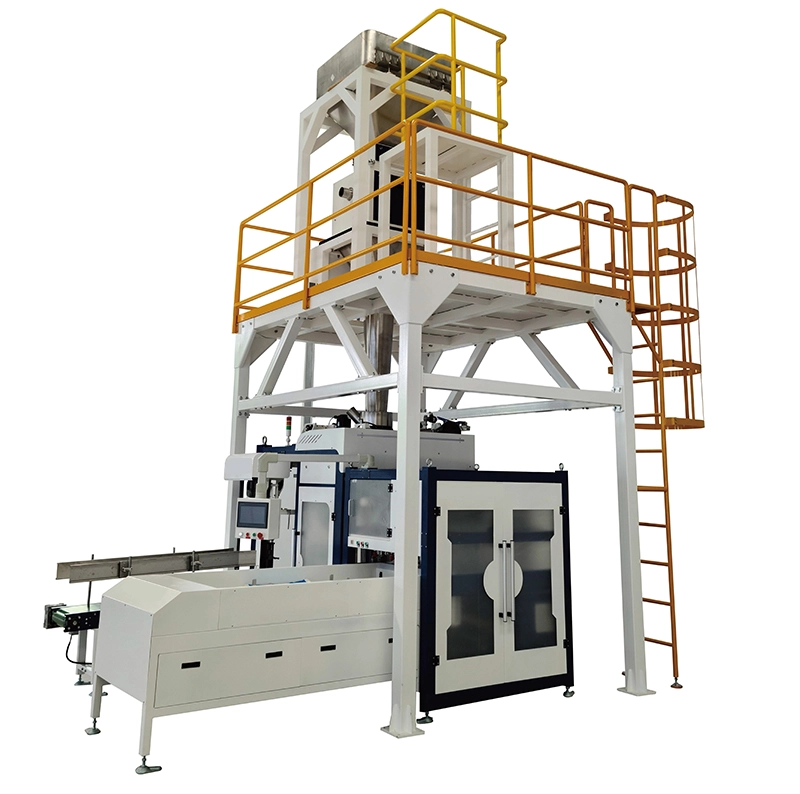
| Image evidence | What it supports | Operational result |
|---|---|---|
| Elevated platform + hopper + inclined conveyor | Cleaner feed routing and better workspace organization | Less manual handling before packaging starts |
| HMI touchscreen + gravity dosing + stitching unit | Single-point control over filling and closure | More stable bagging with fewer alignment errors |
| Vacuum suction cups + bag placer + CAD layout | Evidence of controlled motion and service access | Steadier dispatch and easier maintenance planning |
When a workshop wants an automatic packaging line that can handle bulk products day after day, the target is usually the same: fewer interruptions, cleaner bag transfer, and a more predictable pallet flow. This ppline setup is aimed at exactly that result.
Need a bulk-product packaging line that stays steadier on the floor?
If you are comparing an automatic packaging line, a granule bagging line, or a bulk-product filling line for woven sacks, start with the real workshop problem: feed stability, bag handoff, closure quality, and outfeed speed. That is the level where this design is meant to help.
Talk to BPM about the right line layout English
 Русский