
Pellet Packaging Line for Woven Sacks: Cleaner Handoff and Steadier Pallet Flow
BPMpack blog
A pellet packaging line only looks simple from a distance. In a real workshop, the difference between steady dispatch and daily bottlenecks usually comes down to how the hopper feeds, how the bag is guided, how the scale is set, and how cleanly the product reaches the pallet.
For a pellet producer shipping 25 kg woven sacks, the old setup is usually the same story: manual bagging slows the shift down, bag mouths get misaligned, the scale needs constant correction, and the outfeed area becomes a congestion point. That is where a dedicated pellet packaging line changes the workflow from reactive handling to controlled flow.
The point is not just to package more bags. The point is to keep the full path stable: feed, weigh, bag, discharge, and palletize. When each step is physically supported by the machine structure, the line becomes easier to run, easier to clean, and easier to keep accurate over long shifts.
What usually goes wrong in a pellet bagging workshop
Operators usually feel the problem first, but the root cause is mechanical. A loose bag handoff creates spillage. An unstable frame creates drift at the weighing point. Poor access around the cabinet makes maintenance slower. A weak discharge layout forces sacks to pile up in the wrong place.
That is why a proper bulk product packing line must be treated as a flow system, not just a filling machine. If the workshop wants steadier dispatch, the machine must support the operator instead of asking the operator to fix the machine every hour.
Why this pellet packaging line fits the job
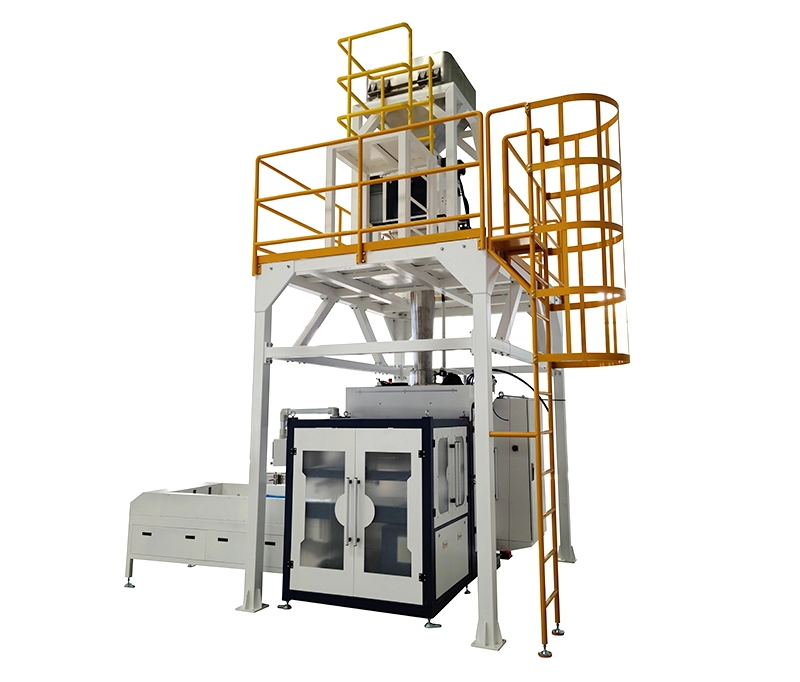
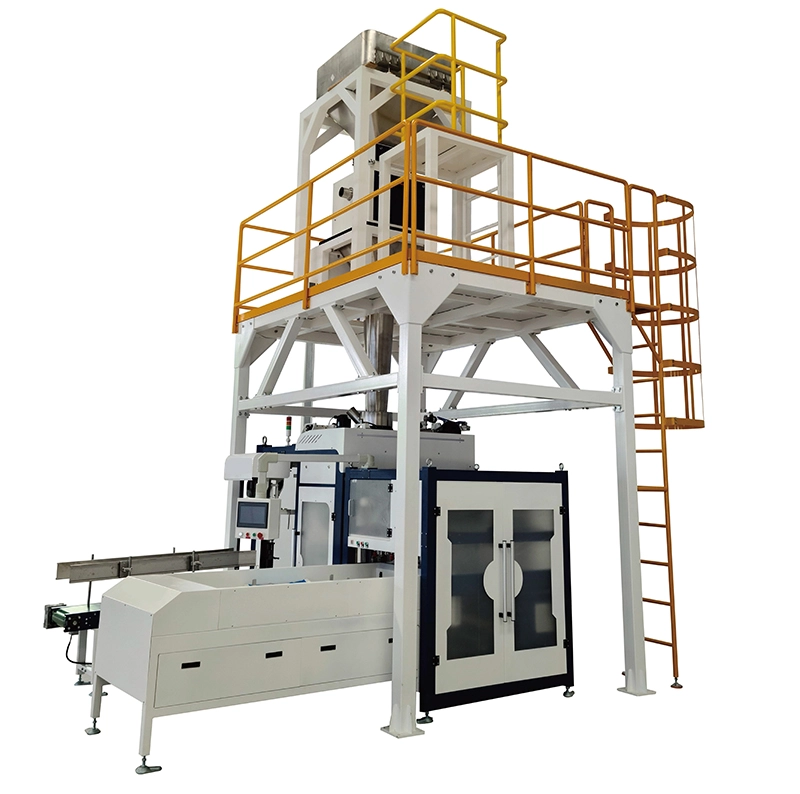
The selected machine layout fits pellet work because it combines a rigid steel structure with a clear operator interface and an organized outfeed path. The HMI sits on a swing arm, so the setting point is visible and close to the working zone. The outfeed conveyor keeps the filled sack moving instead of leaving it in the filling area. That helps reduce re-handling and keeps the floor around the bagging point cleaner.
For buyers comparing bulk material bagging equipment or a bagging machine for loose products, the practical question is not the catalog name. The real question is whether the line keeps the bag mouth, the weighing sequence, and the discharge path under control during real production. This line is built around that question.
What the images prove about the line
The white-background product photo shows a tower-style steel frame, protective ladder, and enclosed cabinet. This matters because pellet lines need structure stability more than decorative covers.
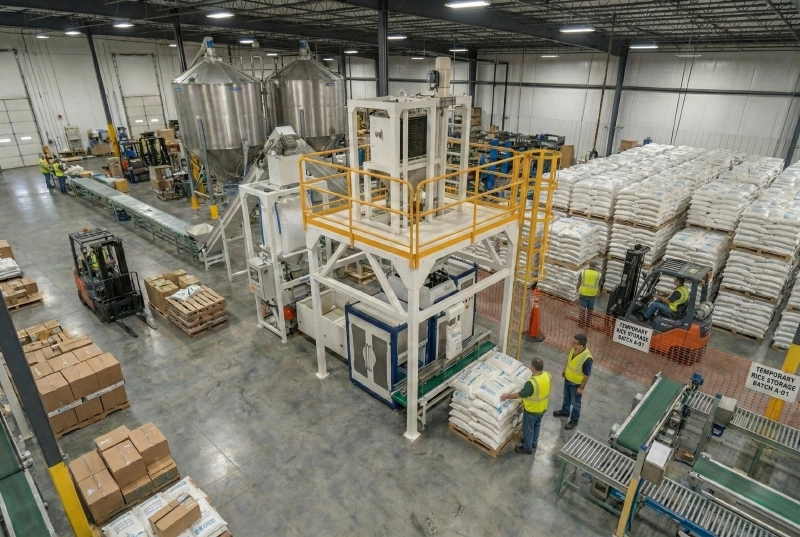
The high-angle plant shot shows twin silos, conveyors, and stacked pallets. That proves the line is not isolated equipment; it is part of a continuous dispatch route from feed point to outbound storage.
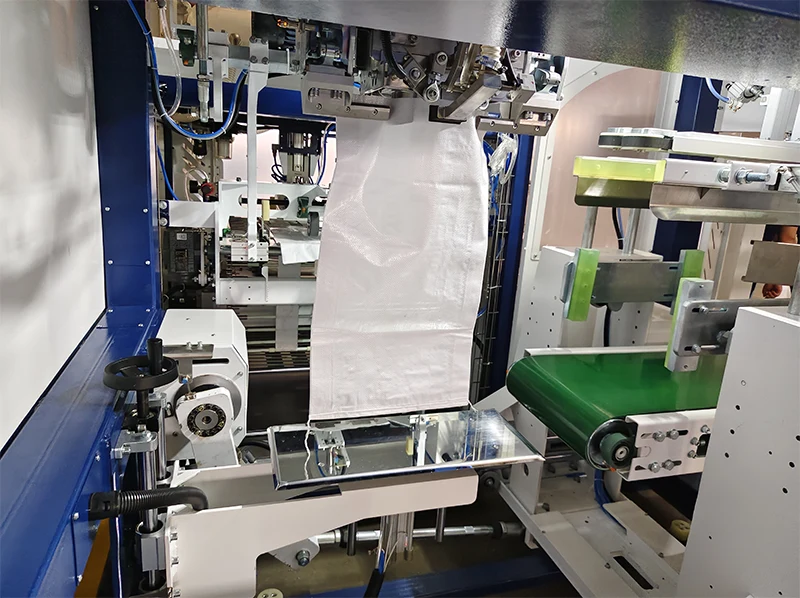
The close-up image shows vacuum suction cups, a bag placer, and a woven polypropylene sack. This is the detail that decides whether the bag mouth lands neatly or needs manual correction.
Result: steadier dispatch, cleaner handoff, less manual correction
For a pellet workshop, the best result is not a flashy machine video. It is a line that keeps moving, keeps the sack path predictable, and keeps the pallet area clear. That is the real value of a well-built bulk product packing machine and the reason buyers look for a bagging and packaging solution that can survive daily production, not just a demo.
If the target is steadier output, fewer bag-handling errors, and a more orderly warehouse exit, the right pellet packaging line should be judged by structure, control, and discharge flow together.
Request a pellet packaging solution review English
 Русский