
How a vertical packaging machine and secondary bagging line solve salt and powder handling at scale
For bulk products such as salt, powders, and other free-flowing materials, the packaging problem is rarely the film alone. The real pressure sits in dosing accuracy, stable transfer, hygienic design, and the ability to move primary packs into a stronger secondary bag without crushing, leakage, or slow changeovers.
Scenario: one line, two packaging stages
A typical customer need starts with a stable primary pack: a vertical packaging machine for bulk products, an auger dosing hopper, and a control system that can keep fill weight under control. After that, the plant often still needs automated secondary packaging to group smaller packs into woven PP sacks or film overpacks for shipping and warehouse handling.
When the old setup depends on manual bag handling, the line becomes sensitive to operator skill, inconsistent output, and product loss. That is why the machine package must cover both the primary filling point and the downstream transfer logic, not just the sealing jaw.
Manual transfer between filling, checking, and secondary packing creates unstable throughput, more rework, and avoidable contamination risk.
Why this bibpu configuration fits the job
The bibpu configuration addresses the problem from the feed zone onward. The vertical packaging machine section handles bulk-product dosing, film control, and sealing stability. The secondary packaging section then groups finished packs into a larger container or sack, which is a practical path for salt, powders, and other granular materials that must move safely through warehouse and logistics steps.
The product logic is simple: use the vertical wrapper for accurate primary packs, then use automated secondary packaging to protect those packs during palletizing, transport, and storage. The result is less manual contact and a cleaner route from machine output to shipping-ready units.
Expert note: For bulk products, the most important part of the line is not a single machine rating. It is whether the dosing head, guide surfaces, sealing zone, and downstream bagging station work as one controlled flow.
Structure evidence from the machine and line images
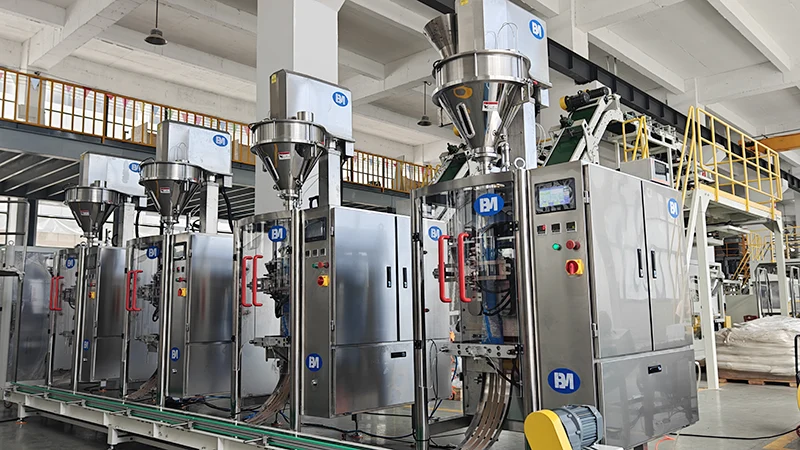
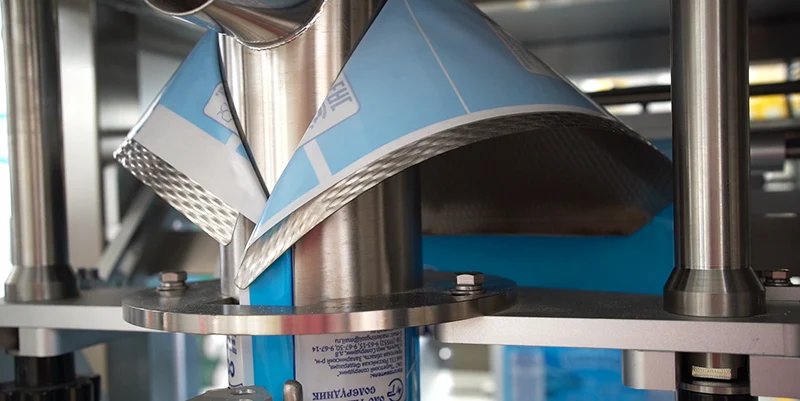
The image set shows the key evidence clearly: a row of vertical form fill seal machines with stainless hoppers for continuous filling, a dimpled forming shoulder to reduce film sticking, and a secondary bagging station that loads refined salt packets into a woven PP sack. Together, these images support the same process story: stable primary packs first, then controlled secondary packaging.
For customers comparing packaging machine options, this is where the details matter. Hygienic design, dosing stability, film tracking, and safe transfer geometry are what keep the line running. The system is suitable for bulk-product packaging machine projects where consistency is more important than a one-off demo speed number.
| Stage | Visible evidence | Business effect |
|---|---|---|
| Primary filling | Four VFFS machines with stainless hoppers | Continuous filling for bulk products |
| Film control | Dimpled forming shoulder | Less sticking and smoother bag formation |
| Secondary packaging | Packets loaded into woven PP sack | Better transport protection and handling |
Result: cleaner handling, steadier output, easier logistics
With the right packaging line for bulk products, the plant gets a more predictable route from dosing to final dispatch. That means better accuracy, less manual work, and a secondary packaging flow that matches warehouse reality instead of fighting it.
Request a packaging line proposal English
 Русский