
Mipline Powder Packaging Line for Cleaner Bag Handoff Before Sewing
For 25 kg milk powder, flour, starch, and other dry powders, the key challenge is not only filling the bag. The real issue is keeping every filled bag square, aligned, and stable before sewing. Mipline is built for that handoff.
The customer problem: good filling, bad bag handoff
In dry powder plants, the bag often looks fine at the filling point and then fails at the next step. The filled kraft paper bag twists, collapses, or arrives skewed at the sewing head. Operators then spend time straightening every bag by hand at the last meter of the line.
That creates three common problems: unstable sewing, slower output, and inconsistent appearance on finished bags. For a milk powder packaging machine or a flour bagging line, the weak point is often the transfer between filling, conveying, clamping, and sewing.
If the bag mouth reaches the sewing station out of square, the sewing head works harder, the operator gets more involved, and the line loses repeatability. The goal is stable bag transfer before sewing, not manual correction after the fact.
Why Mipline fits dry powder bagging work
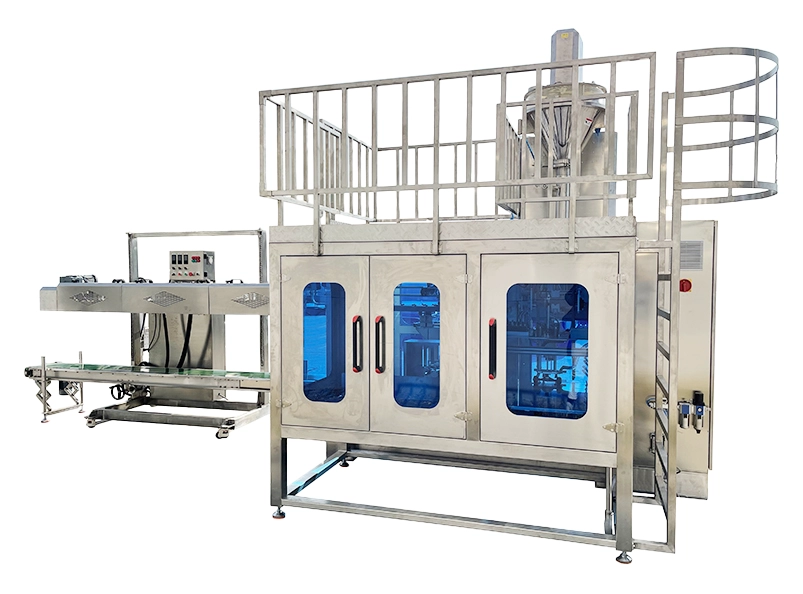
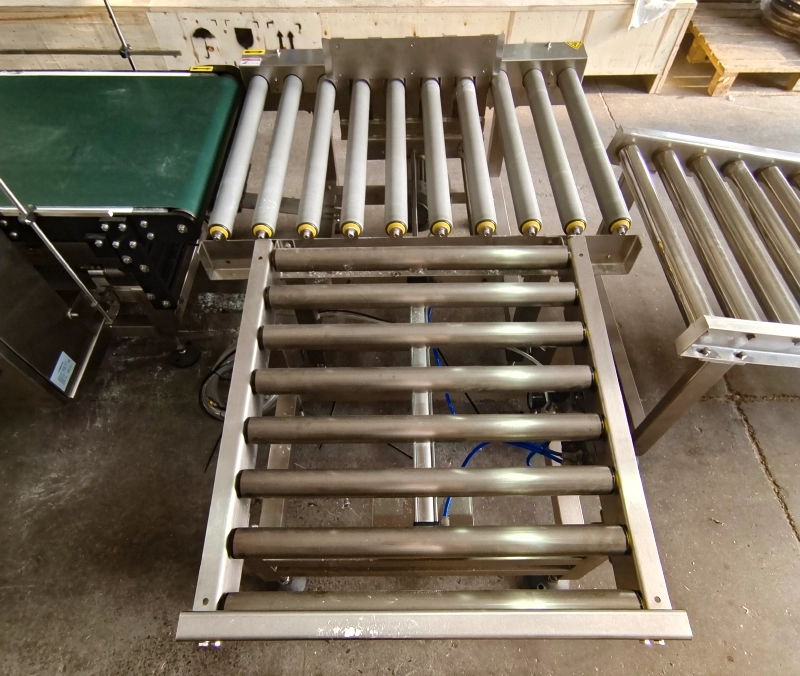
Mipline is an automatic powder packaging and bagging line designed for industrial bags, especially 25 kg kraft paper or woven bags. The visible equipment structure matches the problem: an enclosed stainless steel bagging station, bag magazine conveyor, blue inspection windows, green transfer conveyors, roller conveyor sections, bag clamping, and a clear handoff path before sewing or sealing.
That structure helps the line keep bags straight, reduce manual bag straightening, and improve the handoff from filling to closure. In practice, this is the difference between a line that merely fills bags and a line that produces stable finished bags at production speed.
Engineering point: The transfer section is not decoration. It is the part that protects the bag shape, guides the bag mouth, and gives the sewing station a more consistent presentation.
What the structure and images show
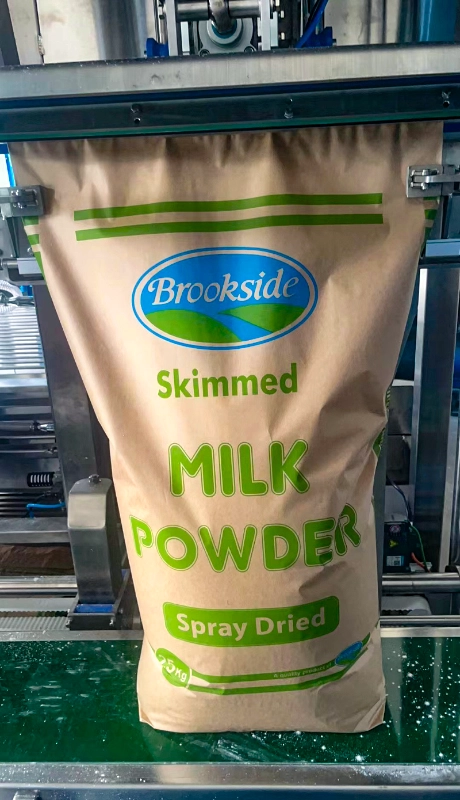
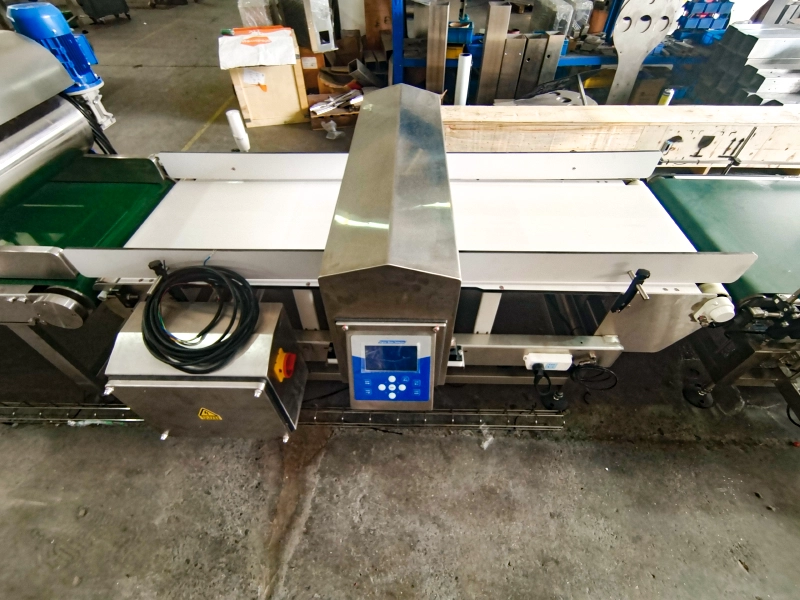
The photos show a real production layout, not a concept sketch. You can see the enclosed stainless steel bagging station, the conveyor interfaces, the clamp point, and the guided transfer path. The machine is built to keep bags square before sewing and to maintain a cleaner flow between stations.
For buyers in dairy powder, flour, starch, and other food powder plants, this matters because the line must stay clean, stable, and easy to maintain. The guarding and inspection windows also support safer operation and quicker access during service.
| Visible evidence | What it does | Buyer result |
|---|---|---|
| Stainless steel automatic bagging station with inspection windows | Provides an enclosed, serviceable bagging core | Cleaner layout and easier maintenance access |
| Roller conveyor transfer section | Keeps powder bags aligned during transfer | More stable sewing and less manual straightening |
| Bag clamp station with kraft paper milk powder bag | Holds the bag mouth in a controlled position | Better bag shape before closure |
| Twin-belt transfer conveyor with side guides | Supports guided bag handoff between stations | Cleaner flow from filling to sewing or sealing |
Result: straighter bags, steadier sewing, cleaner output
When the transfer section does its job, the line stops fighting the bag. The result is a more stable powder packaging line, less manual correction, and a better finished bag before sewing or sealing. That is the real value of Mipline in milk powder, flour, starch, and other dry powder applications.
Request a powder bagging line review English
 Русский