
Starch Packaging Line: zpacker Automatic Paper Bag Packing Machine for Dust Control
Starch packaging in food manufacturing
zpacker combines automatic paper bag feeding, screw dosing, and conveyor handoff to move starch from open bag to finished pack with less dust, less manual handling, and steadier output.
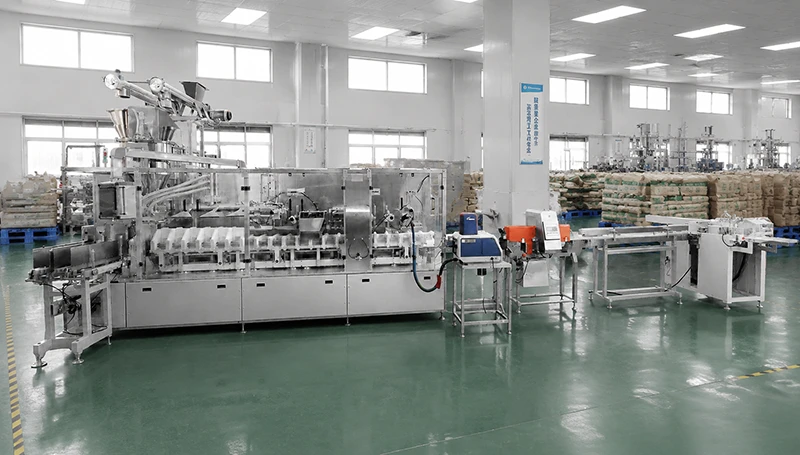
For a starch producer, the real bottleneck is usually not the raw material itself. The bottleneck is the way powder behaves around open bags, operators, and downstream transport. If the bag does not open cleanly, the fill is not stable, and the discharge path is not organized, dust escapes and labor costs rise fast.
Where manual starch packing breaks down
Manual packing and semi-automatic backup stations usually create the same four problems: uneven dosing, open-bag dust, operator fatigue, and slow handoff to the next process. That is why starch packaging is rarely only a weighing problem. It is a line-control problem.
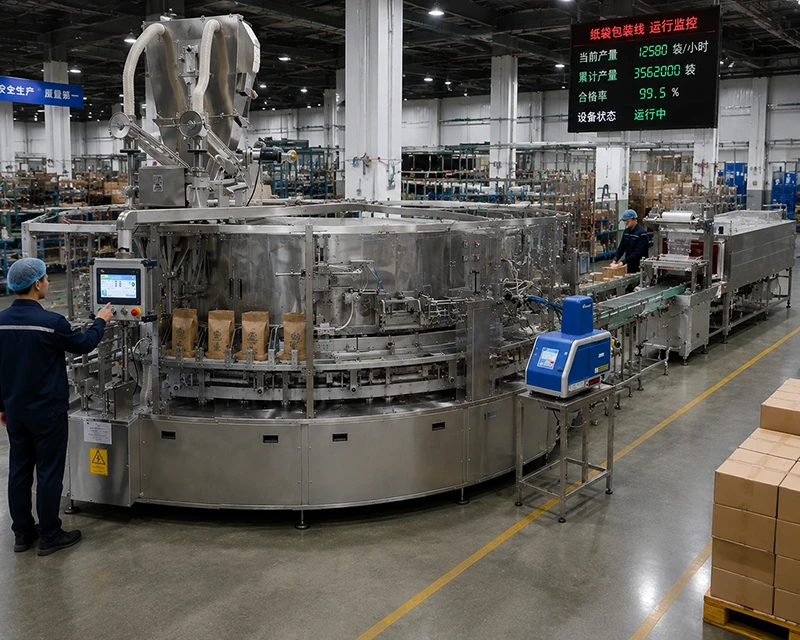
In starch work, the operator should supervise the process, not carry the process. When the line still depends on manual bag holding, loose filling, or repeated correction, the hidden cost is dust loss and rework.
Why zpacker fits starch in kraft paper bags
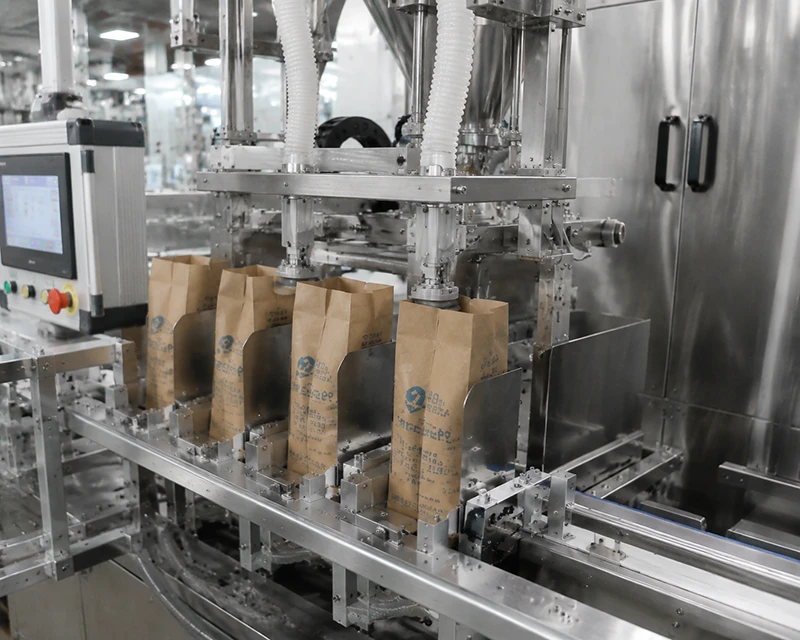
zpacker is built for pre-made paper bags and kraft bags, including side-gusset formats. The line starts with automatic bag feeding and opening, so the bag is placed, clamped, and stabilized before the powder moves. That matters because starch is light, airborne, and easy to scatter if the opening step is weak.
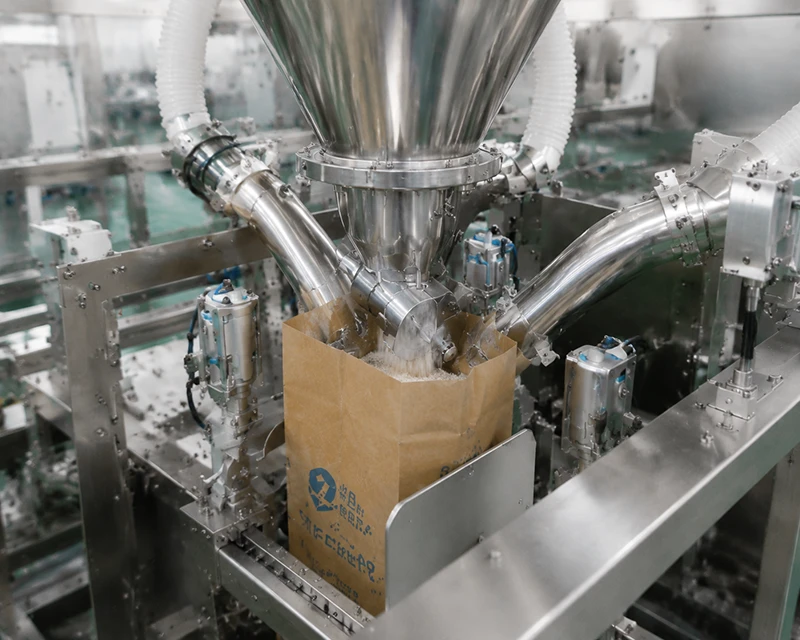
After bag positioning, the screw dosing station meters the powder into the open kraft bag. The image shows a conical hopper, an inclined auger outlet, and the open bag in one working area, which is exactly what a starch line needs: a short, direct material path and fewer chances for dust to drift away.
The touchscreen interface and stainless frame visible in the line also point to a practical operating style: the machine is meant to be set once, watched clearly, and kept in a repeatable rhythm. In a food plant, that rhythm is what helps reduce labor pressure and keep the line moving.
What the image evidence says about the line
| Image evidence | Visible structure | Operational effect for starch packaging |
|---|---|---|
| Full workshop line | Horizontal bagging machine, upper feeding system, conveyor, bag handling area | Shows a continuous starch packaging flow from feed to discharge |
| Bag opening station | Bag clamps, stainless frame, touchscreen, kraft bags | Stabilizes the bag before filling and reduces dust escape at the opening step |
| Screw dosing station | Conical hopper, inclined auger outlet, open paper bag | Supports controlled powder delivery into the bag |
| Factory floor installation | Blue touchscreen, hopper, upper piping, surrounding production line | Shows the machine can sit inside a real food-production workflow |
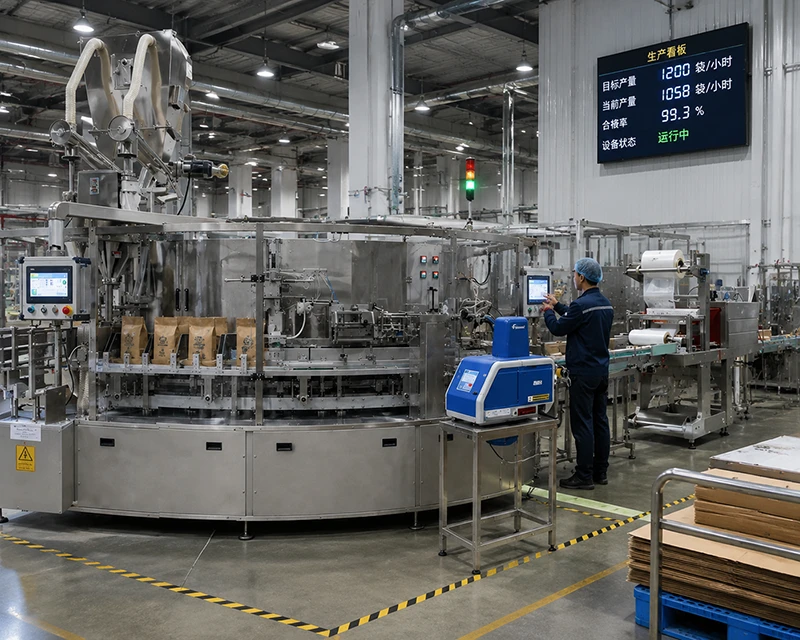
That matters for starch because a packing line must handle the whole path: bag supply, filling, discharge, and handoff to the next unit. When those steps are integrated, the result is a cleaner plant area, lower labor demand, and a more predictable bagging rhythm.
Need a starch packaging line layout?
Share your bag type, target fill weight, and expected output. We can map the feeding, dosing, and discharge path around your flour plant or food production line and show where zpacker fits best.
Request a line review English
 Русский