
Agrobalt Peat: Automatic Valve Bag Packing for Large 1-Ton Batches
For peat producers planning large one-ton batches, VPLINE connects automatic bag loading, air-assisted filling, valve sealing, weight checking and palletizing into one engineered line for cleaner, more controlled peat packing.
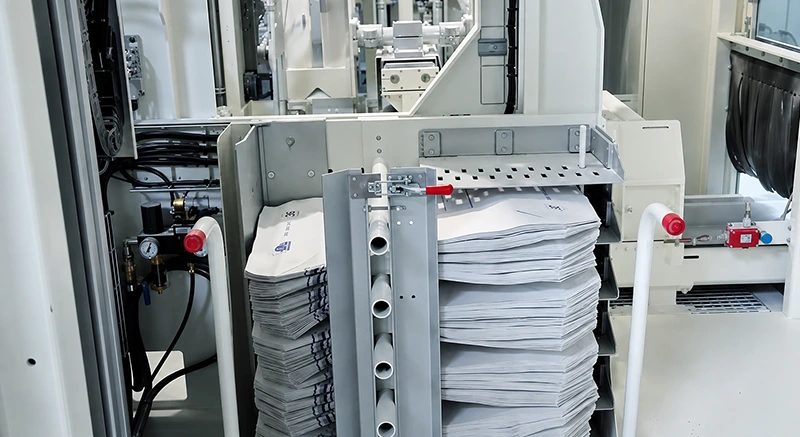
Large-batch peat packing starts with the real production scene
A peat producer handling large orders needs more than a standalone packing machine. The practical requirement is usually a repeatable route from the bag magazine to the finished pallet: operators load empty valve bags, the line opens and positions each bag, the filler meters the material, and the downstream equipment prepares the product for storage or dispatch. This is the production context behind a request for automatic peat packing in large batches.
VPLINE is configured for powder and tested fine-particle materials that can be conveyed by air. A typical demonstration uses 25 kg valve bags, while the documented filling range is 10–50 kg and must be confirmed against peat bulk density, flowability, bag construction and the required valve dimensions. A one-ton order is therefore treated as a batch or dispatch quantity—not as a promise that one bag weighs one tonne.
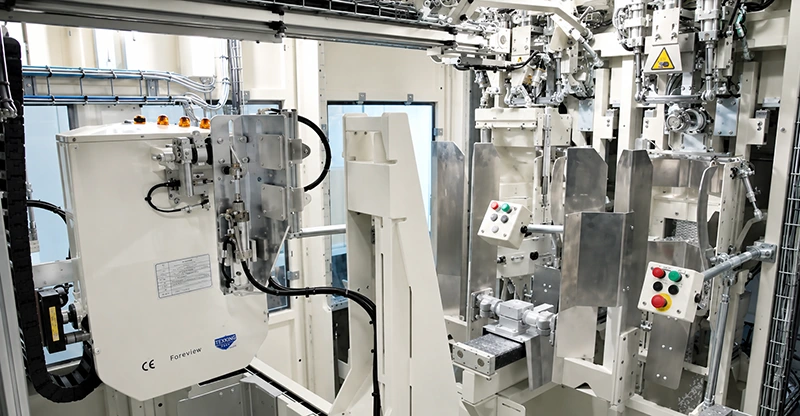
Manual filling and stitched open bags expose the operation to dust at the filling interface, variable bag placement and heavy handling work. Air remaining in a filled bag can also make the pack unstable, so a pallet may lean, shift or suffer transport damage. Adding an isolated bagging machine does not solve the inspection, shaping and pallet-handling gaps that follow it.
Why VPLINE fits dust-controlled peat and dry-bulk packaging
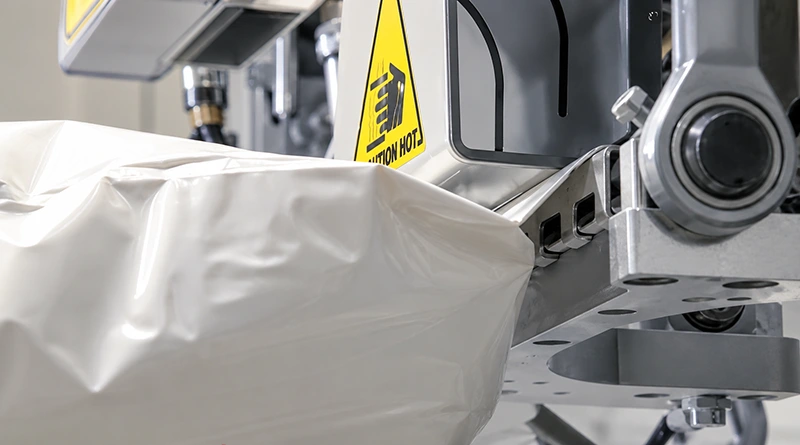
The line uses an expanding valve nozzle with separate product and return-air paths. When the peat and valve bag are correctly tested, the nozzle creates a more enclosed filling interface than an open bag, while the air-assisted process supports continuous filling of suitable fine particles. The contact parts are documented as 304 stainless steel; the remaining frame is carbon steel. Required plant conditions include stable compressed air at 0.5–0.7 MPa and an AC 380 V, 50 Hz, 15 kW packaging machine supply.
At the bag mouth, a 20–40 kHz ultrasonic sealing module is available for the valve area. The actual seal depends on the bag’s paper, woven, laminated or composite construction, its sealing layer and the amount of dust at the interface, so a material test remains part of the project. This distinction matters when selecting equipment for powder packing in valve bags rather than assuming that every peat sack is interchangeable.
Engineering note. VPLINE is not a VFFS, Doypack or Flow Pack machine. It handles pre-made valve bags; the correct design depends on peat properties, bag permeability, valve tolerance, air supply, available exhaust routing and the required changeover frequency.
From bag loading to a transport-ready pallet
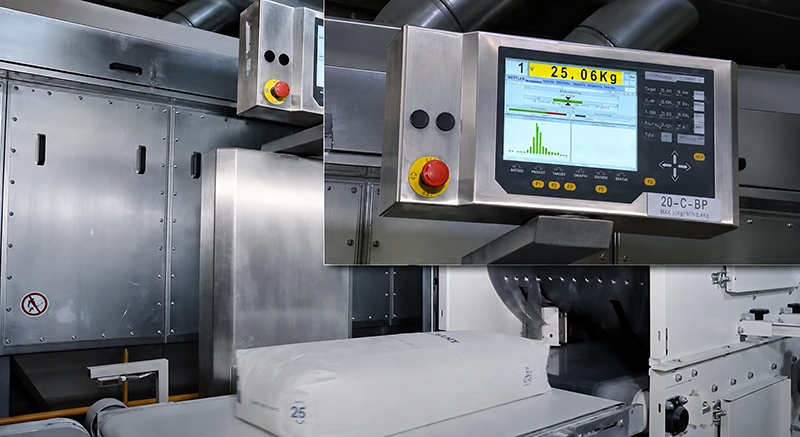
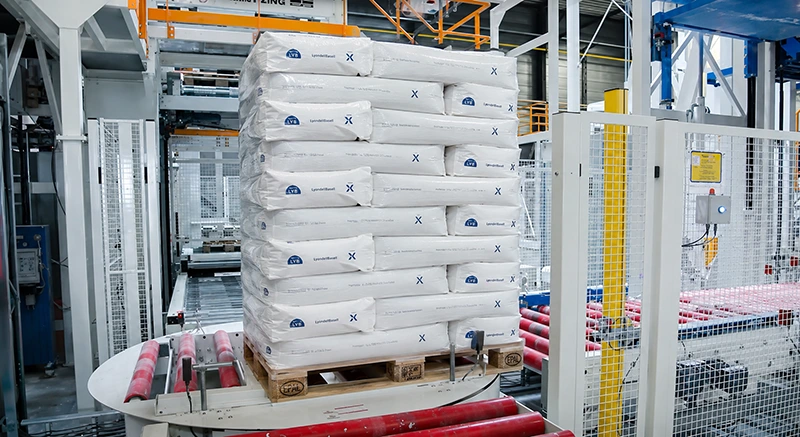
The visible modules show how the system closes the gaps left by a manual line. A movable bag magazine supplies stacked empty bags to the automatic loader. The gripper and pneumatic opening arms position the valve bag on the filling nozzle. After filling and ultrasonic sealing, the product can pass through a checkweigher and metal detector before negative-pressure shaping, palletizing and stretch-hood or shrink-film protection. The final palletized bags can then move through the finished-goods warehouse with less manual intervention.
The documented reference speed is 5–12 bags per minute, influenced by bulk density and other operating conditions. Accuracy is listed as ±1–2‰, but the test method and material conditions must be fixed before it becomes a project commitment. Pallet layers are configured by project; the video shows three bags per layer with rotation and shaping. Layout planning typically allows about 15–20 m of straight line, 4–6 m width and at least about 4.5 m clear height, subject to the final equipment arrangement.
| Project point | VPLINE reference or design check | Why it matters for peat |
|---|---|---|
| Bag and batch | Typical demonstration 25 kg; documented range 10–50 kg | One tonne is planned as a batch quantity and must be matched to bag count and dispatch workflow. |
| Filling interface | Expanding valve nozzle with product and return-air paths | Supports a more enclosed, dust-controlled interface when material and bag tests pass. |
| Quality gate | Checkweigher, rejection logic and metal detection can be integrated | Helps prevent overweight, underweight or contaminated bags from reaching the pallet. |
| Final handling | Negative-pressure shaping, robot palletizer and film protection | Produces a more compact, stable pallet for warehouse storage and transport. |
| Site conditions | 0.5–0.7 MPa air; AC 380 V, 50 Hz, 15 kW packaging machine | Utilities and exhaust routing must be confirmed during site engineering. |
Specify the peat before you buy the packing line
Send the material bulk density and flowability data, target bag weight, valve-bag samples, required one-ton batch workflow, air and power conditions, available height and desired pallet pattern. BPM can then confirm whether VPLINE is suitable for automatic valve bag packing, define the test plan and configure the inspection, shaping and palletizing modules around the actual site.
Discuss a peat packing line English
 Русский