
Cement Packing Line Price: What a 25 kg Valve-Bag System Includes
When a cement or dry-mix plant searches for a cement packing line price, the useful comparison is not the price of one filling machine. It is the cost and scope of an automatic valve bag packaging line: bag loading, pneumatic filling, ultrasonic valve sealing, quality checks, bag shaping, robotic palletizing and stretch-hood protection in one connected flow.
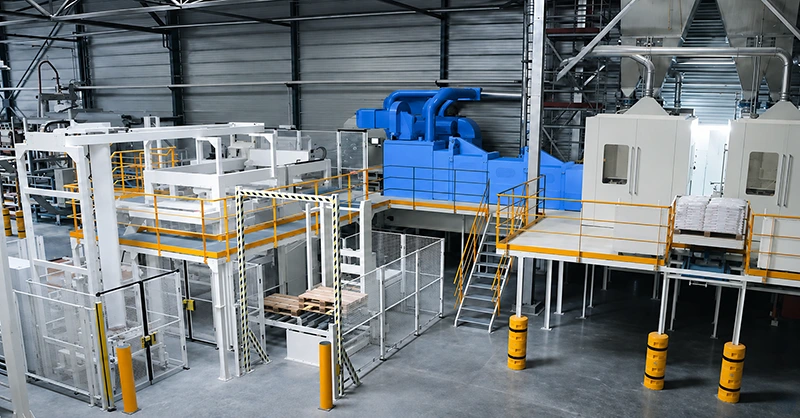
Why the old cement bagging method becomes expensive
A plant using manual or semi-automatic filling into open bags usually separates weighing, bag handling, sewing, conveying and palletizing. Operators must hold or position each bag, control the sewing step and correct unstable bags before stacking. For dusty cement and dry mixes, open filling also makes dust extraction more difficult. The result is variable cycle time, higher handling effort and more opportunities for an underweight, damaged or poorly closed bag to continue downstream.
That is why a cement packing line price should be assessed against the complete process. VPLINE is designed for pre-made valve bags, typically demonstrated with 25 kg bags. It is not a VFFS, Doypack or Flow Pack machine, and it is not a stand-alone screw weigher. The line is an engineering system whose final scope depends on material flowability, bag construction, valve tolerance, air supply and workshop layout.
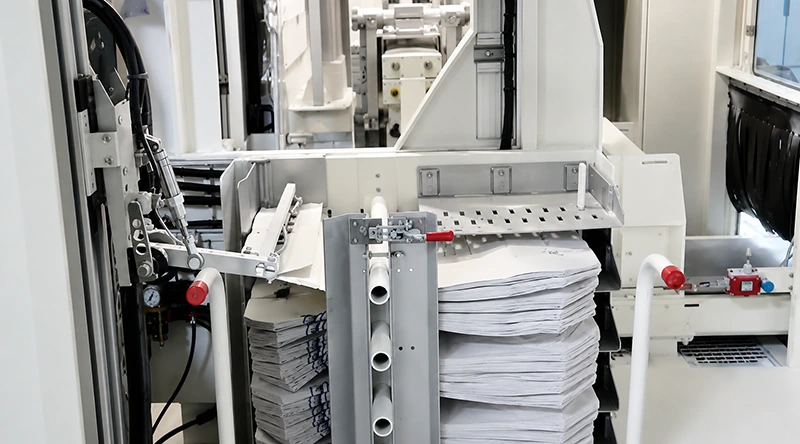
Does the quotation replace only manual filling, or does it close the whole route from an empty valve bag to a protected pallet ready for the finished-goods warehouse? A lower equipment price can leave bag feeding, inspection, pallet supply and final wrapping as manual operations.
Why VPLINE fits automatic cement packing in valve bags
VPLINE starts with a mobile bag magazine and an automatic pick-and-place head. Suction and pneumatic gripping elements take, open and position the bag before it is fitted over the filling nozzle. The expansion-type valve nozzle creates a controlled filling interface: the main passage feeds material while the return-air path supports air removal. With a material and bag combination that passes testing, this arrangement helps limit dust escape compared with an exposed open-bag operation.
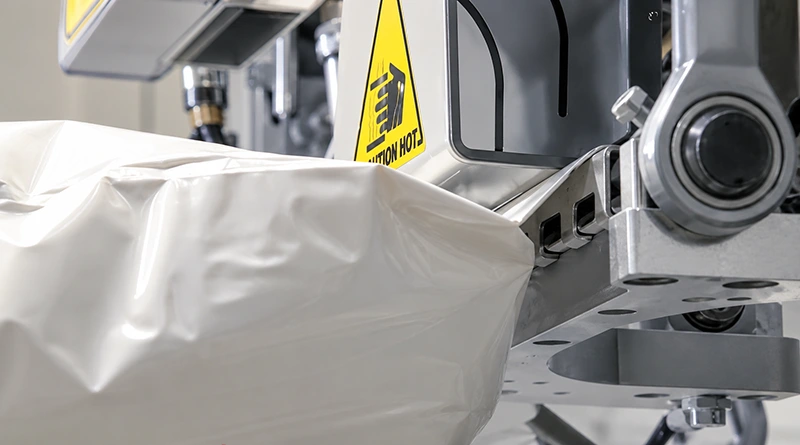
The filling station can be followed by ultrasonic sealing of the valve area. The documented operating principle uses vibration in the 20–40 kHz range to create interface heat; the actual bag laminate, paper layer, valve tolerance and dust condition must be tested before a sealing specification is confirmed. After filling, VPLINE connects checkweighing and metal detection, negative-pressure bag shaping, orientation, interleaved palletizing and stretch-hood protection. One project configuration can allow one bag-loading robot to alternate between two packing machines, but this is a layout option rather than a universal throughput promise.
Engineering point: the line price should be built from the material test, valve-bag specification, target bag weight, required 5–12 bags/min operating range, air quality and pressure stability, available height and the chosen pallet pattern—not from a generic machine label.
What is included in the technical comparison
For a dry-mix bagging line, each module answers a specific production question. The following reference points show what should be checked when comparing equipment for cement packing in valve bags and estimating the real project cost.
Contact parts are specified as 304 stainless steel, with carbon steel used for other structural areas. The documented electrical reference for the packing machine group is AC 380 V, 50 Hz and 15 kW. Air supply is listed at 0.5–0.7 MPa; dynamic stability and consumption require site verification. The stated 10–50 kg capability and the typical 10–25 kg operating focus are not a single guaranteed range, so the 25 kg cement bag format should be confirmed in the project specification.
| Plant requirement | VPLINE response to verify | Evidence or boundary |
|---|---|---|
| Dust-controlled filling | Expansion valve nozzle with feed and return-air paths | Requires suitable flowability, bag permeability and extraction route |
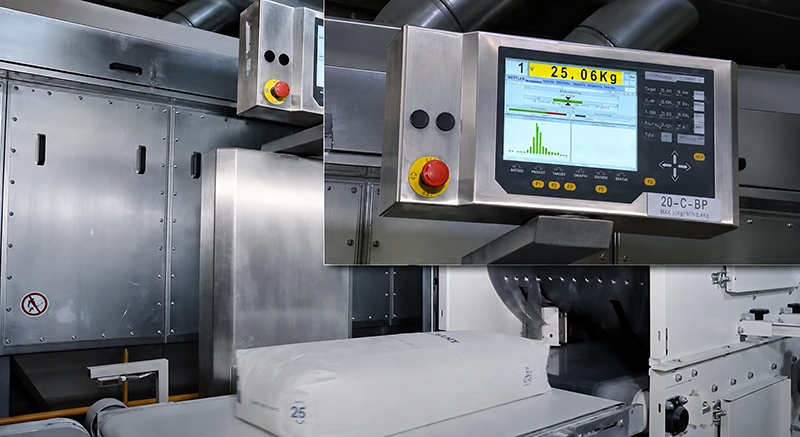
| Stable dispatch weight | In-line checkweigher before palletizing | Reference accuracy is ±1–2‰; test method and conditions must be agreed |
| Foreign-material control | Metal detector with reject logic | Detector performance depends on product and package conditions |
| Transport-ready pallets | Negative-pressure shaping, robot palletizer and stretch hood | Three bags per layer is shown; layer count and pallet type are project-specific |
| Workshop integration | Conveyors, pallet magazine and links to silo, air, forklift or AGV | Planning reference is about 15–20 m long, 4–6 m wide and 4.5 m+ clear height |
From filling to the finished-goods warehouse
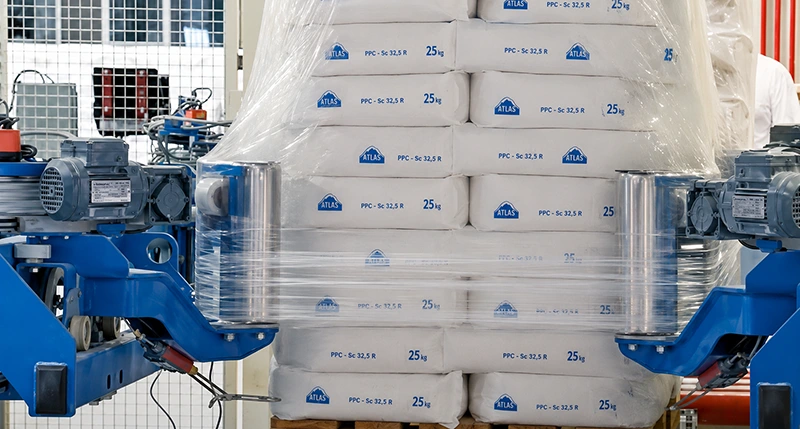
Once the filled bag passes the weight and metal-detection gates, negative-pressure shaping removes excess air and produces a flatter package for the palletizer. The robot can rotate and arrange bags into an interleaved pattern; the exact number of layers depends on bag behavior, pallet dimensions and stability requirements. Automatic pallet supply, roller conveying and stretch-hood wrapping then create a defined handover point for the finished-goods warehouse or long-distance dispatch.
This sequence changes the meaning of a cement packing line price. The purchasing team is not only buying a dosing head; it is deciding how much manual bag handling, rework, inspection risk and pallet protection remain after installation. Before requesting a final quotation, send the cement or dry-mix sample, target bag weight, valve-bag drawings, required output, pallet pattern, air data and available building dimensions. BPM can then define the appropriate automatic valve bag packing equipment without presenting untested limits as guarantees.
Request a project-based cement packing line price
Share your material, 25 kg valve-bag specification, target production, pallet pattern and site constraints. We will separate confirmed parameters from items requiring a filling, sealing and air-system test.
Discuss your VPLINE project English
 Русский