
Tomato Cubes Packaging: Is a Zpacker the Right Fit?
For tomato-cube production, the first question is not simply whether a packaging machine can fill a bag. The material shape, moisture, flow behaviour and premade bag format must match the process. Zpacker is built primarily as an automatic paper bag packing machine for flour and compatible powders; tomato cubes should therefore be treated as a test-led application rather than an assumed standard fit.
Start with the customer process, not the machine name
A tomato-processing plant may need to move diced tomato pieces from production into retail or food-service bags while keeping product shape, fill weight and sealing quality consistent. That requirement is different from the normal Zpacker application: 1 kg, 2 kg and 5 kg flour packing into premade paper bags, kraft bags or M-fold side-gusset bags. For tomato cubes packaging, that flour-focused baseline is the comparison reference.
That distinction matters because tomato cubes are not automatically equivalent to powder. Pieces can bridge in a hopper, behave differently in a screw dosing system and carry moisture into the sealing zone. Before specifying an automatic packaging line for tomato cubes packaging, the buyer should provide representative tomato cubes, target weights, bag samples, product temperature, moisture range, bulk density and the required rate. A material test is the correct next step; a catalogue assumption is not.
Manual filling can create variable weights, slow bag handling and inconsistent sealing. A standard powder line can create a different problem: its screw dosing, dust-removal sequence and paper-bag forming stations are designed around powder flow, not necessarily around discrete tomato pieces. The machine must be accepted against a tested product-and-bag combination.
Why Zpacker may still be relevant to a tomato-cube project
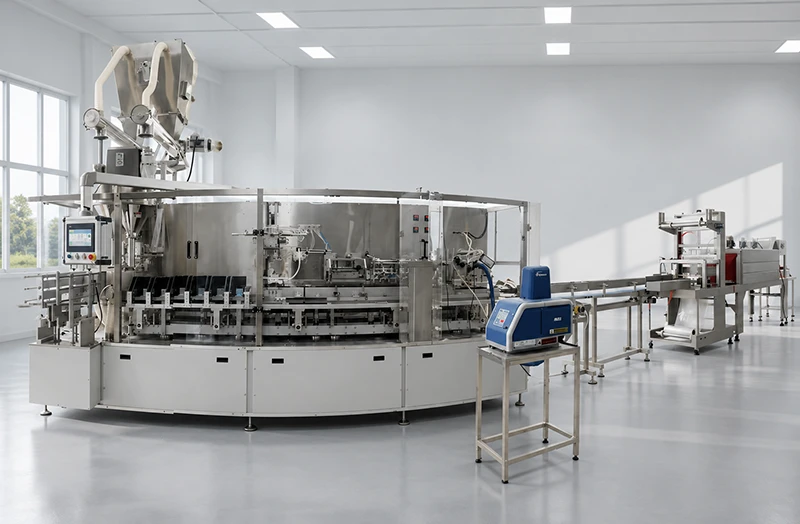
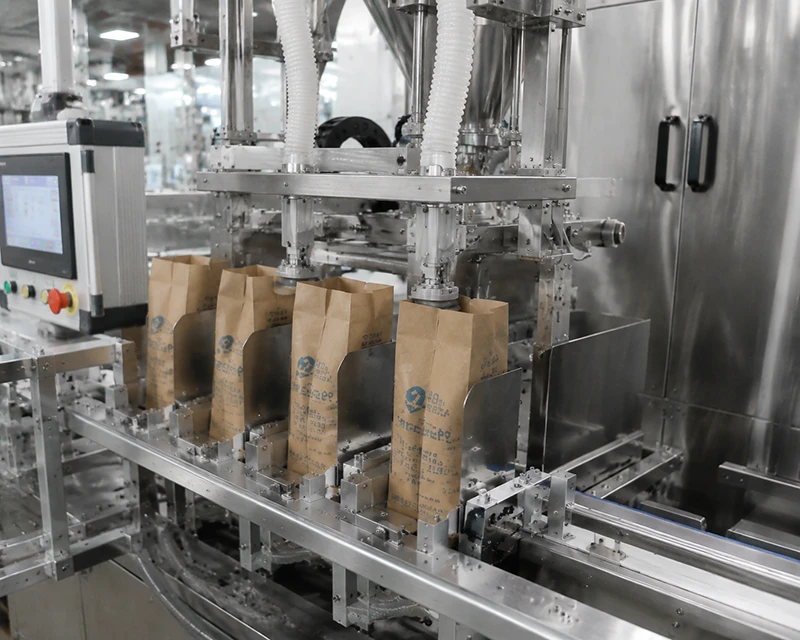
Zpacker has a complete premade-bag process rather than a simple open-fill station. The bag is picked from the magazine, opened and positioned, then transferred through filling, settling, edge preparation, glue application and top pressing. For its intended powder applications, multiple vibration and dust-removal stages help the material settle and keep powder away from the sealing area. For tomato cubes, those same stations must be reviewed carefully so that vibration, transfer height and compression do not damage the product.
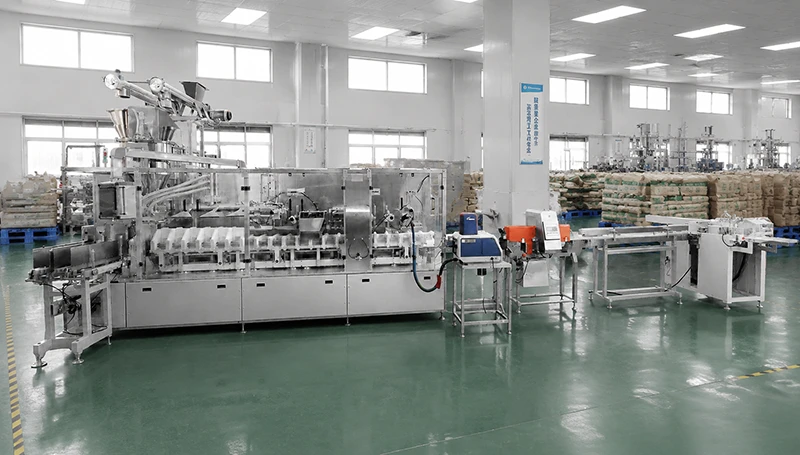
The line architecture is also suitable for a structured feasibility discussion. A 10.4-inch touchscreen and PLC-based controls support recipe and sequence management, while the downstream layout can be connected to conveying, checkweighing, metal detection, date printing and secondary packaging where the tested product requires them. These are configuration options to validate, not promised tomato-cube performance.
Engineering checkpoint: Tomato cubes should be evaluated as a possible extension application. Confirm product integrity, hopper discharge, bag orientation, sealing cleanliness and achievable speed with actual samples before selecting the screw dosing and premade-bag configuration.
What to verify before approving the packaging line
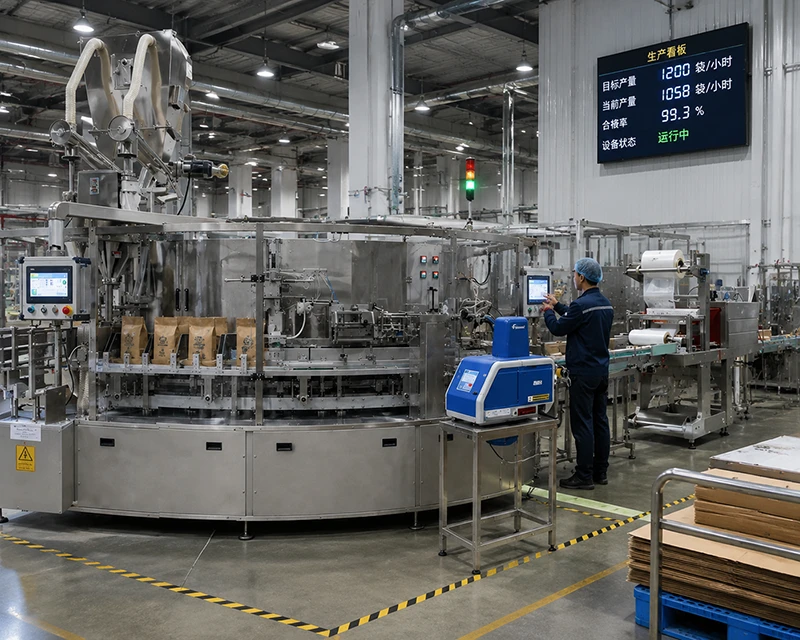
The visible equipment provides useful evidence of the process boundary. The paper-bag station shows the bag magazine, clamps and touchscreen; the complete-line views show how dosing, the main bagging machine and outfeed conveyor can be arranged; the factory-floor view shows the need to coordinate operator access, upstream feeding and downstream handling.
For a tomato-cube production project, the following checkpoints for tomato cubes packaging should be recorded in the final technical proposal. Zpacker reference values below belong to the powder-oriented configuration and must be confirmed or revised after testing.
| Checkpoint | Zpacker reference | Tomato-cube approval question |
|---|---|---|
| Product and dosing | Powder-focused screw dosing; about ±0.5% reference accuracy | Can the product discharge without bridging or damage, and what dosing method is validated? |
| Bag format | Premade paper or paper-plastic M-fold square-bottom bags; 1–2 kg and 2.5–5 kg ranges | Do the tomato-cube bags match the tested dimensions, orientation and material strength? |
| Sealing | Hot-melt glue point or line spray followed by top pressing | Does moisture remain outside the adhesive and sealing path at the target temperature? |
| Line speed | About 30–35 bags/min for the 1–2 kg powder reference; final rate depends on material and feeding | What stable rate is demonstrated with real tomato cubes and the selected bag? |
| Downstream checks | Conveyor, checkweigher, metal detector, date printer and secondary packing can be considered | Which inspection, grouping and pallet or case-packing steps are required after filling? |
| Utilities and layout | 15.5 kW; 380 V ±10%, 50 Hz; compressed air values require final confirmation | Are air, power, cleaning access and the available installation space suitable for the tested line? |
Use the test to define the final result
For tomato cubes packaging, a suitable result is not an unverified promise of automatic packing. It is a documented decision: either the tested Zpacker configuration can handle the product and premade bag at the required weight and rate, or the project needs a different dosing and sealing route. This approach prevents the common failure of replacing manual filling with equipment that solves bag handling but not product flow or seal contamination.
If the tests confirm compatibility, the project can be developed as an automatic packaging line with defined feeding, bag opening, dosing, inspection and secondary-packaging interfaces. If they do not, the test data still gives the food producer a precise basis for selecting another machine type. Send the product sample information, target bag and production rate for a configuration review.
Discuss the tomato-cube packaging test
Share the tomato-cube sample, target fill weight, bag drawing, moisture range and required output. BPM can then confirm whether the Zpacker premade paper-bag process is technically suitable and define the equipment interfaces.
Request an application review English
 Русский