
From Bulk to Bagged: How a Peat Producer Built a 25kg Valve-Bag Packaging Line
A peat processor replaced manual bagging with BPM’s VPLINE valve-bag packaging line. Output went from 100 to 500 bags per shift, weight variance tightened to ±50g, and the dust path is now sealed from silo to pallet.
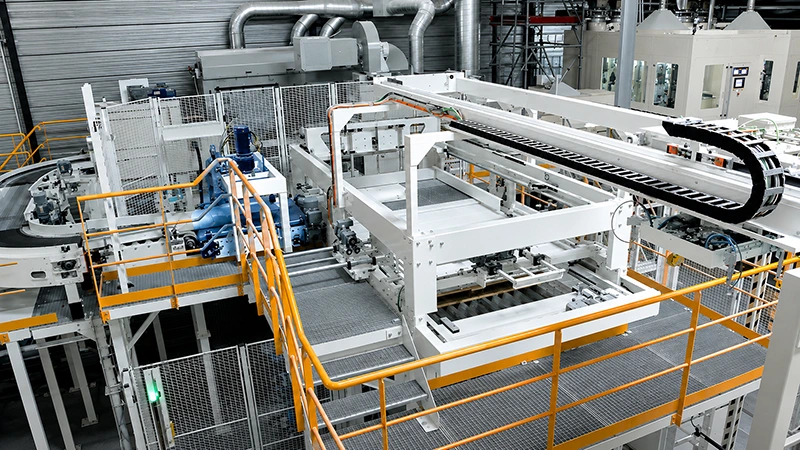
Bulk peat arrives in 1-ton FIBCs — but the customer wants 25kg
Peat lands at the processing plant in 1-ton bulk bags. The buyer, however, is a garden center, a municipal landscaping contractor, or a packaged-soil brand. They want a 25kg valve bag they can stack on a pallet, lift with a forklift, and re-ship to the retail shelf without a dust trail behind the truck.
Manual bagging had become the bottleneck. Four operators, a stitched closure, and a thread-and-needle bag closer were pushing 80 to 120 bags per shift. Every fill point was an open dust source. Stitched bags leaked fines during truck loading and warehouse storage, and the giveaway on each 25kg pack drifted past 200 grams by the end of a long shift.
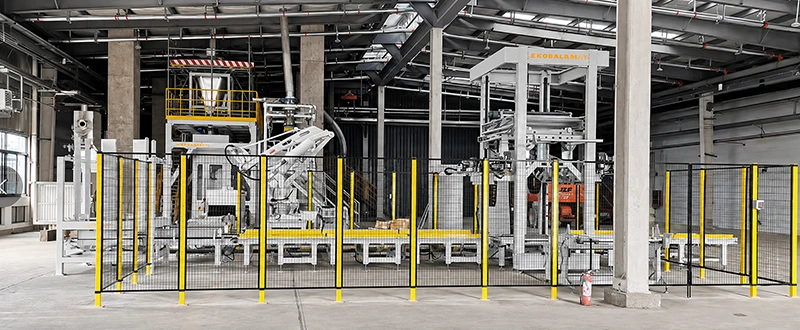
Every minute spent on a stitched closure is a minute the silo isn’t feeding the next line. Every gram off the target weight is a giveaway that compounds across a 24-hour shift. And the dust at the fill point is a hygiene problem the line cannot grow past without a sealed fill path.
Why a valve bag, why ultrasonic sealing
A valve bag accepts product through a self-sealing paper or PE valve — no open mouth to sew shut, no stitcher to thread, no needle to replace every shift. The bag arrives at the nozzle, the sleeve fills with peat, and the valve closes under the product’s own pressure.
BPM’s VPLINE valve-bag packaging line couples the bag pickup head to an ultrasonic sealing station. The seal is dust-tight, the cycle holds at 7 to 9 seconds per bag, and the operator’s only job is to restock the bag magazine every 90 minutes. Stainless steel contact parts keep corrosion out of the equation even with damp peat coming off the silo.
Spec note: A valve-bag line with ultrasonic sealing removes the stitched closure step entirely — peat goes from the silo to a sealed, pallet-ready bag without ever being exposed to open air during the fill cycle.
Throughput, accuracy, and what changes on the floor
A VPLINE cell with twin bagging heads runs 400 to 600 25kg bags per hour. The gross-weight checkweigher at the line’s exit rejects out-of-spec bags before they reach the palletizer, holding weight accuracy at ±50g across a full shift.
The shift goes from four or five baggers to two operators — one at the HMI, one at the pallet station. The palletizer drops a 5-layer or 8-layer pattern, applies the stretch hood, and the load is ready for the truck without a forklift driver waiting on the floor.
| Parameter | Manual line | BPM VPLINE |
|---|---|---|
| Throughput | 80–120 bags/hr | 400–600 bags/hr |
| Operators per shift | 4–5 | 2 |
| Weight accuracy | ±200g | ±50g |
| Bag seal integrity | Stitched (leaks fines) | Ultrasonic valve seal |
| Dust at fill point | Uncontrolled | Sealed + aspirated |
| Palletizing | Manual stacking | Robotic palletizer + stretch hood |
Spec a peat-bagging cell against your silo
Send us your current bagging rate, your bag size, your silo discharge height, and your target output. We’ll spec a VPLINE cell that fits the floor plan and the truck-loading schedule.
Talk to a peat-packaging engineer English
 Русский