
Powder Packaging Line for 5 kg Limestone Flour
For a limestone flour plant in Sverdlovsk Oblast, Mipline connects controlled filling, guided bag transfer, closure and inspection in a powder packaging line for 5 kg industrial bags. The target is a cleaner, more stable handoff between filling and final closure.
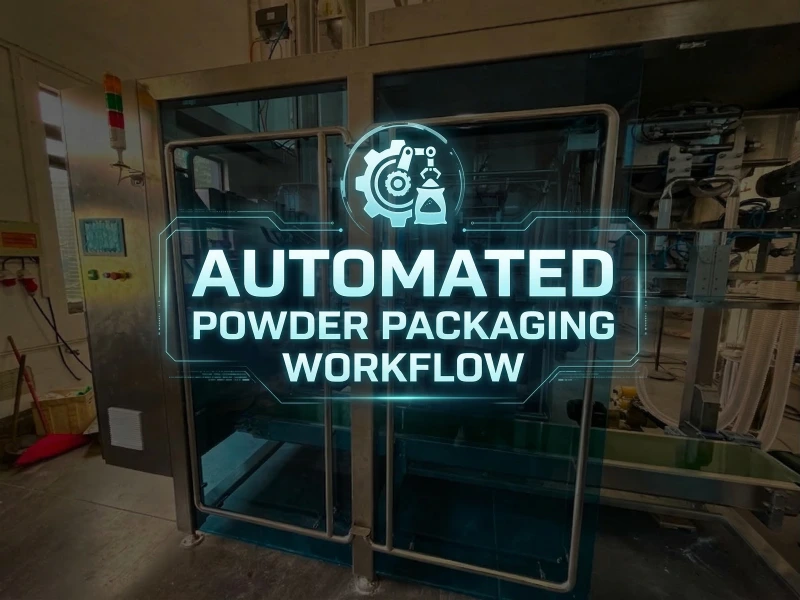
The plant scene: 5 kg limestone flour needs controlled handling
A limestone flour operation in Sverdlovsk Oblast may need to move from loose material handling to a repeatable 5 kg industrial bag format. Fine powder behavior is affected by bulk density, flowability, moisture and aeration, so the powder packaging line should be specified around the actual material and bag construction rather than treated as a generic flour filler. Kraft paper, paper-plastic composite and coated woven bags can be considered where the selected closure method and project trials support them.
The practical production question is not only how to place 5 kg of powder into a bag. It is how to open and hold the bag, keep the fill point controlled, close the mouth, transfer the filled bag and present it squarely to the next station. Mipline is positioned as a connected powder packaging line for that sequence, with bag supply, clamp handling, filling, closure, shaping and inspection planned as one process.
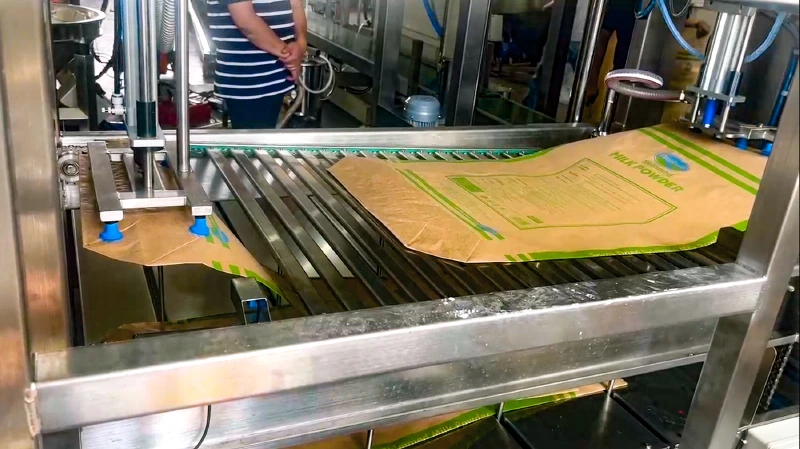
When operators open, hold, straighten and reposition each bag by hand, the final sewing or sealing station receives inconsistent bag mouths. Free-fall filling can also push powder toward the mouth and closure area. A conveyor that only moves the bag does not necessarily control its orientation, and a scale without downstream inspection cannot define a complete reject path. The result is extra correction at the last meter, dusty closure work and unstable bags before palletizing or warehouse handling.
Why Mipline fits this 5 kg powder application
Mipline treats the bag magazine, pickup or opening step, bag clamp and filling head as linked stations. Its bottom-up tracked filling concept keeps the fill point close to the rising powder level and is designed to reduce dust escape compared with open free-fall filling. A three-stage screw feed—fast filling, medium filling and slow final dosing—provides a controlled route toward the target weight. For limestone flour, the final screw, extraction and bag settings still need confirmation through a material and bag trial.
After filling, the powder packaging line can be configured around the required closure sequence. Depending on the bag and project design, this may include dust removal, trimming, inner heat sealing, pressing, sewing, paper-tape wrapping or final pressing. Settling and shaping then prepare the closed bag for metal detection, checkweighing, reject handling and roller discharge. The line is therefore matched to a defined 5 kg route, not sold as a standalone filling unit disconnected from bag handling.
Engineering reference The DS25K reference covers 5–25 kg bags, with stated accuracy up to ±0.2% and 1–3 bags/min, plus 380/220 V, 50–60 Hz, 5 kW and 6 kg/cm² air supply references. These values are configuration references; the final powder packaging line must be confirmed against limestone flour density, bag dimensions, closure, dust extraction and site utilities.
Structure, parameters and image evidence
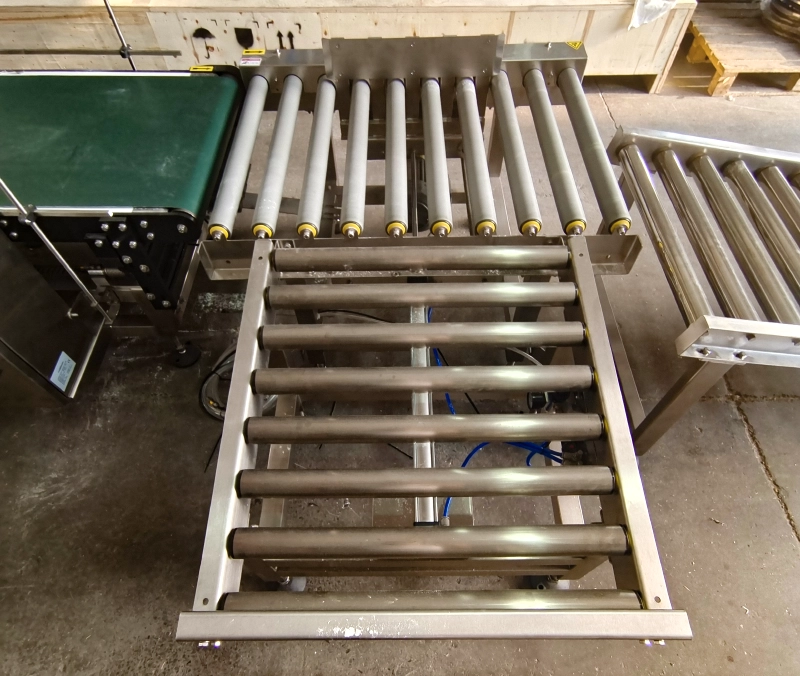
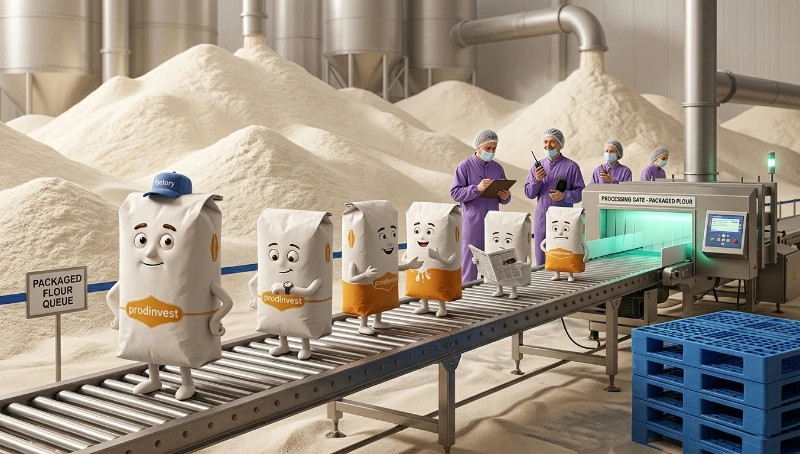
The production images show the physical logic behind the proposal. The enclosed stainless-steel station has safety doors and a conveyor interface. The roller-transfer image shows angled rollers and a welded frame for controlled bag handling. A separate flour-line render helps explain the intended factory flow, but it is a layout illustration—not proof of capacity or a customer result. The actual line must be tested with the specified limestone flour and 5 kg bag.
For a plant team comparing a manual route with a powder packaging line, the useful checks are concrete: can the bag magazine feed the selected bag reliably; can the clamp keep the mouth aligned; can the filling method limit powder at the closure area; can the transfer hold the bag shape; and can the inspection and reject stations be reached without manual rework? The Mipline concept answers these questions with dedicated stations while leaving the final settings open for project engineering. A related 5 kg limestone flour bagging assessment and the guide to settling and final inspection provide additional context.
| Project point | Mipline design response | What to verify |
|---|---|---|
| 5 kg limestone flour | DS25K reference range begins at 5 kg with staged screw feeding | Bulk density, flowability, aeration and target accuracy |
| Bag mouth and closure | Bag clamp, controlled fill, dust removal and selected sealing or sewing steps | Bag material, dimensions and closure sequence |
| Filled-bag handoff | Guided belt and roller transfer with shaping before downstream inspection | Bag shape, line speed and handoff geometry |
| Quality release | Metal detection, checkweighing and reject path after forming and closure | Product effect, detector model and approved checkweigher data |
Review the 5 kg limestone flour layout
A project review can turn the Sverdlovsk Oblast application into a confirmed specification: material test, bag sample, target speed, closure method, utility conditions, dust extraction and palletizing handoff. Share those inputs before selecting the final powder packaging line configuration.
Request a project review English
 Русский