
How a Siberian Salt Producer Stabilizes the Transfer Zone Before Palletizing
In salt plants, the most expensive problems rarely start at the filler. They show up one step later: film that sticks, bags that bulge, transfer points that skew, and a palletizing zone that keeps waiting for operators to fix what the machine should have controlled in the first place.
Salt is abrasive, moisture-sensitive, and unforgiving when the transfer rhythm breaks. If the bag arrives uneven, the next unit cannot correct the error for free. The result is rework, slower pallet formation, and a line that looks busy while output stays flat.
1) The transfer zone has to do more than move bags
For secondary packaging, the transfer zone must keep the film centered, protect the bag shape, and hand off each unit without introducing twist. That is why the forming shoulder and film path matter so much. On this kind of line, the dimpled stainless forming shoulder is not a cosmetic detail. It is a practical anti-stick surface that helps reduce web drag when salt-room humidity starts working against the film.
At the same time, the guide rollers need to keep the web tracking stable so the bag does not wander into the sealing area. When the transfer is steady, the palletizing section receives bags that are already better aligned, easier to group, and less likely to collapse during stacking.
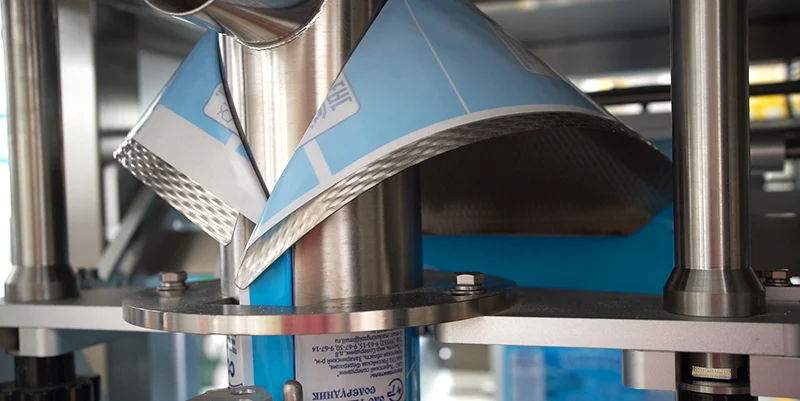
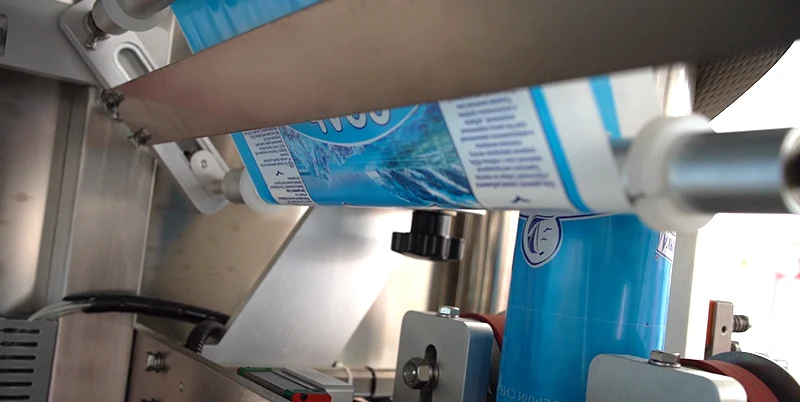
BPM Engineering Insight: For salt applications, the machine cannot rely on “operator correction” as a normal operating method. The line needs mechanical alignment, stable film tracking, and corrosion-aware construction. In the BIBPU family, material-contact components are specified for chloride-heavy environments, and the electrical side stays separated from the wet workflow so the transfer zone remains predictable instead of fragile.
2) Control quality is part of packaging quality
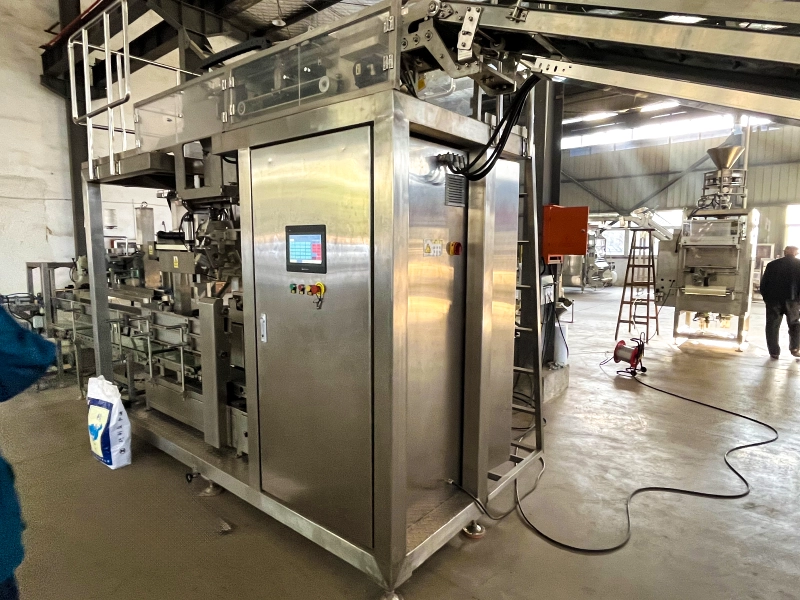
A stable line is not only about steel and rollers. The operator interface also decides whether a plant can keep pace across shifts. A clear cabinet, fast access to controls, and a readable HMI reduce setup mistakes when the team is dealing with different bag formats, changing throughput targets, or repeated start-stop cycles.
That is where the cabinet and the screen become part of the process story. A protected electrical enclosure, touch HMI, and a screen that can show packaging parameters in the operator’s working language all reduce the chance of a slow restart after a stop. For a salt producer, that is the difference between a line that recovers in minutes and a line that drifts for the rest of the shift.

| Observed line problem | What BIBPU-style equipment does to contain it |
|---|---|
| Film sticks or drags in humid salt-room conditions | Dimpled forming shoulder and controlled film path reduce contact resistance and help the web stay stable. |
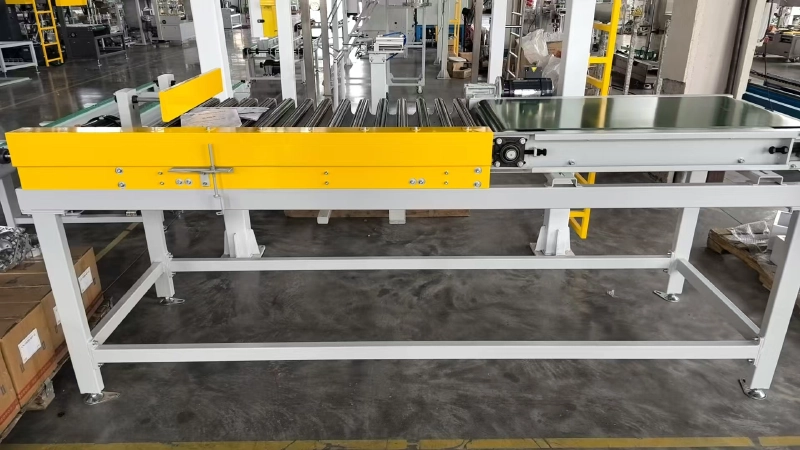
| Bags arrive skewed at transfer points | Guide rollers and aligned conveyors keep the bag centered before the next process step. |
| Operators lose time after start-stop interruptions | Protected cabinet layout and readable HMI shorten reset time and make setpoints easier to verify. |
| Corrosive atmosphere attacks exposed hardware | Salt-facing components are built for harsh environments, with corrosion-aware material selection on contact surfaces. |
3) The best salt line does not feel busy; it feels controlled
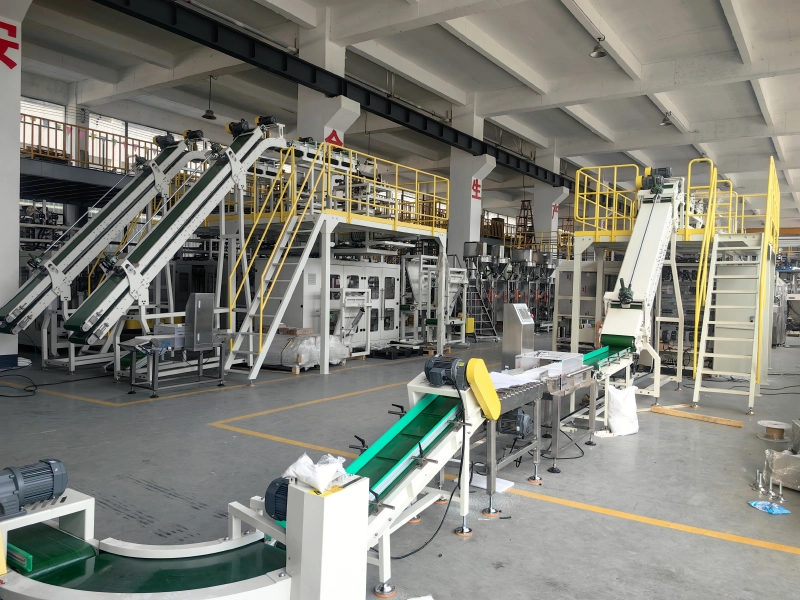
In a well-designed packaging area, the transfer zone, the control cabinet, and the conveyor layout all work together. The workshop image tells the same story: steel platform access, grouped control cabinets, and a layout that keeps the machine line readable for maintenance teams. That matters because line stability is not a single machine feature. It is the sum of alignment, guard design, operator clarity, and the way each bag is handed to the next unit.
For a Siberian salt producer, the practical goal is simple: keep the bags moving, keep the geometry consistent, and keep the palletizing section from becoming a manual rescue station. Once the line does that, the factory gets more than higher throughput. It gets lower fatigue on operators, fewer corrections at the end of the line, and a packaging workflow that behaves like a system instead of a collection of separate machines.
FAQ
Can this kind of line handle only salt?
No. Salt is a strong reference case because it exposes moisture, corrosion, and flow-control weaknesses quickly, but the same transfer and control logic also supports other granular bulk products. The exact setup depends on product flow, bag format, and target output.
Why not solve transfer problems with more manual inspection?
Manual checks are useful for QA, but they do not fix unstable mechanics. If the film path, guide rollers, conveyor handoff, and operator interface are built correctly, the line needs fewer interventions and spends more time producing saleable bags.
If your salt plant is losing time at the handoff between filling, sealing, grouping, and palletizing, BPM can help you map the weak point and choose the right BIBPU configuration for the job.
Request a Packaging Line Review English
 Русский