
Why Compression Before the Sewing Head Matters on a Siberian Salt Line
On a high-humidity salt line, the bag that reaches the sewing head is already deciding the quality of the pallet. If the sack still carries trapped air, if the mouth is not square, or if the transfer is too soft, the seam becomes a rescue job instead of a controlled process. That is exactly where BIBPU helps a Siberian salt producer turn an unstable final meter into a repeatable packaging step.
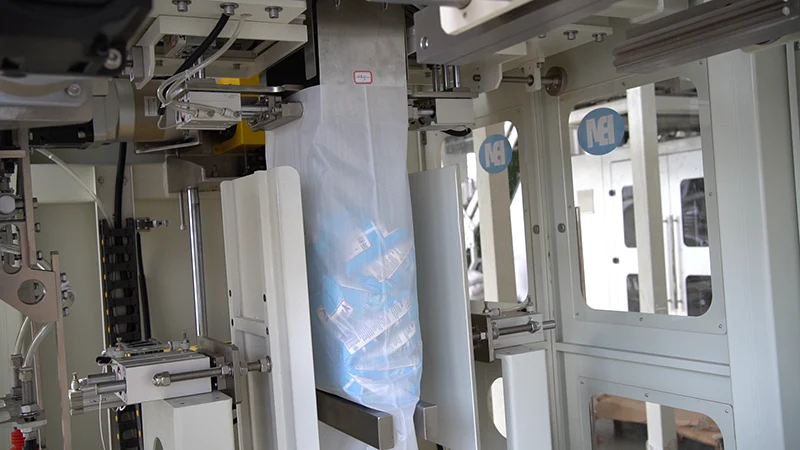
A filled woven sack may look finished, but if it arrives bulged, loose, or off-center, the sewing head has to fight the bag instead of closing it. That creates crooked stitches, poor mouth alignment, unstable stack geometry, and more manual correction just before dispatch.
The real job is not closing the bag. It is preparing the bag for closing.
BIBPU is built around that idea. The line does not treat compression, deaeration, and transfer as optional extras. It uses them as the control points that shape a soft, air-filled bag into a transport-ready unit. In the Siberian salt case, that matters because humidity, salt dust, and chloride exposure make ordinary handling surfaces wear faster and make the bag body more difficult to stabilize.
The flow starts upstream and stays controlled all the way to the sewing station. The woven bag is supported, its top section is flattened, and the excess air is pushed out before the final stitch. Once that happens, the mouth of the bag stays more consistent, the seam line is cleaner, and downstream palletizing stops inheriting the problem created at the closing station.
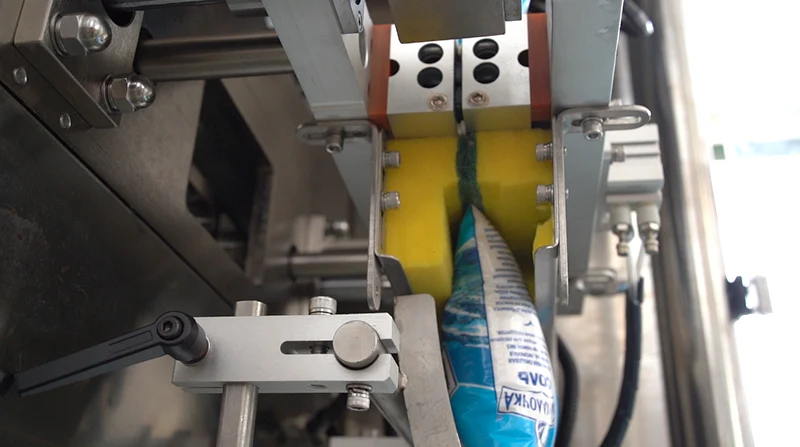
BPM Engineering Insight: On salt lines, the seam head is not the place to discover shape problems. When BIBPU uses compression and foam-guided deaeration first, the final sewing step becomes predictable instead of corrective. That is the difference between a line that looks busy and a line that actually holds output.
Why salt makes the last meter harder than it looks
Salt is abrasive, hygroscopic, and harsh on contact surfaces. If the environment is damp, the outer bag can soften while the product inside still resists the shape you want. If the transfer path is not rigid enough, the bag swells at the wrong point and the mouth wanders before sewing. BIBPU addresses that with stainless contact parts, protected transfer paths, and a compression sequence that keeps the bag body compact instead of puffy.
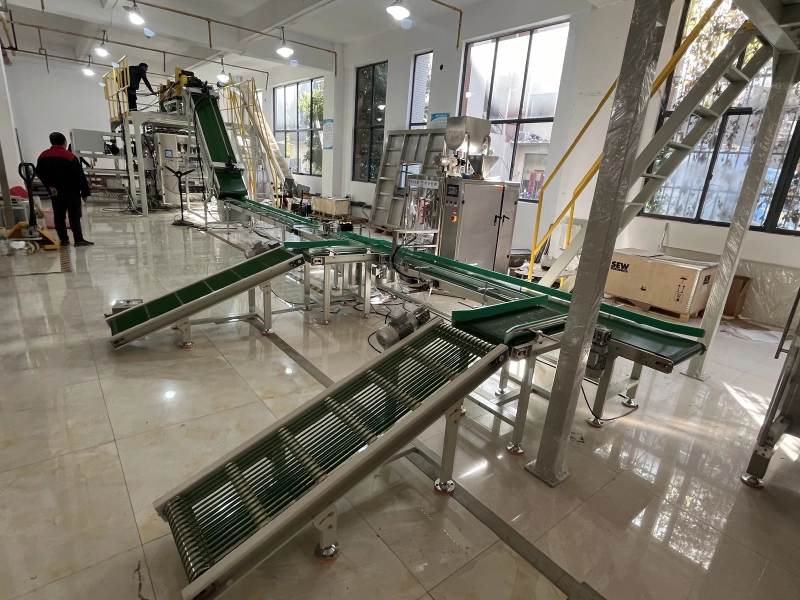
This is also why a confluence or transfer section matters. When bags merge into one stable path, the line is less dependent on operator reaction time. The machine keeps the bag on the same centerline long enough for the next action to happen cleanly, whether that action is compression, alignment, or stitching.
| Line problem | How BIBPU responds |
|---|---|
| Bulging sack mouth before sewing | Pneumatic compression and foam-guided deaeration reduce trapped air and keep the mouth square. |
| High humidity and salt corrosion | 316L / UNS S31603 contact surfaces and protected structural parts are used where salt exposure is constant. |
| Unstable bag flow before palletizing | Guided transfer and confluence sections hold the bag on centerline so the sewing and downstream handling stay consistent. |
The sewing head works best when the bag is already under control
That is why the open sealing and closing components matter. The final closure is only strong when the bag has been conditioned before it reaches the head. A clean approach angle, a flatter top section, and a controlled mouth position let the seam do its real job: sealing, not correcting shape.
The same logic applies to the full line. If the packaging system can keep a salt bag compact, aligned, and easy to close, the result is not just a neater stitch. It is a more stable pallet, fewer manual interventions, and a line that behaves better under real plant conditions.
What a salt producer should expect from a serious end-of-line package
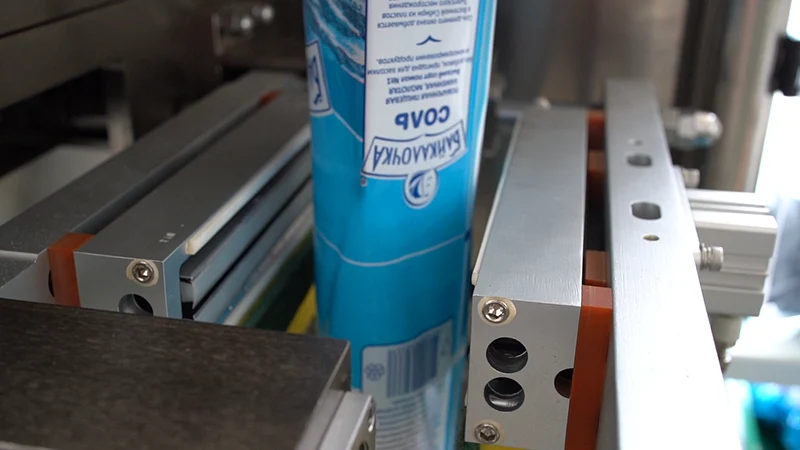
For a producer working in a corrosive, high-output environment, the target is not simply to close sacks faster. The target is to keep the bag shape stable enough that sewing, handling, and stacking all happen with the same repeatable geometry. That is where BIBPU stands out: it is designed as a packaging control chain, not just a closing machine.
If the line keeps the bag flat, the seam steady, and the transfer stable, the whole packaging zone becomes easier to run. That is the real value of compression before the sewing head.
FAQ
Can a standard bag closer handle salt sacks on its own?
It can close them, but it cannot reliably correct a bulging or off-center bag. Without compression and deaeration, the stitch area becomes inconsistent and pallet quality suffers.
Why not let operators fix the bag manually?
Manual correction slows the line, creates shift-to-shift variation, and does not scale when output rises. A controlled mechanical sequence is more stable and easier to repeat.
If your salt line still fights bulging sacks, crooked seams, or unstable pallet geometry, BIBPU can be configured around your bag size, humidity level, and output target.
Request a packaging line review English
 Русский