
Salt filling machine · humid salt · secondary packaging
Humid Salt Filling Machine for Stable Secondary Packaging and Clean Bag Sewing
For humid salt lines, BIBPU keeps film tracking stable, controls powder flow into the bag set, and moves filled packs into sewing with less swelling, less rework, and fewer stoppages.
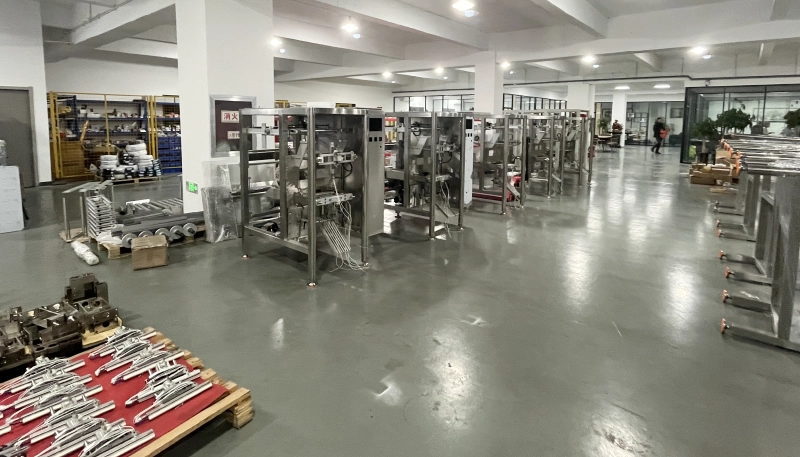
What humid salt usually breaks first
Humid salt is not difficult because it is heavy. It is difficult because it is sticky, corrosive, and unforgiving when the line loses rhythm. Film may wander. The forming shoulder may drag. The bag can trap air. A filled woven sack may bulge before sewing. Once that happens, operators spend time on manual correction instead of throughput.
The real issue is rarely one single component. It is the handoff between dosing, film forming, secondary bagging, air release, compression, and bag sewing. If any one stage is weak, the whole line becomes unstable.
Why BIBPU fits this duty
BIBPU is built for humid salt packaging lines that need a cleaner handoff from VFFS output to secondary packaging. The product family uses corrosion-aware contact parts, including 316L stainless steel on material-contact surfaces, which is important for chloride-heavy salt environments. That matters in real plants where moisture and salt dust combine to shorten equipment life.
On the film side, the line uses guide rollers and alignment hardware to keep the web running true. The forming shoulder is designed to reduce sticking. In the discharge and transfer zones, the machine focuses on controlling bag shape before sewing, so the next station receives a flatter, more predictable pack.
On the secondary packaging side, pneumatic clamps hold the woven PP sack open while the smaller salt packs drop in. After filling, side compression helps remove trapped air and reduce the bulge that often causes sewing trouble. Dual belt feeders then guide the top opening into the sewing head with better alignment.
Image evidence from the line
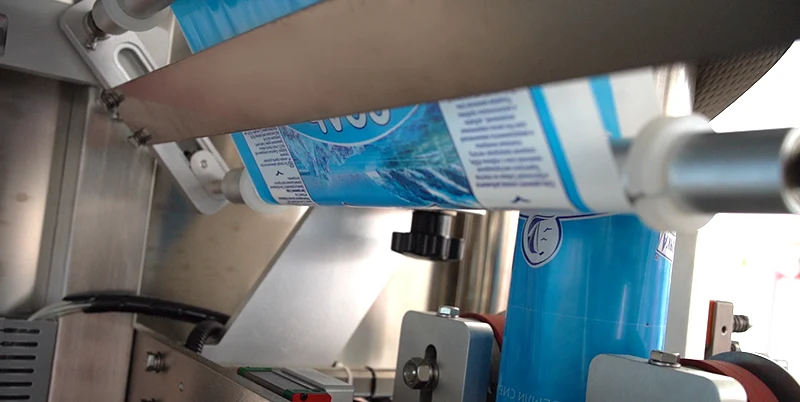
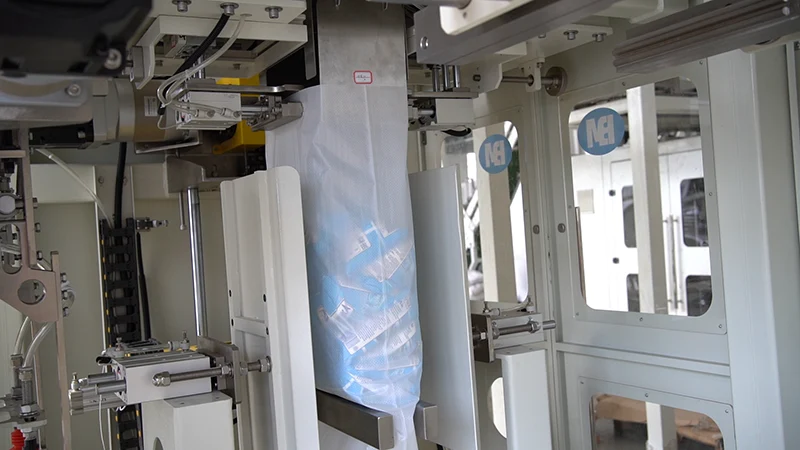
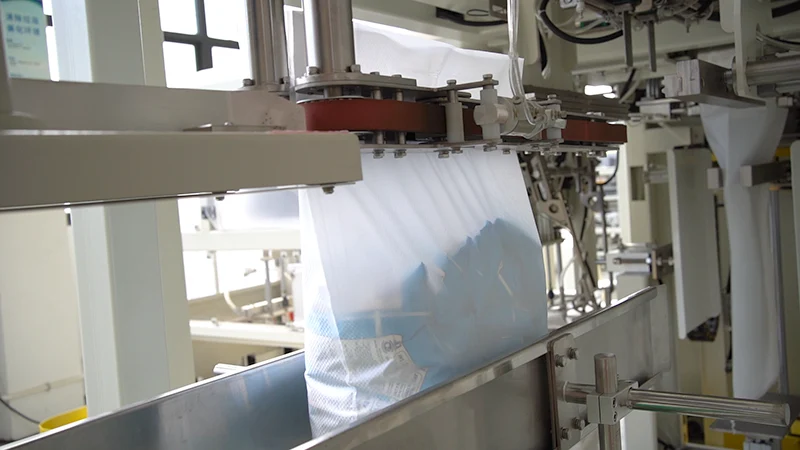
Problem to machine element to result
| Line problem | Machine element | Result on the floor |
|---|---|---|
| Film drifts during humid production runs | Guide rollers and alignment collars | More stable forming and fewer manual resets |
| Bag swells before sewing | Pneumatic clamping and side compression | Cleaner mouth shape and better sewing handoff |
| Salt dust and moisture shorten machine life | 316L contact surfaces and corrosion-aware layout | Longer service life in salt-rich environments |
| Operators spend time correcting the transfer | Dual belt feeders and guided sewing entry | Less manual intervention and steadier output |
Where the line is strongest
The strongest point is not one machine headline. It is the chain of small controls: centered film, stable dosing, clean sack opening, controlled air release, and a reliable feed into sewing. That is what a salt filling machine for humid salt should do. It should make the awkward part of the job look routine.
For plants shipping food salt or industrial salt, this kind of layout helps reduce scrap, improve pack consistency, and keep the secondary packaging station from becoming the bottleneck.

Need a line that holds together from filling to sewing?
If your salt line is losing time at the transfer point, BIBPU gives you a practical way to stabilize the web, calm the bag shape, and keep secondary packaging moving at a predictable pace.
 English
 Русский