
Salt Filling Machine for Humid Salt Lines: Film Tracking, Sealing, and Sewing Without Drift
Humid salt does not fail at one point only. It stresses the film path, the forming shoulder, the seal jaw, and the last sewing handoff all at once. This BIBPU line is built to keep those four steps aligned, so the bag stays stable from dosing to final closure.

Why humid salt lines punish ordinary film paths
In a dry plant, many packaging lines can look acceptable during trial runs. In a humid salt environment, that same line starts to reveal weak points fast. Film can cling to the collar, tension can drift as the roll unwinds, and the bag can lose shape before the seal jaw finishes its job. Once that happens, the sewing station receives a bag that is already fighting the line.
The first image shows the wider system logic: four vertical form fill seal machines with stainless hoppers arranged as a high-output salt line. That layout matters because salt filling machine performance is not just about one head or one hopper. It is about repeatable film feeding, stable dosing, and a clean transfer into downstream closure. The line is designed around that sequence, not around a single isolated machine frame.
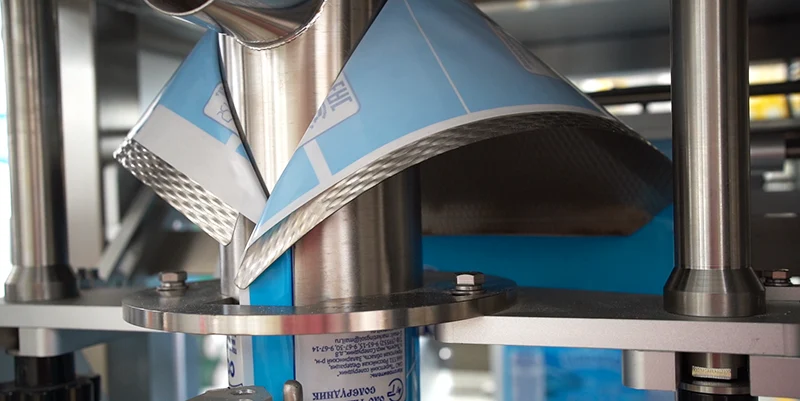
When moisture rises, the film grabs the forming shoulder, the bag mouth loses alignment, and the operator starts compensating by hand. That kind of correction may save a few bags, but it does not solve the real problem: the line is no longer self-stable.
Why BIBPU matches the problem
The dimpled stainless steel forming shoulder is the right answer for sticky film behavior because it reduces contact drag where the film must travel cleanly. The tension-controlled unwind section supports that same goal from the back end, keeping the roll feed consistent instead of letting the film surge or flutter. Together, those two structural details keep the bag path predictable.
From there, the heated cross-sealing jaw with PID temperature control finishes the seal at a controlled heat level rather than chasing an unstable bag shape. That is especially important for salt, because a weak seal or a bag with trapped air will only create more handling trouble downstream. The process stays under control when the film, seal, and bag compression all work as one system.
bpmpack Engineering Insight: Humid salt packaging is a chain problem. If the shoulder sticks, the seal drifts. If the seal drifts, the sewing station inherits a deformed bag. BIBPU addresses the chain from the top film roll to the final woven-sack closure, so each stage supports the next one instead of creating a new defect.
What the line proves in the pictures
The selected images are not decorative. They show the structure behind the result. The film roll and tension shafts explain why the line keeps tracking straight. The heated seal jaw shows how the bag closes without losing control of temperature. The bag sewing head then completes the handoff into secondary packaging without forcing the operator to rescue the bag by hand.
That is the real value of this salt filling machine setup for humid salt lines: fewer corrections, cleaner handoff, and a more repeatable finish. The line is built to keep the product moving, the bag shape stable, and the closure sequence orderly from the first feed to the last stitch.
| Stage | What can go wrong | BIBPU structure shown in the images | Result |
|---|---|---|---|
| Film feed | Film drifts or sticks in humidity | Blue salt film roll with tension shafts | Stable unwind and cleaner tracking |
| Forming and sealing | Bag mouth loses shape before closure | Dimpled forming shoulder plus PID seal jaw | Lower drag and more consistent sealing |
| Secondary closure | Bag arrives deformed at the sewing station | Industrial bag sewing head on the line | Cleaner handoff and fewer manual corrections |
Need a stable salt line?
If your plant is dealing with humidity, film sticking, unstable bag shape, or a messy handoff before sewing, we can configure the salt filling machine around the real bottleneck instead of forcing the operator to manage it by hand.
Request a line review English
 Русский