
From Hopper Feed to Pallet: A Cleaner Handoff for Bulk Products
For a southern Russian bulk-goods producer, the real problem was not filling speed. The problem was what happened after discharge: bags drifted, operators corrected them by hand, and pallet quality suffered. ppline fits this job because the line keeps feed, access, conveying, and bagging in one aligned layout.
Why the old workflow broke at the handoff point
The customer was already using equipment for bulk products, but the line still depended on manual tail correction after discharge. Once the product left the dosing point, the bag had too much swing, the transfer path was too open, and the operators had to keep touching the package before it could move on. That meant more labor, more small mistakes, and less consistency at the palletizing stage.
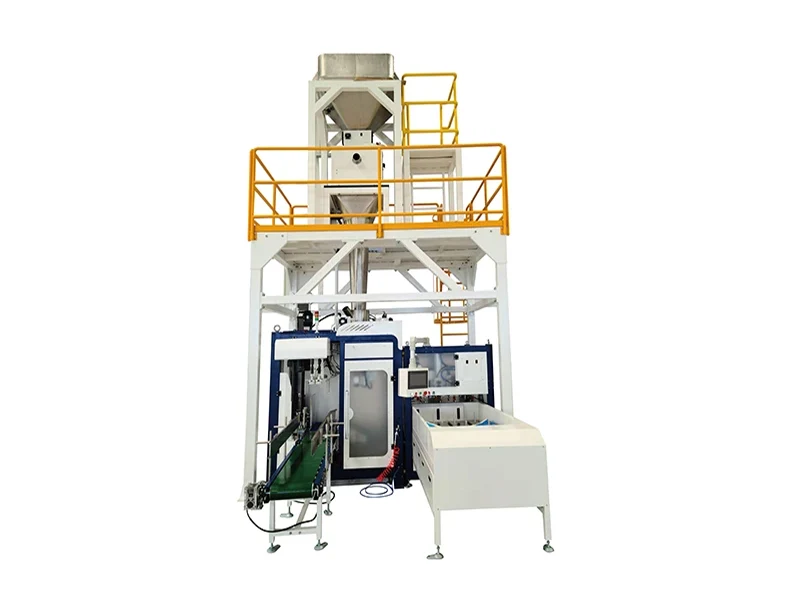
ppline solves that by keeping the geometry simple and readable: hopper above, working platform close to the operator, enclosed control cabinet, and a guided conveyor that carries the bag forward instead of letting it wander. In the first image, the line is installed as one physical chain, so the handoff looks deliberate rather than improvised.
A bag that leaves the dosing point without stable guidance becomes a pallet problem later. Time saved during filling is often lost during correction, stacking, and rework.
Why ppline matched this project
The second image shows the machine as a visible module set: hopper feed, HMI touchscreen, stitching unit, and discharge conveyor all sit in one frame. That matters for bulk products because the operator can see where the material is, where the bag is moving, and where the next adjustment should happen. There is less guessing, and that usually means fewer interruptions.
The line is not trying to win with a single headline number. Its value is in how the structure removes unnecessary movement. A straight feed path, an accessible service platform, and clear operating controls give the team a calmer process, which is exactly what a daily production shift needs when bags must stay stable before palletizing.
What matters: When bulk products are unstable, the right geometry matters more than a flashy feature list. A straight feed path, accessible service platform, and clear operator interface do more to protect output quality than constant manual correction.
What the production result looked like
After the layout was matched to the job, the transfer became cleaner, the tail correction load dropped, and pallet alignment became easier to manage. For a Russian bulk-goods customer, that is the real outcome: not a demo that looks good for five minutes, but a line that can repeat the same handoff every day.
In practical terms, the bag arrives at the next step with fewer twists, the discharge path feels more controlled, and operators spend less time fixing what should have been guided by the machine. That is what a stable handoff means in a bulk-products line: less repair work, more forward motion, and a better final stack.
| Project issue | ppline answer | Practical effect |
|---|---|---|
| Unstable discharge after dosing | Hopper feed with guided conveyor and aligned frame | Cleaner handoff toward the next step |
| Manual tail correction | HMI control, enclosed cabinet, and readable work zone | Fewer operator touches and fewer mistakes |
| Pallet instability downstream | Elevated platform and compact transfer layout | More consistent bag presentation before stacking |
Need a line for bulk products?
Send us the product type, bag format, and discharge target, and we will match the layout to the handoff so the bag stays stable before palletizing.
Request a layout review English
 Русский