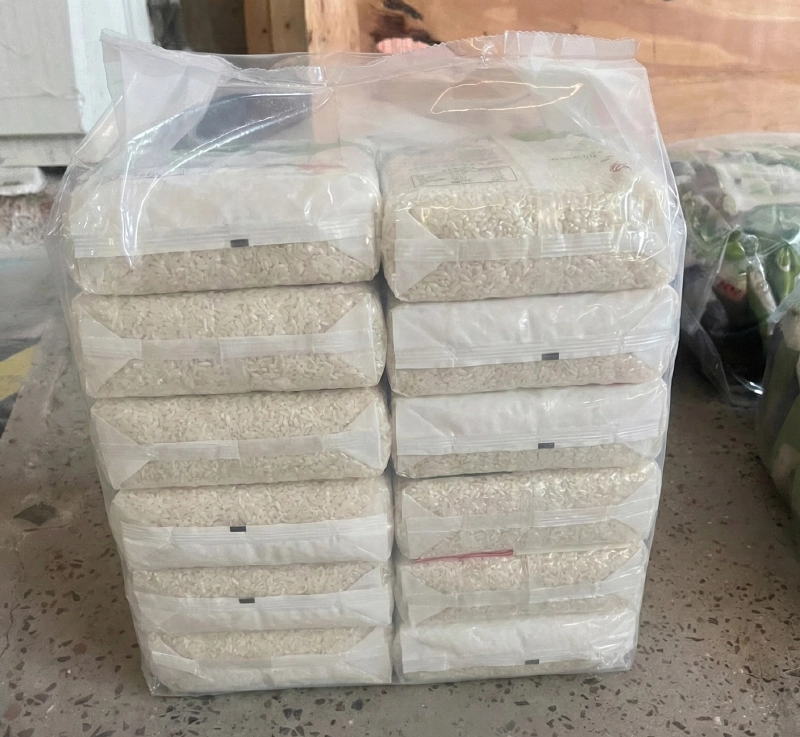
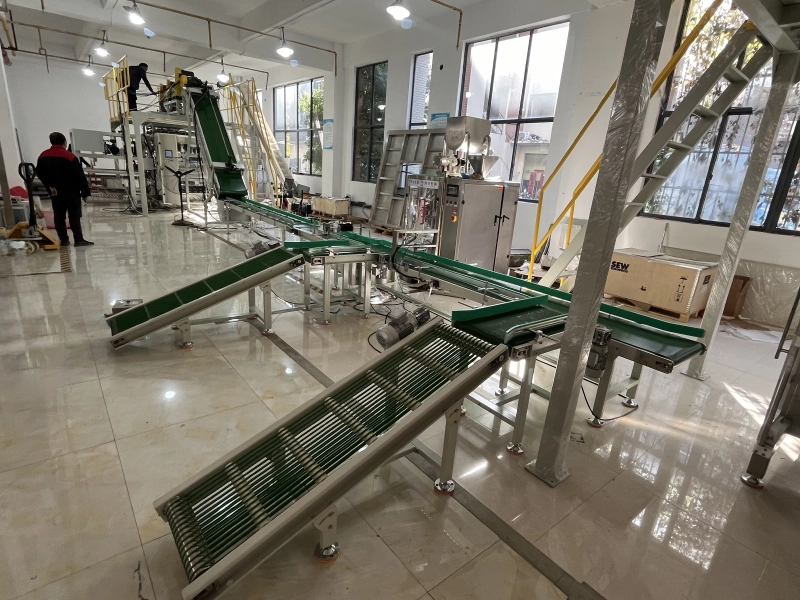
Automatic Bagging Machine & Palletizing Systems Manufacturer

Author: liuxvyou@qq.com

  • Оборудование для вторичной упаковки конвейер защита от скольжения

    Оборудование для вторичной упаковки конвейер защита от скольжения

    Вторичная Упаковочная Машина

    Is Your Salt Production Sliding Out of Control?

    In the salt and chemical industry, “slippage” isn’t just a nuisance—it’s a production killer. When 1kg salt bags hit a standard conveyor, micro-slides cause counting errors, jams at the merger, and messy “shingling.” Stop fighting friction physics with manual labor. Our anti-slip secondary packaging lines are engineered specifically for high-dust, low-friction environments.

    The Hidden Crisis: When “Smooth” Become “Stuck”

    If you are managing a packaging line for salt, starch, or urea fertilizers, you know the specific nightmare of “aerated bags.”

    Your VFFS machines are pumping out 60 bags per minute. The film is dusty, and the product is aerated (ballooning). When these bags hit a standard smooth belt conveyor, they don’t accelerate instantly. They skid. This split-second delay destroys the spacing required for accurate counting.

    The result? The Вторичная Упаковочная Машина (Secondary Packaging Machine) receives 4 bags instead of 5, or worse, two bags overlap and jam the gate. Your operators spend more time clearing jams than monitoring quality.
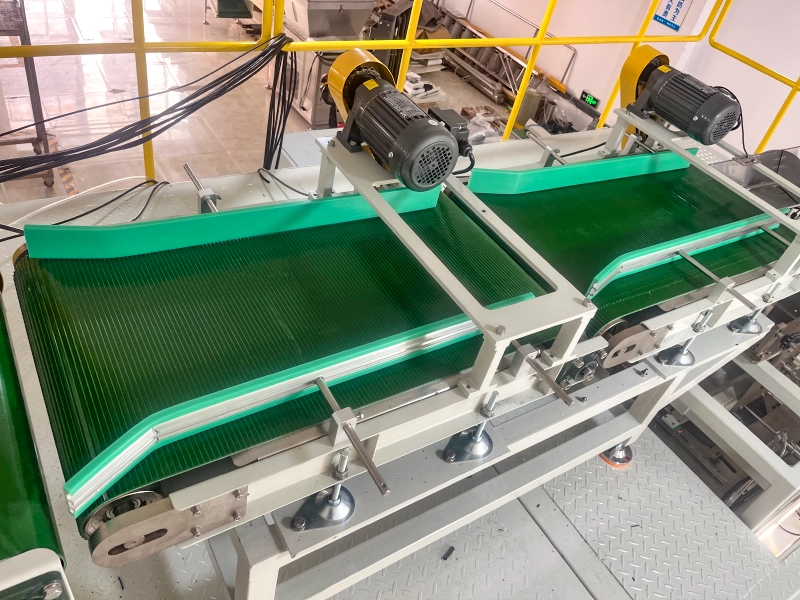
    Вторичная Упаковочная Машина

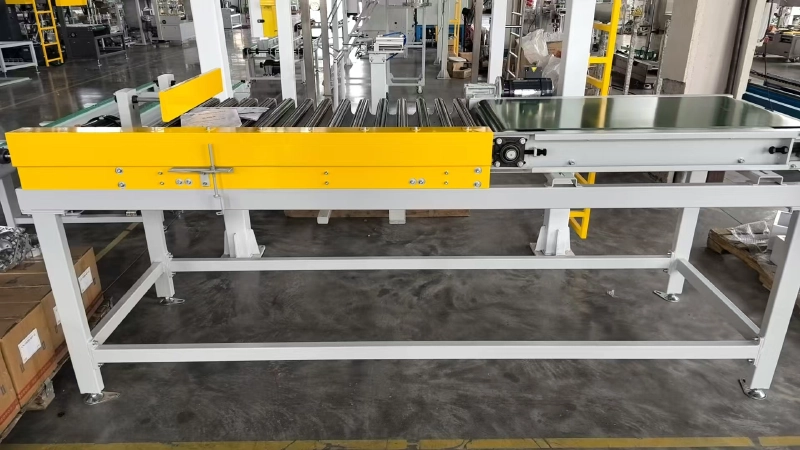
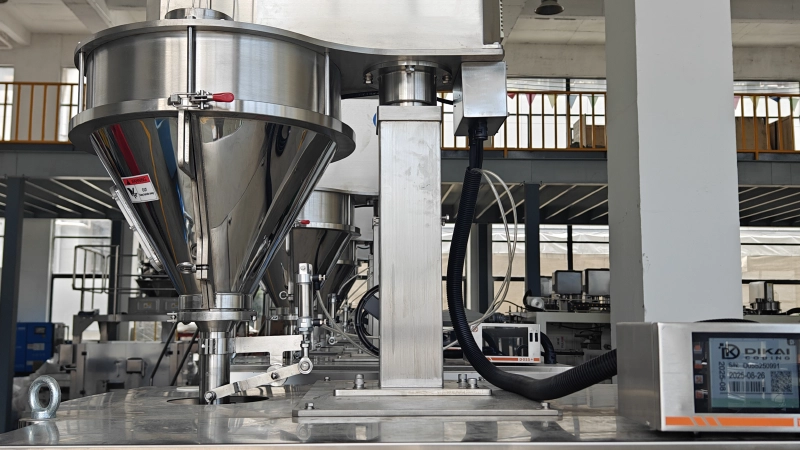
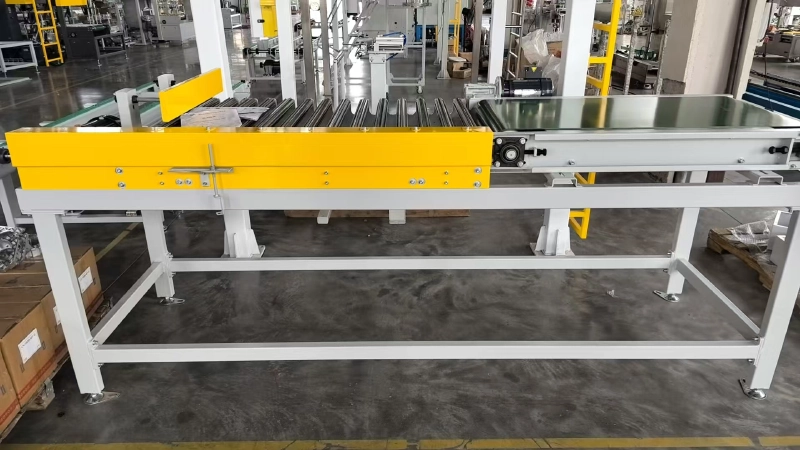
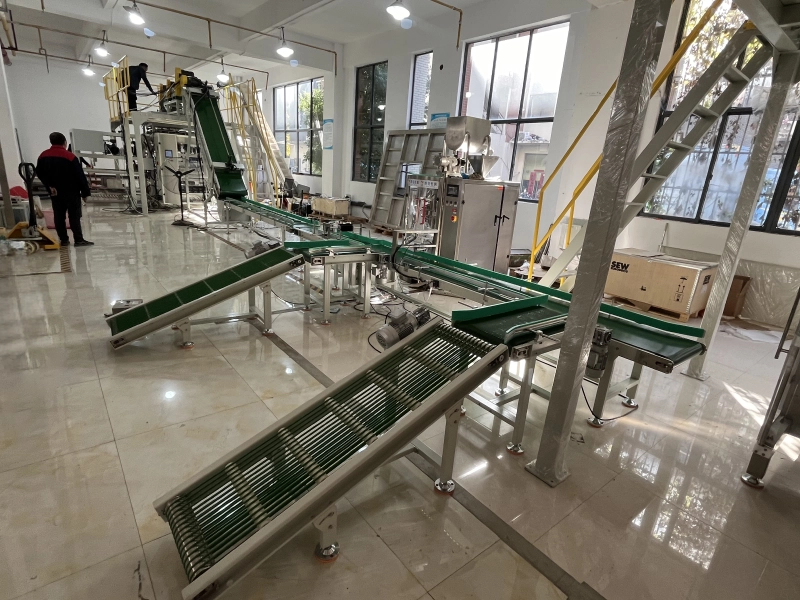
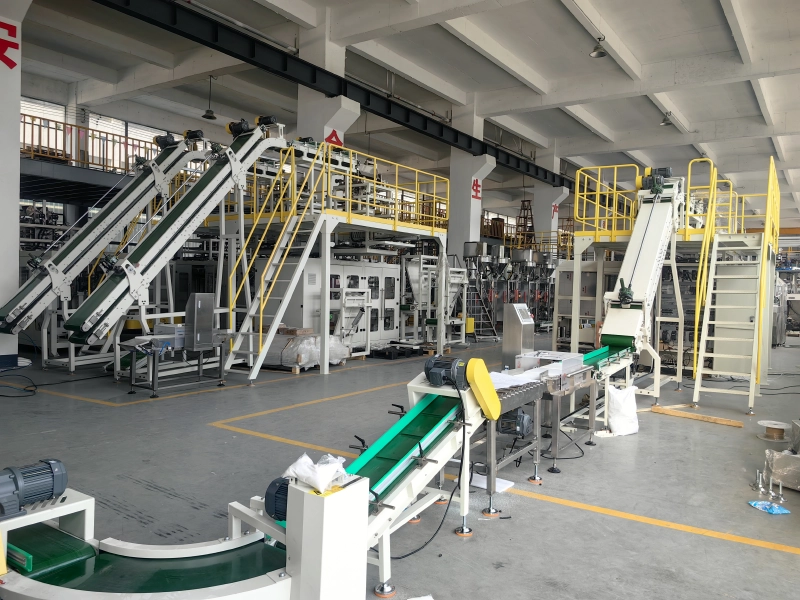
    Figure 1: Precision counting requires absolute grip. Our servo-driven gates and high-friction belts ensure exact bag spacing, even with dusty salt bags.

    Engineering Grip in a Dusty World

    Standard conveyors are useless when covered in a fine layer of salt dust. That is why our solution focuses on mechanical grip and positive control.

    • PVC Grass-Pattern Belts: We don’t use smooth belts. We utilize specialized PVC belts with a “grass” texture. This acts like off-road tires for your bags, penetrating the dust layer to grip the bag film directly. This ensures that when the motor accelerates, the bag moves instantly—zero slip.
    • Double-Deck Shaping (De-Aeration): Before the bags even reach the grouping unit, we run them through a double-deck incline conveyor. This physically presses the “balloon” air out of the salt bags, turning them into flat bricks. Flat bags have more surface area contact with the belt, further reducing slippage.
    • Servo-Driven Synchronization: We use Inovance servo motors to match the speed of the infeed conveyor exactly to the VFFS discharge. This eliminates the “impact skid” that happens when a fast bag hits a slow belt.
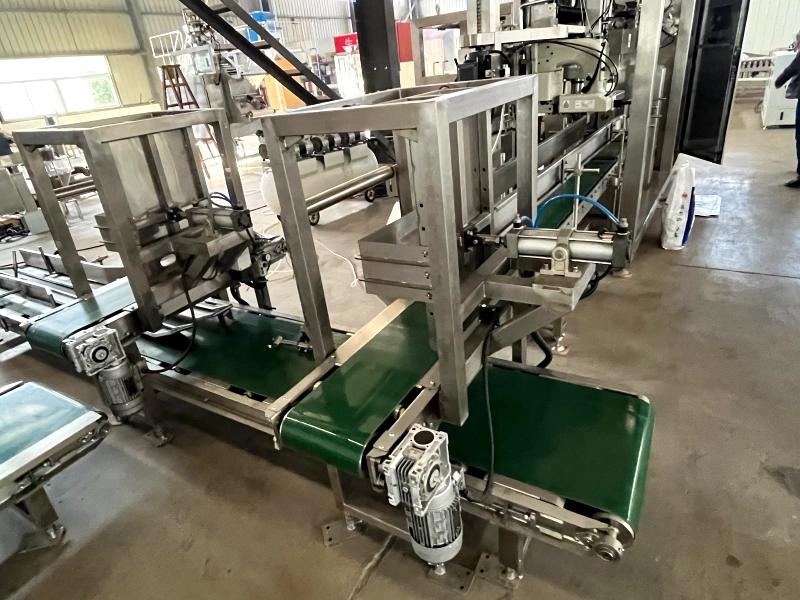
    Вторичная Упаковочная Машина

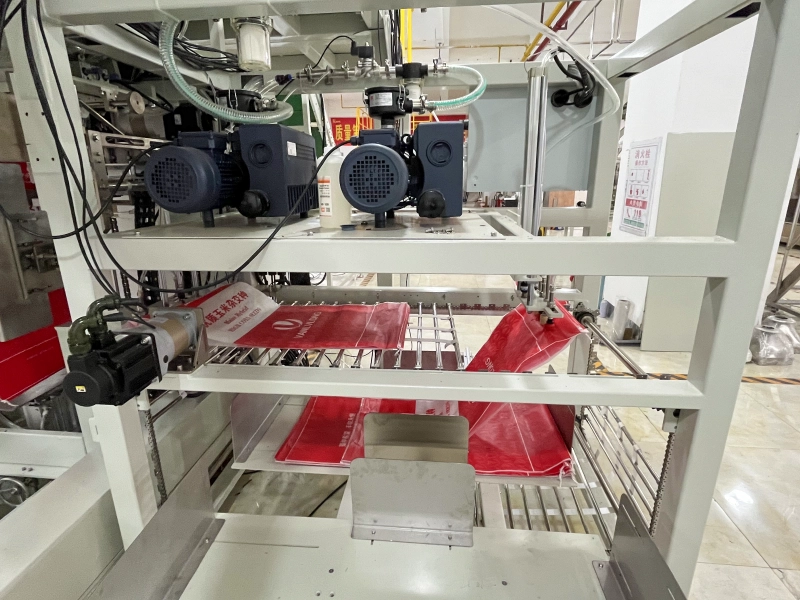
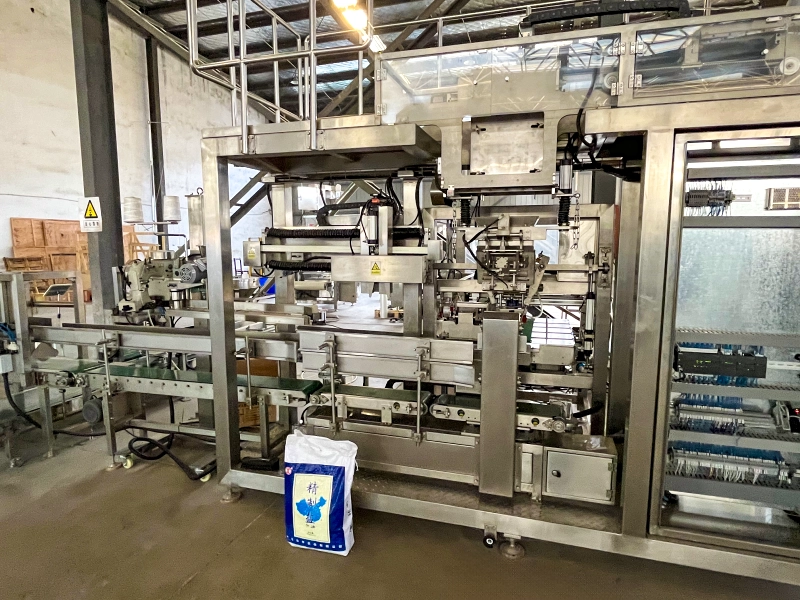
    Figure 2: Controlled transfer. Even after sewing, the bag turning mechanism relies on precise friction control to orient heavy 50kg bags for metal detection.

    Surviving the “Salt Fog”

    Solving the slip is only half the battle. In a salt processing plant, the air itself eats metal. A standard carbon steel conveyor will seize up within 18 months due to rust.

    Our Вторичная Упаковочная Машина systems are built with a “Salt-Spec” configuration:

    316L Stainless Steel Contact Points: Every surface that touches your product is medical-grade stainless steel. It resists the chloride attack that destroys lesser metals.
    Sealed Bearings & Motors: We use IP65/IP67 rated motors (SEW/Shiyuan) and sealed bearings to prevent salt dust from entering the moving parts and creating abrasive paste.

    From Slippery Chaos to Solid Stacks

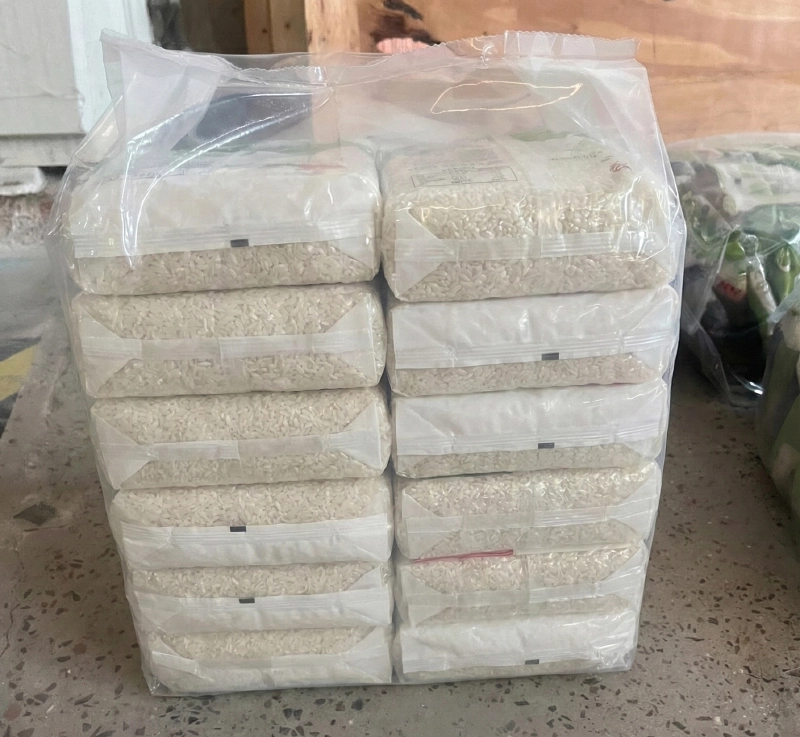
    When you control the friction on the conveyor, you control the quality of the final pallet. By ensuring the bags are de-aerated and perfectly spaced before they enter the master bag, the final secondary package is a tight, square brick—not a loose sack.

    This means when our robot palletizer stacks them, they interlock perfectly. No more “leaning towers” of salt that get rejected by supermarket distribution centers.
    Вторичная Упаковочная Машина

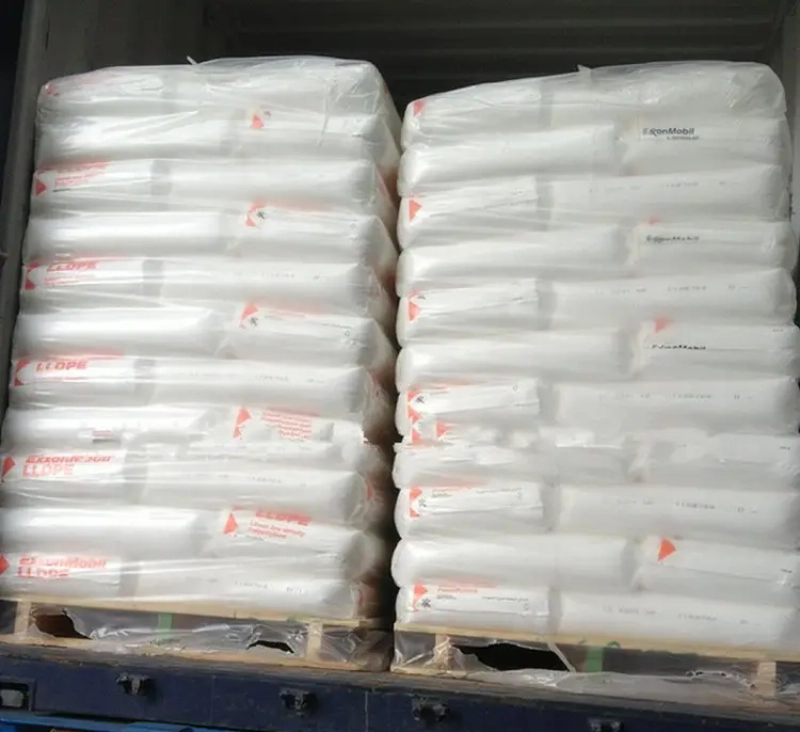
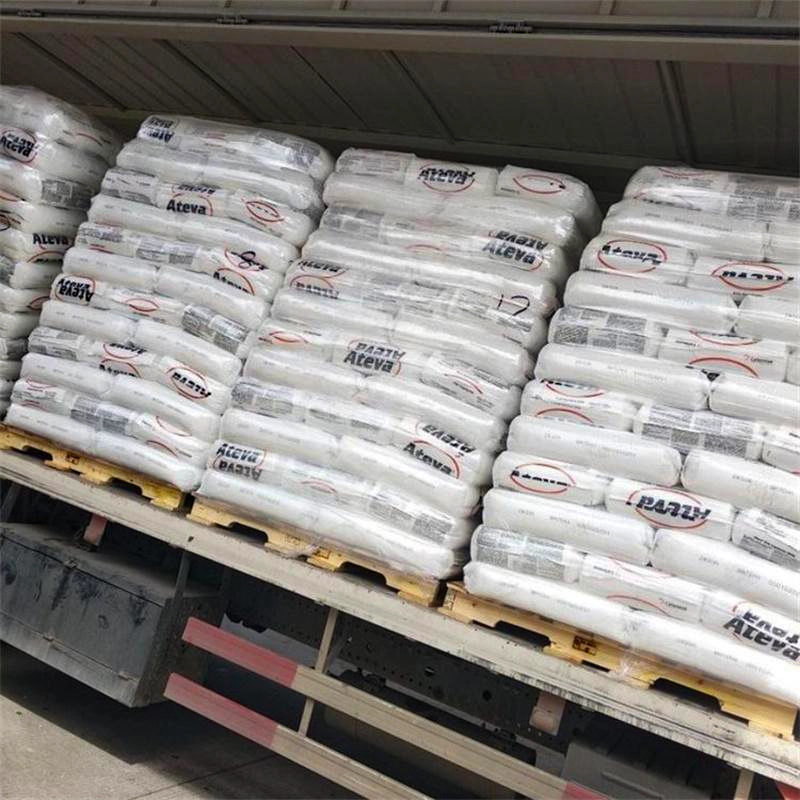
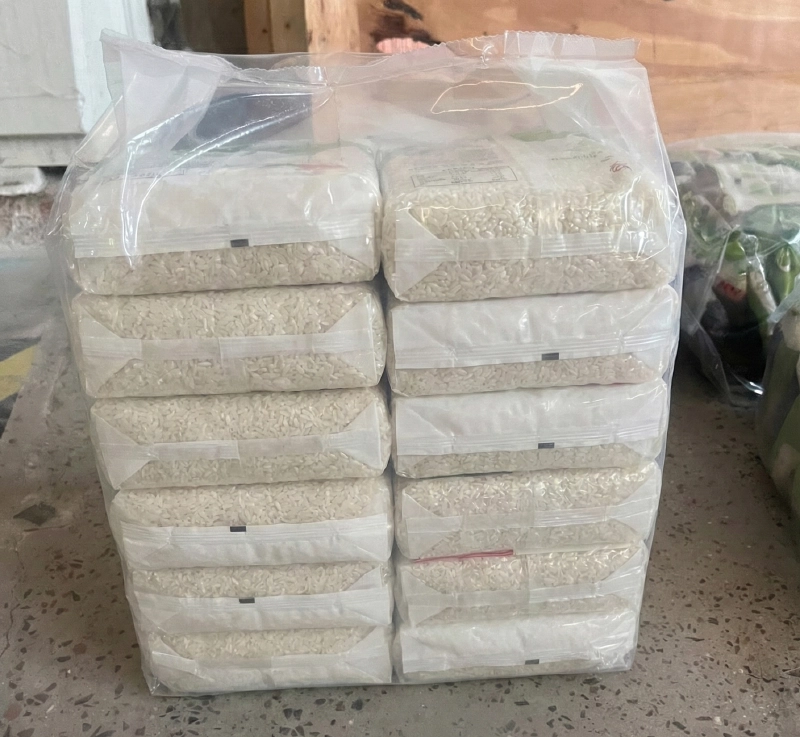
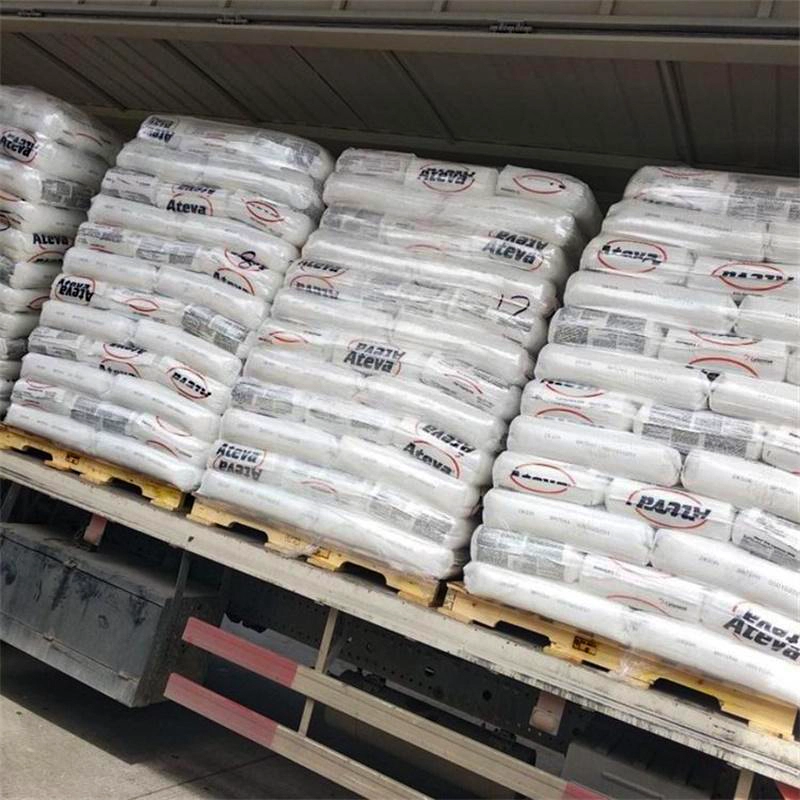
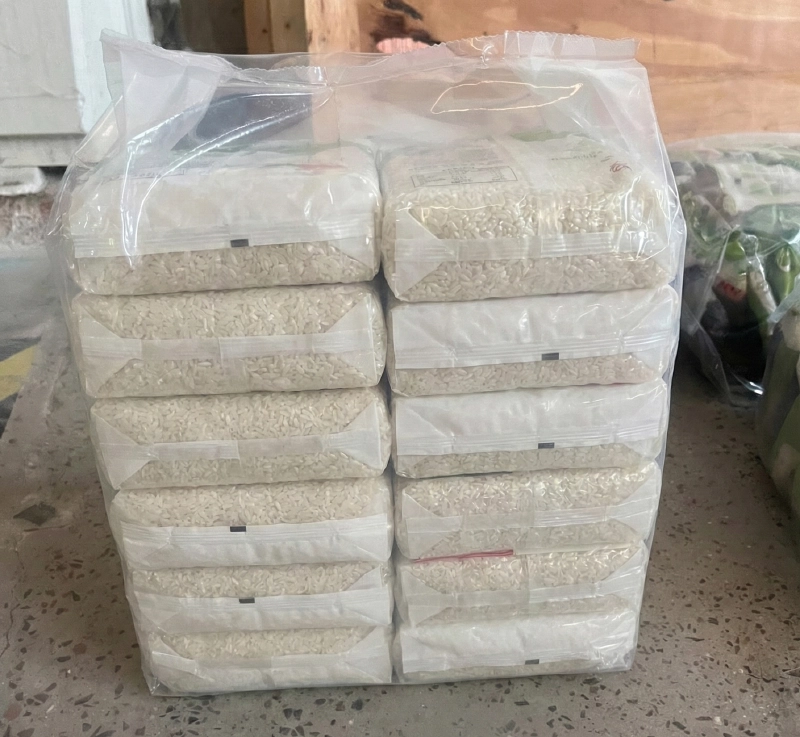
    Figure 3: The ultimate test. Properly conveyed and packed bags create stable, transport-ready pallets that withstand long-haul trucking without shifting.

    Frequently Asked Questions

    1. Can this system handle wet or “green” salt?
    Yes. For high-moisture salt, we upgrade the anti-slip belts to a specialized high-drainage design and increase the steepness of the vibration angles to prevent sticking.

    2. My current bags are very dusty. Will the photo-eyes work?
    We use SICK (Germany) sensors with background suppression and dust-penetrating modes specifically for this industry. We also install air-knives to keep the sensor lenses clean automatically.

    3. How do you prevent the woven master bags from slipping during sewing?
    The sewing station utilizes a synchronized dual-belt feed system with a knurled surface grip. This holds the heavy woven bag (up to 50kg) firmly while the needle passes through, ensuring a straight seal line.

    4. What happens if a bag breaks on the conveyor?
    We integrate a “Salt Filtering Conveyor” with diamond-pattern rollers. If a bag breaks, the loose salt falls through the rollers into a collection tray below, rather than accumulating on the belt and causing the entire line to slip.

    5. Do you support the “Chestny ZNAK” tracking system for Russia?
    Absolutely. Our conveyors are designed with stabilized sections specifically for Thermal Transfer Overprinters (TTO) to apply Data Matrix codes clearly, without the vibration that causes unreadable codes.

    Нужна консультация по упаковочному оборудованию?
    СВЯЗАТЬСЯ С НАМИ →

  • Машина для групповой упаковки во вторичных пакеты плотная укладка

    Машина для групповой упаковки во вторичных пакеты плотная укладка

    Вторичная Упаковочная Машина

    Is Your Salt Arriving as “Bricks” or Broken Bags?

    In the salt mining industry, humidity is the enemy. Manual packing leaves air inside small bags, creating “balloons” that slide off pallets and turn into hard rocks during transport.

    Our Salt-Specific Secondary Packaging Line solves the “aeration problem” by mechanically squeezing air out and tightly packing 1kg bags into 25kg/50kg woven sacks—engineered with 316L stainless steel to survive the harshest corrosive environments.

    The “Balloon Effect”: Why Loose Packing Kills Profit

    If you are managing a salt processing plant (like Tyretsky or similar operations), you know the nightmare of “aerated bags.” When 1kg salt bags are packed manually or by standard machines, they retain about 30% air.

    This creates a chain reaction of logistics failures:

    • Pallet Instability: Rounded, air-filled bags do not stack flat. They act like rollers. When your forklift driver turns a corner, the entire pallet of 50kg master bags can collapse (the “flowering” effect).
    • Hygroscopic Caking: Excess air inside the master bag means excess moisture. Your premium table salt turns into a solid block before it even reaches the retailer.
    • Volume Waste: You are paying freight costs to ship air. A truck that should carry 20 tons often maxes out at 16 tons because the pallets are too bulky and unstable to double-stack.

    To solve this, you need a specialized Машина для групповой упаковки во вторичных пакеты плотная укладка (Machine for group packaging in secondary bags with tight packing) that physically forces air out before the bag is sealed.

    Вторичная Упаковочная Машина

    The Double-Deck Shaping Conveyor presses “balloon” bags into flat “bricks” for high-density packing.

    Engineering the Perfect “Salt Brick”

    Standard packaging lines fail in the salt industry because they treat salt like plastic parts. Our BPM solution treats salt like a fluid that needs to be tamed. Here is the logic behind our tight packing technology:

    1. Vibration & Settling: Before the small bags enter the grouping unit, they pass over a specialized vibration conveyor. This settles the granules, reducing volume naturally.
    2. Mechanical Compression (The Shaper): As seen in the image above, our double-deck conveyor applies adjustable pressure to the top of the passing bags. This forces air out through the micro-perforations in the film, transforming a round bag into a flat, stackable rectangular “brick.”
    3. Precision Grouping: The machine counts and arranges these flat bags (e.g., 20 bags of 1kg) into a tight matrix. Because they are flat, they fit snugly into the PP woven master bag with zero wasted space.

    The result? A rock-solid 25kg or 50kg master bag that stacks like a concrete block, not a beanbag.

    Вторичная Упаковочная Машина

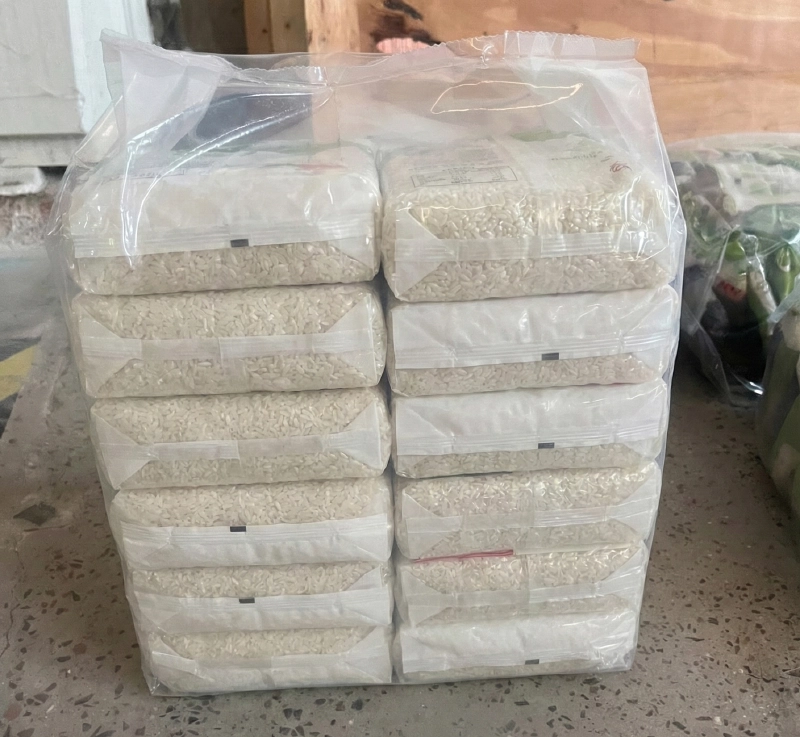
    The final result: Tightly grouped small bags inside the secondary packaging, ready for stable palletizing.

    316L Stainless Steel: Built for the Salt Mine

    In a salt packaging facility, corrosion is inevitable for standard machinery. The “salt fog” in the air attacks carbon steel and even lower-grade 304 stainless steel, leading to rust contamination in your product and frequent machine downtime.

    Our Машина для групповой упаковки во вторичных пакеты плотная укладка is configured specifically for this environment:

    • Contact Parts: All parts touching the salt are upgraded to 316L Medical Grade Stainless Steel, which offers superior resistance to chloride corrosion.
    • Electrical Protection: Control cabinets are sealed with positive pressure to prevent salt dust ingress, protecting the sensitive Siemens PLC and Inovance servos.
    • Dust Extraction: Integrated negative pressure ports at the filling station suck away the fine salt dust before it settles on the sealing bars, ensuring a hermetic seal every time.

    Maximize Your Truck Loads

    The ultimate test of a secondary packaging machine is how the product survives the journey from Irkutsk to Moscow. Loose bags mean you can’t double-stack pallets in the truck without crushing the bottom layer.

    By utilizing our tight packing system, you achieve high-density pallets. The interlocking pattern of the master bags provides structural integrity, allowing for safe double-stacking in trucks and containers. This increases your shipping capacity by up to 20% per vehicle.

    Вторичная Упаковочная Машина

    Stable, tightly packed pallets allow for optimized truck loading and prevent transit damage.

    FAQ: Salt Industry Packaging Solutions

    Q1: Can this machine handle both 25kg and 50kg woven bags for salt?

    Yes, the system is adjustable. You can switch between 25kg (e.g., 25 x 1kg) and 50kg (e.g., 50 x 1kg) formats via the Siemens touchscreen. Mechanical adjustments for bag width take approximately 20-30 minutes.

    Q2: How do you prevent the woven bag from slipping during the sewing process?

    We use a specialized “Bag Holding Mechanism” with high-friction grippers that support the heavy bag’s weight while it moves through the sewing head. This prevents the bag from tearing or slipping, ensuring a straight, strong seal.

    Q3: Is the machine compatible with PP woven bags that have a PE liner?

    Absolutely. This is the standard for salt packaging to prevent moisture. Our bag opening system uses strong vacuum suction and mechanical grippers to ensure both the outer woven layer and the inner PE liner are opened simultaneously for filling.

    Q4: What happens if a 1kg salt bag breaks inside the machine?

    The system features a “Salt Filtering Conveyor” with diamond-pattern rollers. If a bag breaks, the loose salt falls through the rollers into a collection tray below, preventing it from contaminating the final master bag or jamming the belt.

    Q5: Do you provide installation services in Russia?

    Yes, we offer complete turnkey installation. Our engineers can travel to your site for setup, commissioning, and training your local operators (Оператор) on how to maintain the equipment.

    Нужна консультация по упаковочному оборудованию?
    СВЯЗАТЬСЯ С НАМИ →

  • Автоматическая вторичная пакетировочная упаковочная машина расход воздуха

    Автоматическая вторичная пакетировочная упаковочная машина расход воздуха

    Автоматическая вторичная пакетировочная упаковочная машина

    In the salt and fertilizer processing industry, compressed air is your “fourth utility”—and often the most expensive one. A drop in pneumatic pressure doesn’t just mean a slower line; it means Автоматическая вторичная пакетировочная упаковочная машина fails to open the master bag, leading to catastrophic salt spillage, equipment corrosion, and hours of downtime. Stop letting air leaks drain your profit margins.

    The Hidden Pneumatic Cost in Bulk Solids Packaging

    If you are managing a packaging line for hygroscopic materials like sea salt, urea, or starch, you know that your environment is the enemy of standard machinery. The air around your line is filled with corrosive micro-dust. When we discuss the air consumption of a secondary packaging line, we aren’t just talking about the size of your compressor; we are talking about the reliability of every single actuation in a hostile environment.

    In a typical “Bag-in-Bag” (BIB) system, compressed air (0.6 MPa – 0.8 MPa) is the lifeblood for three critical functions: Vacuum Generation for bag picking, Cylinder Actuation for bag clamping/opening, and High-Speed Rejection for weight control.

    1. The “Lung” of the System: Vacuum Bag Opening

    The most air-intensive process in your secondary packaging line is the automatic bag feeding and opening. Unlike rigid cardboard boxes, woven PP bags are porous and “limp.” They don’t want to open.

    Вторичная Упаковочная Машина

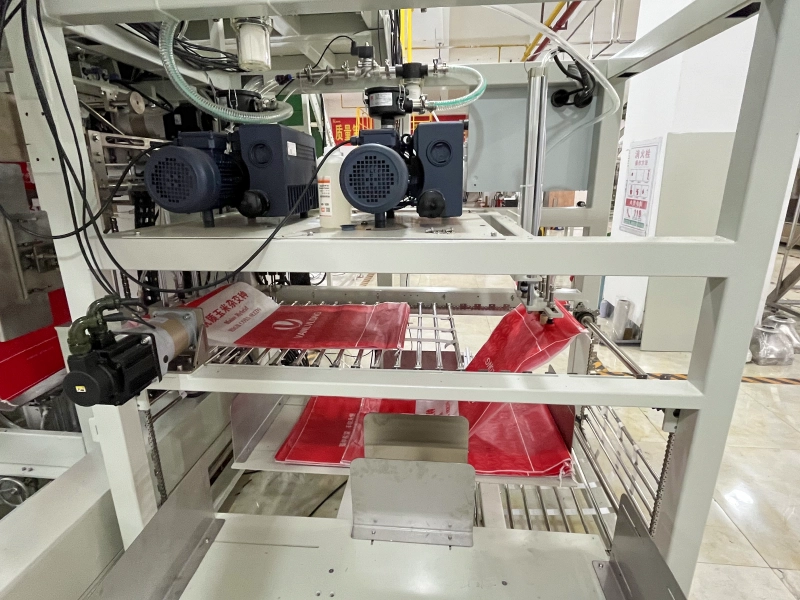
    The precision suction cup system requires consistent air pressure to separate and open woven bags without failure.

    Our system utilizes high-flow vacuum generators driven by compressed air. Here is the specific challenge in the salt industry: if your air consumption calculation is off, or if your plant pressure fluctuates due to other equipment coming online, the vacuum cups will fail to separate the bag lips. The result? The machine attempts to stuff 20 packs of salt into a closed bag. This causes a “jam-up” that forces your operators to stop the line and manually clear corrosive salt spills—a safety hazard and an efficiency killer.

    2. Rejection Systems: Speed Requires Pressure

    Consistency is king. Before the master bag is even filled, every single 1kg consumer unit passes through a checkweigher. When a bag is underweight (a sign of bridging in the auger filler) or overweight, it must be rejected instantly.

    Вторичная Упаковочная Машина

    Pneumatic rejectors on the checkweigher demand instant, high-pressure air bursts to remove non-compliant packs at high speeds.

    The rejection arm is purely pneumatic. It relies on a “burst” of air consumption. If your Автоматическая вторичная пакетировочная упаковочная машина is starved of air, the rejector becomes sluggish. A sluggish rejector might only partially hit the bad bag, causing it to jam the conveyor rails, or worse, let an underweight bag pass through to the master pack, leading to a batch rejection by your retail client.

    3. The Heavy Lifting: Bag Turning and Shaping

    Once the 50kg master bag is sewn, it stands vertically. To be palletized by the robot, it must be laid flat. This is not done by motors, but by a heavy-duty pneumatic pusher.

    Вторичная Упаковочная Машина

    The bag turning mechanism relies on robust pneumatic cylinders to knock down heavy 50kg bags for palletizing.

    This single motion represents a significant portion of the cycle’s air consumption. In salt and fertilizer plants, the cylinder rod is exposed to dust every time it extends. If you use standard cylinders, the seals will degrade within months, leading to massive air leaks. We utilize Airtac and SMC components with specific dust-wipers and, where necessary, stainless steel fittings to ensure that air consumption remains stable over years of operation, not just weeks.

    Optimization: How We Reduce the “Air Bill”

    We don’t just consume air; we manage it. Our systems integrate Servo Motors (Inovance) for the precise, variable movements (like film pulling and counting), leaving pneumatics only for the binary “open/close” or “push/pull” actions. This hybrid design significantly lowers the CFM (Cubic Feet per Minute) requirement compared to older, fully pneumatic machines.

    By upgrading to a modern secondary packaging line, you are effectively sealing the leaks in your balance sheet. You get consistent bag opening, reliable rejection, and a pallet that doesn’t collapse during transport.


    Frequently Asked Questions (FAQ)

    Q1: What is the typical air pressure requirement for this secondary packaging line?
    The system requires a stable air supply of 0.6 MPa to 0.8 MPa. Stability is key; we recommend a dedicated air tank buffer near the machine to prevent pressure drops when other plant equipment cycles on.

    Q2: My plant processes urea fertilizer which is highly corrosive. Will the pneumatic fittings survive?
    Yes. For corrosive environments like urea and salt, we upgrade critical pneumatic fittings to 316L Stainless Steel and use corrosion-resistant cylinder bodies. We also recommend installing air dryers to prevent moisture from mixing with fertilizer dust inside the lines.

    Q3: Does the machine stop if air pressure drops?
    Yes, the system is equipped with low-pressure sensors (SICK/Omron). If the pressure falls below the safe operating threshold (e.g., 0.5 MPa), the Автоматическая вторичная пакетировочная упаковочная машина will auto-pause to prevent half-opened bags or incomplete seals, protecting your product and equipment.

    Q4: How much air does the machine consume per minute?
    Air consumption depends on the speed (bags per minute). For a standard 20kg line running at 4-5 bags/minute, consumption is moderate. However, the momentary flow rate is high during the vacuum generation phase. We can provide a precise CFM calculation based on your specific speed requirements.

    Q5: Why use pneumatics for the rejector instead of an electric pusher?
    For high-speed 1kg salt bags, pneumatic rejectors offer the fastest reaction time (milliseconds) and the high force-to-weight ratio needed to “punch” a heavy bag off the line instantly without the risk of motor burnout in a stall situation.

    Нужна консультация по упаковочному оборудованию?
    СВЯЗАТЬСЯ С НАМИ →

  • Автоматическая вторичная упаковочная машина для кормов

    Автоматическая вторичная упаковочная машина для кормов

    Вторичная Упаковочная Машина

    Ваш экструдер работает на полную мощность, но склад завален “раздутыми” мешками, которые невозможно штабелировать? В производстве кормов узкое место всегда находится в конце линии. Ручная укладка скользких пакетов с гранулами в транспортные мешки — это не просто медленно, это риск возврата всей партии из-за развалившихся паллет. Наша система превращает хаос фасовочного цеха в идеальную геометрию логистики.

    Talk With An Expert

    Почему обычная упаковка не подходит для кормов и премиксов

    Производство кормов для животных — это борьба с двумя физическими свойствами продукта: текучестью и пылением. Будь то гранулированный корм для кроликов по 1 кг или премиксы для птицеводства, первичная упаковка часто насыщена воздухом. Когда рабочие вручную пытаются утрамбовать эти “подушки” в групповой полипропиленовый мешок, результат предсказуем: рыхлая упаковка, которая “плывет” при транспортировке.

    Наша Вторичная Упаковочная Машина решает эту проблему инженерным путем, а не грубой силой.

    Вторичная Упаковочная Машина

    Двухканальная система принудительного формирования пакета перед укладкой

    Технология “Кирпич”: Превращаем воздух в стабильность

    Главная боль технолога комбикормового завода — это “пухлые” пакеты. Если 1-килограммовый пакет с кормом имеет форму шара, в транспортный мешок их влезет меньше расчетного, а сама паллета будет похожа на Пизанскую башню.

    Мы интегрировали в линию двухъярусный конвейер-формирователь (Double-deck incline conveyor). Он работает как пресс: пакеты с кормом зажимаются между двумя лентами. Это принудительно распределяет гранулы внутри пакета, выгоняет лишний воздух и придает упаковке плоскую форму “кирпича”. Только после такой подготовки продукт поступает на группировку.

    Автоматизация работы со “скользким” полипропиленом

    Тканые полипропиленовые мешки (Woven bags) — стандарт для кормовой индустрии из-за их прочности и дешевизны. Но они имеют высокий коэффициент скольжения и часто “лохматятся” по краям, что делает автоматическое раскрытие ночным кошмаром для обычных машин.

    Наша система использует специализированный механизм захвата и раскрытия с усиленными присосками, рассчитанными на пористую структуру ткани. Система не просто “бросает” продукт в мешок, а жестко фиксирует горловину, обеспечивая корректную загрузку даже при высокой запыленности цеха.

    Вторичная Упаковочная Машина

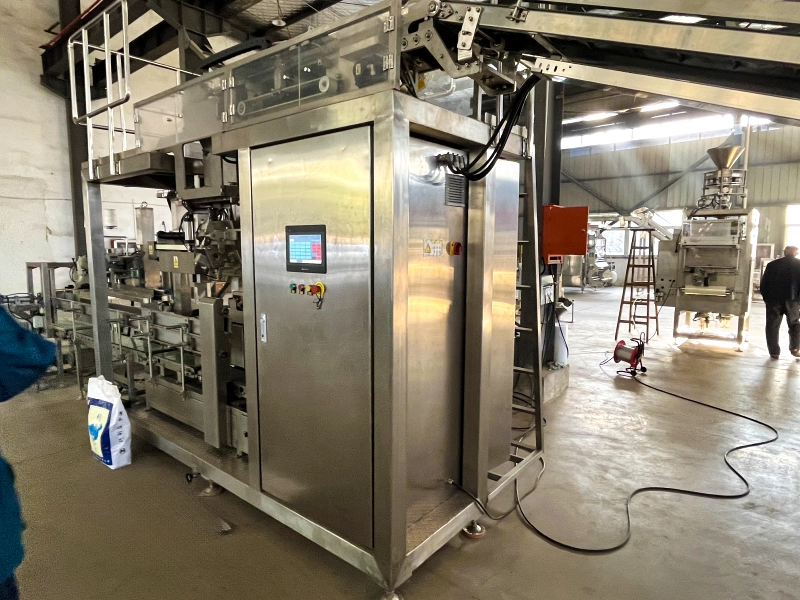
    Узел автоматической подачи мешка, наполнения и зашивки

    Точный счет: Исключаем “человеческий фактор” при отгрузке

    В ручном режиме операторы часто ошибаются: положили 19 пакетов вместо 20. Для конечного потребителя (фермера или зоомагазина) это повод для претензии. Наша Вторичная Упаковочная Машина оснащена системой точного подсчета и группировки (Counting and arranging machine).

    Специальные отсекатели формируют точную матрицу пакетов перед сбросом. Если вес первичной упаковки отклоняется от нормы (например, недосып гранул), встроенный чеквейер (Checkweigher) отбракует её еще до попадания в групповой мешок. Вы отправляете клиенту только 100% качественный и пересчитанный продукт.

    Вторичная Упаковочная Машина

    Механизм точного подсчета и группировки пакетов с кормом

    Финал: Логистика без потерь

    Завершающий этап — это паллетирование. Роботизированная рука-манипулятор укладывает готовые мешки по запрограммированной схеме перевязки. В отличие от грузчиков, робот не устает к концу смены и формирует идеально ровные паллеты высотой до 2 метров, которые не разваливаются при перевозке в фуре.

    Вторичная Упаковочная Машина

    Идеальная геометрия паллеты для складского хранения и транспортировки


    Часто задаваемые вопросы (FAQ)

    1. Справится ли машина с пылью от комбикорма?

    Да, оборудование имеет исполнение с защитой от пыли. Ключевые узлы (пневматика, датчики) изолированы, а зона зашивки мешка может быть оснащена системой аспирации для удаления пыли перед герметизацией.

    2. Можно ли упаковывать разные виды кормов (гранулы и рассыпной) на одной линии?

    Да, система универсальна. Переналадка с одного размера первичного пакета на другой или смена типа продукта занимает минимальное время благодаря рецептурному управлению через PLC Siemens.

    3. Какие типы внешних мешков поддерживает машина?

    Машина оптимизирована для работы с ткаными полипропиленовыми мешками (с ламинацией или без), а также с бумажными крафт-мешками, которые часто используются для премиальных кормов.

    4. Как обеспечивается прочность шва на мешке?

    Мы используем промышленные швейные головки Newlong (или аналоги), которые делают двойной цепной стежок. Это гарантирует, что тяжелый мешок с кормом не разойдется при падении или транспортировке.

    5. Какова производительность линии?

    В зависимости от конфигурации и веса продукта, линия может обрабатывать до 800-1000 мешков в час, полностью заменяя ручной труд бригады из 4-6 человек.

    Нужна консультация по упаковочному оборудованию?
    СВЯЗАТЬСЯ С НАМИ →

  • Машина вторичной упаковки сухого молока пищевая 304

    Машина вторичной упаковки сухого молока пищевая 304

    Вторичная Упаковочная Машина

    Сухое молоко — это не песок и не щебень. Это «живой», гигроскопичный и дорогой продукт, который ведет себя как жидкость. Если ваша упаковочная линия оставляет воздух в пакетах, вы перевозите «воздушные шары», а не товар. Если вы используете обычную сталь, вы приглашаете ржавчину и бактерии в свой цех.

    Наша Машина вторичной упаковки сухого молока пищевая 304 — это санитарный стандарт, превращенный в металл. Мы решаем три главные проблемы молочного цеха: аэрацию продукта, гигиеническую безопасность и стабильность паллеты.

    Почему «Пищевая 304» — это не опция, а закон выживания

    В молочной промышленности компромиссы с материалами заканчиваются там, где начинается микробиология. Сухое молоко, особенно с высоким содержанием жира, при контакте с окисленным металлом или микротрещинами мгновенно становится средой для развития патогенов. Обычная углеродистая сталь здесь недопустима.

    Наша Машина вторичной упаковки сухого молока пищевая 304 спроектирована по принципу «Sanitary Design». Все зоны, контактирующие с продуктом и упаковкой — от шнекового дозатора до направляющих вторичной упаковки — выполнены из нержавеющей стали AISI 304 (или 316L по запросу). Это означает:

    • Устойчивость к агрессивной мойке: Вы можете использовать щелочные и кислотные растворы для CIP-мойки без риска коррозии.
    • Гладкие сварные швы: Никаких пор, где может скапливаться молочная пыль и размножаться бактерии.
    • Отсутствие «мертвых зон»: Конструкция исключает скрытые полости, куда может попасть порошок и заплесневеть.
    Вторичная Упаковочная Машина

    Система дозирования из нержавеющей стали 304 гарантирует чистоту продукта на входе в линию.

    Битва с воздухом: Как превратить «подушку» в «кирпич»

    Главная боль технолога на линии сухого молока — это аэрация. Порошок насыщается воздухом в процессе транспортировки и фасовки. В результате пакет 1 кг выглядит раздутым, как мяч. Если такой пакет попытаться сразу уложить в мешок или коробку, он лопнет, либо укладка будет нестабильной («плавающей»).

    Мы не ждем, пока порошок осядет сам (это слишком долго). Мы используем принудительную деаэрацию и механическое профилирование:

    1. Микро-перфорация: На этапе первичной фасовки создаются микроскопические каналы для выхода воздуха, не пропускающие сам продукт.
    2. Вибро-уплотнение: Высокочастотная вибрация заставляет частицы молока укладываться плотнее.
    3. Двойное прессование: Наша система оснащена специализированным конвейером-формирователем. Он мягко, но настойчиво «прокатывает» пакет, выдавливая остатки воздуха и придавая упаковке идеальную плоскую форму.
    Вторичная Упаковочная Машина

    Двухленточный транспортер выравнивает пакеты с молоком, подготавливая их к групповой упаковке.

    Автоматизация «Мешок в Мешок»: Точность до грамма

    Сухое молоко — дорогой биржевой товар. Потеря даже 0.5% продукта на линии из-за разрывов или передозировки («Giveaway») — это сотни тысяч рублей убытков в год. Ручная укладка здесь — главный враг. Усталый оператор может порвать пакет, неправильно посчитать вложение или неплотно зашить внешний мешок, что приведет к отсыреванию всей партии.

    Наша автоматическая линия работает как швейцарские часы:

    • Группировка: Пакеты 500г или 1кг собираются в заданную матрицу (например, 5×4).
    • Бережная загрузка: Система «мягкой посадки» опускает группу пакетов в полипропиленовый мешок или крафт-мешок, исключая пыление.
    • Герметизация: Автоматическая зашивка с подворотом или термопайка гарантирует, что влага извне не попадет внутрь при морской транспортировке.
    Вторичная Упаковочная Машина

    Сердце системы: узел автоматической загрузки и зашивки мешка, исключающий человеческий фактор.

    Логистика без сюрпризов: От цеха до контейнера

    Молочный порошок часто идет на экспорт. Это означает недели в пути, перепады температур и тряску в контейнерах. Если паллета собрана плохо, мешки «поплывут», трутся друг о друга, нагреваются и рвутся. Результат — возврат партии и штрафы.

    Интегрированный в нашу линию робот-паллетайзер не просто складывает мешки. Он формирует монолитный куб. Используя схемы перевязки слоев (interlocking patterns) и прессование каждого слоя, мы добиваемся максимальной плотности загрузки. Вы перестаете возить воздух в контейнерах и получаете гарантию, что груз доедет до Китая или Ближнего Востока в товарном виде.

    Вторичная Упаковочная Машина

    Идеальная геометрия паллеты позволяет максимально использовать объем морского контейнера.


    Часто задаваемые вопросы (FAQ)

    1. Как машина справляется с молочной пылью, которая может вывести из строя электронику?
    Мы используем шкафы управления с классом защиты IP65/IP66 и системой избыточного давления. Это предотвращает попадание мелкодисперсной пыли внутрь к чувствительным компонентам PLC и сервоприводов.

    2. Можно ли упаковывать на одной линии сухое обезжиренное молоко (СОМ) и сухую сыворотку?
    Да, наша Машина вторичной упаковки имеет память рецептов. Вы можете переключаться между продуктами разной плотности, изменяя параметры вибрации и дозирования через сенсорный экран за пару минут.

    3. Соответствует ли нержавеющая сталь российским стандартам ГОСТ для пищевых производств?
    Абсолютно. Мы используем сталь AISI 304 (аналог 08Х18Н10 по ГОСТ), которая является золотым стандартом для молочной промышленности и полностью сертифицирована для прямого контакта с продуктами питания.

    4. Как предотвращается попадание металлических включений в готовый мешок?
    Линия может быть опционально оснащена металлодетектором и рентген-контролем перед финальной упаковкой. При обнаружении инородного тела система автоматически отбракует загрязненный пакет без остановки всей линии.

    5. Насколько сложно мыть оборудование при смене продукта?
    Конструкция предусматривает быстрый разбор без инструментов (tool-free) основных узлов. Гладкие поверхности и открытый дизайн рамы позволяют проводить полную санитарную обработку в кратчайшие сроки, минимизируя простой линии.

    Нужна консультация по упаковочному оборудованию?
    СВЯЗАТЬСЯ С НАМИ →

  • Вторичная Упаковочная Машина стирального порошка

    Вторичная Упаковочная Машина стирального порошка

    Вторичная Упаковочная Машина

    Вторичная Упаковочная Машина

    Ваш стиральный порошок заслуживает идеальной логистики, а не «пыльного хаоса» на складе.

    Остановите потери от порванных мешков и нестабильных паллет. Узнайте, как автоматизировать групповую упаковку бытовой химии и сократить штат упаковщиков с 10 до 2 человек уже сегодня.

    Вторичная Упаковочная Машина стирального порошка: Конец эпохи ручного труда

    Производство синтетических моющих средств (СМС) — это битва с двумя врагами: пылью и скоростью. Когда ваши вертикальные фасовочные машины (VFFS) выдают по 60 пакетов в минуту, ручная укладка в мешки становится «узким горлышком», тормозящим весь завод. Пакеты со стиральным порошком скользкие, «живые» и при малейшем нажатии выбрасывают облако химической пыли.

    Наша Вторичная Упаковочная Машина (Secondary Packaging Machine) разработана специально для химической промышленности. Мы заменяем хаотичный ручной труд на инженерную точность системы Bag-in-Bag («мешок в мешок»), обеспечивая герметичность и идеальную геометрию для логистики.

    Проблема: «Эффект мыла» и разваливающиеся паллеты

    До внедрения: Пакеты со стиральным порошком (обычно 3 кг или 5 кг), изготовленные из полиэтилена или ламинированной пленки, имеют крайне низкий коэффициент трения. При ручной укладке в групповой мешок они ложатся неравномерно. Результат? Кривые, «пузатые» мешки, которые невозможно штабелировать. При транспортировке паллеты с бытовой химией часто заваливаются, приводя к возвратам от торговых сетей.

    Решение BPM: Наша система использует принудительное формирование слоя. Перед тем как попасть в большой плетеный мешок, индивидуальные пакеты проходят через систему двухъярусных конвейеров-формирователей. Мы буквально «выдавливаем» лишний воздух и придаем пакету форму кирпича. Робот-укладчик затем получает идеально плоский продукт.

    Вторичная Упаковочная Машина

    Двухъярусная система формирования пакетов перед групповой упаковкой

    Результат: Вы получаете плотный, компактный групповой мешок. Коэффициент загрузки фуры увеличивается на 15-20% за счет более плотной укладки, а риск обрушения паллет сводится к нулю.

    Борьба с пылением и агрессивной средой

    Стиральный порошок — это химически активная среда. Мелкая пыль проникает в подшипники, выводит из строя электронику и разъедает обычный металл. Обычные упаковочные линии здесь живут недолго.

    Наша Вторичная Упаковочная Машина построена по стандартам химической защиты:

    • Нержавеющая сталь 304/316L: Все части, контактирующие с продуктом, выполнены из коррозионностойких материалов.
    • Герметичные шкафы управления: Электроника Siemens надежно изолирована от внешней среды.
    • Пылезащищенная пневматика: Мы используем компоненты SMC и Airtac, устойчивые к работе в запыленных цехах.
    Вторичная Упаковочная Машина

    Автоматический узел зашивки мешка, устойчивый к пыли

    Интеллектуальная интеграция: От дозатора до склада

    Автоматизация — это не просто установка робота. Это синхронизация потоков. Наша линия объединяет разрозненные процессы в единый организм:

    1. Слияние потоков: Продукция от нескольких вертикальных машин (VFFS) поступает на единый конвейер.
    2. Контроль качества: Встроенные чеквейеры (Checkweigher) отбраковывают пакеты с недовесом, предотвращая претензии потребителей.
    3. Групповая упаковка: Автоматический подсчет и укладка пакетов (например, 10 пакетов по 1 кг) в полипропиленовый плетеный мешок.
    4. Роботизированная паллетизация: Робот KUKA или ABB бережно укладывает готовые мешки на поддон, формируя идеальный штабель.
    Вторичная Упаковочная Машина

    Интеллектуальная система слияния потоков и управления конвейерами

    Внедрение этой системы позволяет химическим предприятиям отказаться от бригад ручной упаковки, устранить человеческий фактор (ошибки в счете, некачественная зашивка) и гарантировать стабильность поставок даже в пиковые сезоны продаж.

    Часто задаваемые вопросы (FAQ) для производителей бытовой химии

    В: Справится ли машина с пакетами разного веса (например, 450г, 1кг, 3кг)?
    О: Да, наша система модульная. Переналадка с формата на формат занимает минимум времени благодаря рецептурному управлению в PLC Siemens. Вы можете фасовать разные форматы на одной линии.
    В: Как система защищена от агрессивной химической пыли стирального порошка?
    О: Мы используем исполнение из нержавеющей стали, герметичные подшипниковые узлы и систему аспирации в зоне засыпки и зашивки, чтобы предотвратить накопление пыли внутри механизмов.
    В: Можно ли использовать вторичные мешки из полиэтилена вместо плетеных?
    О: Да, наша Вторичная Упаковочная Машина универсальна. Мы можем адаптировать узел раскрытия и запайки под ПЭ-мешки, крафт-бумагу или полипропиленовые плетеные мешки.
    В: Какова точность подсчета пакетов при высокой скорости?
    О: Точность составляет 100%. Мы используем многоступенчатую систему контроля с оптическими датчиками SICK. Если количество пакетов в группе не соответствует заданному, сброс в большой мешок блокируется.
    В: Сколько места занимает линия в цехе?
    О: Линия проектируется индивидуально под вашу планировку (Layout). Мы можем использовать спиральные конвейеры для вертикального перемещения, чтобы сэкономить полезную площадь вашего завода.

    Нужна консультация по упаковочному оборудованию?
    СВЯЗАТЬСЯ С НАМИ →

  • Машина вторичной упаковки устранение воздуха из пакетов

    Машина вторичной упаковки устранение воздуха из пакетов

    Вторичная Упаковочная Машина
    Stop Shipping Air: The “Balloon Bag” Crisis in Starch & Flour Packaging

    If you are managing a starch or fine powder plant, you know the nightmare: 1kg bags coming off the VFFS line looking like inflated balloons. They contain 30% air, refuse to stack, and turn your pallets into “leaning towers” that get rejected by supermarkets. Manual pricking creates dust clouds and explosion risks (St1). It’s time to switch to a Secondary packaging machine engineered specifically for physical de-aeration and high-density logistics.

    The Hidden Cost of “Aeration” in Powder Logistics

    In the fine chemical and food ingredient sectors—specifically for corn starch, wheat flour, and additives—the product behaves like a fluid immediately after dosing. The “Aeration Problem” isn’t just cosmetic; it is a direct hit to your bottom line.

    When a 1kg bag is full of air, it becomes a rounded cylinder rather than a flat brick. Manual packers struggle to grip these slippery, bloated bags. To make them fit into a master woven bag, operators often resort to aggressive squeezing, which leads to micro-perforations. This releases white dust—a severe hygiene issue and a potential combustible dust hazard. Furthermore, because the bags are not flat, your shipping density drops. You are paying for a full truck but only shipping 75% of the payload weight because your pallets are bulky with trapped air.

    Double-Deck Shaping: Turning Balloons into Bricks

    Standard conveyors are useless for aerated powders. Our system employs a specialized Double-Deck Incline Conveyor designed to mechanically force air out without rupturing the seal.

    Acting like two large hands, the upper and lower belts gently compress the bag as it travels up the incline. This physical pressure settles the powder and expels excess air through the microscopic pores of the packaging material or designated micro-perforations. The result is a transformation from a “balloon” to a hard, flat “brick.” This step is non-negotiable for high-speed automated counting and stacking.

    Вторичная Упаковочная Машина

    Double-deck shaping belts compress aerated bags into flat, stackable units.

    By flattening the primary package, our Automatic secondary bagging machine ensures that when the bags are grouped, they form a solid, interlocking matrix. This is critical for preventing the “flowering” effect (where pallets blossom outward and collapse) during transport.

    Zero-Impact Loading for Fragile Bags

    Once flattened, the bags must be loaded into the master woven bag (secondary packaging). In the starch industry, dropping heavy bags from a height is a recipe for disaster—the impact can burst the seams, contaminating the entire batch.

    Our system utilizes a Servo Flexible Bottom Support mechanism. When the small bags are counted and released into the master bag, a servo-driven platform rises to meet them, reducing the drop height to near zero. It then lowers gradually as the bag fills. This “Soft Landing” technology eliminates impact shock, keeping your factory floor clean and your product contained.

    Вторичная Упаковочная Машина

    Automatic bag fetching and opening system prepares the master bag for gentle loading.

    From Wobbly Pallets to Export-Ready Units

    The final proof of efficiency is at the dock door. A manual pallet of aerated starch bags typically tops out at 750kg because it becomes unstable if stacked higher. With our air-removal and brick-forming technology, the Palletizing robot can stack solid, square master bags up to 1.2 tons on a standard industrial pallet.

    This 50% increase in pallet density means you are using fewer pallets, less wrapping film, and significantly fewer trucks to transport the same amount of product. Your product arrives at the customer’s warehouse looking professional, stable, and ready for automated warehousing systems.

    Вторичная Упаковочная Машина

    High-density, stable pallets optimized for container loading and long-distance transport.

    FAQ: Secondary Packaging for Powders & Starch
    Q: Can the machine handle the dust generated during the bagging of starch?
    A: Yes. The system is equipped with enclosed dust extraction points at critical transfer areas (bag opening, filling, and sewing). We also use IP65-rated components to prevent dust ingress into electrical panels.

    Q: My starch bags are very slippery. Will the counter count them accurately?
    A: Absolutely. We utilize high-friction PVC “grass pattern” belts specifically for slippery, dusty bags. This ensures positive traction during the acceleration and separation phases, guaranteeing 100% counting accuracy.

    Q: Does the squeezing process damage the inner bag?
    A: No. The Double-Deck Shaping conveyor applies gradual, uniform pressure across the entire surface of the bag, not a sharp impact. This gently forces air out through the bag’s natural porosity or micro-perforations without stressing the seals.

    Q: What types of master bags can be used?
    A: The system is versatile and handles PP woven bags (with or without liner) and Kraft paper laminated bags, which are standard for the export of food ingredients.

    Q: What is the typical ROI for upgrading to this automated line?
    A: By eliminating 8-10 manual packing positions and increasing logistics density by up to 50%, most starch and powder manufacturers see a return on investment in 12 to 18 months.

    Нужна консультация по упаковочному оборудованию?
    СВЯЗАТЬСЯ С НАМИ →

  • Оборудование для вторичной упаковки 316L нержавеющая сталь

    Оборудование для вторичной упаковки 316L нержавеющая сталь

    【Вторичная Упаковочная Машина】

    Is chloride corrosion eating your profits?

    For salt and chemical refineries, standard stainless steel is a ticking time bomb. You need an automated secondary packaging line armored in 316L to survive the “Salt Fog” and eliminate manual bagging bottlenecks.

    Talk With An Expert

    The “Rust Virus” in Salt & Chemical Packaging

    In the salt and chemical fertilizer industry, the environment is the enemy. We have seen too many production lines where standard 304 stainless steel equipment begins to pit and rust within 12 months due to high humidity and chloride exposure. This isn’t just an aesthetic issue; it’s a contamination risk that leads to batch rejections.

    If you are packaging sea salt, table salt, or urea, your Вторичная Упаковочная Машина (Secondary Packaging Machine) must be more than just automated—it must be chemically inert.

    Our solution utilizes 316L Medical-Grade Stainless Steel for all contact parts. Unlike standard steel, 316L contains molybdenum, which dramatically increases corrosion resistance against chlorides and industrial solvents. This ensures your equipment lasts for a decade, not just a season.

    【Вторичная Упаковочная Машина】

    316L Stainless Steel components ensure longevity in high-salinity environments.

    Solving the “Rock-Hard Brick” Phenomenon

    Salt is hygroscopic. If your 1kg consumer bags contain excess air or are loosely packed, moisture will find its way in during storage. By the time the product reaches the retailer, the salt has turned into a solid brick. Consumers don’t buy bricks; they buy free-flowing granules.

    Furthermore, “balloon bags” (bags filled with air) are a logistics nightmare. They don’t stack flat inside the master woven bag. When you try to palletize them, the stack becomes unstable and looks like a “flowering” pyramid, leading to collapsed pallets during truck transport.

    Our Double-Deck Shaping Conveyor solves this physics problem. Before the small bags enter the secondary bagging unit, they are mechanically pressed between two belts. This forces air out and distributes the salt evenly, creating a flat, “brick-like” shape that is perfect for high-density stacking.

    【Вторичная Упаковочная Машина】

    The Double-Deck Shaping Conveyor presses bags flat for stable stacking.

    The “Leaking Bag” Filter: Protecting Your Master Bag

    In high-speed salt production (30+ bags/minute per VFFS), seal failures happen. If a single leaking 1kg bag gets into your 50kg master woven bag, the abrasive salt crystals will grind against other bags during transport, causing a chain reaction of breakage.

    Manual packers often miss these micro-leaks. Our system features a specialized Salt Filtering Conveyor with diamond-pattern rollers. As bags travel up the line, the vibration shakes off loose salt and allows leaking granules to fall through the rollers. This ensures that only clean, intact bags make it into the final secondary packaging.

    Get a Custom Layout for Your Salt Refinery

    From Chaos to “Retail-Ready” Pallets

    The final challenge in the salt industry is logistics. Heavy woven bags (25kg or 50kg) are physically demanding to stack manually. Fatigue leads to irregular stack patterns, which means you cannot maximize container space.

    By integrating a KUKA or ABB Palletizing Robot at the end of the line, we convert the output into perfectly squared, stable pallets. The robot uses a specialized gripper that supports the bottom of the woven bag, preventing tearing—a common issue when handling heavy, shifting materials like salt.

    【Вторичная Упаковочная Машина】

    Perfectly interlocked stacking ensures load stability during truck transport.

    Technical Summary: The 316L Line

    ComponentSpecification
    Material ConstructionFull 316L Stainless Steel (Contact Parts) / Anti-Corrosion Coating
    ThroughputUp to 800 bags/hour (Secondary Packaging)
    Control SystemSiemens PLC + Touch Screen
    Master Bag TypeWoven PP Bags, Kraft Paper Laminated Bags

    Frequently Asked Questions

    Q1: Why is 316L better than 304 stainless steel for salt packaging?
    316L contains molybdenum, which provides superior resistance to chloride corrosion found in sea salt and brine. 304 steel will eventually pit and rust in these environments, leading to equipment failure and product contamination.

    Q2: Can this machine handle wet sea salt without clogging?
    Yes. We use specialized anti-stick coatings and vibration motors at key transition points to prevent wet salt from bridging or clogging the chutes.

    Q3: What happens if a 1kg bag breaks inside the machine?
    The system includes a “Salt Filtering Conveyor” designed with gaps that allow loose salt to fall through into a collection tray, preventing it from entering the master bag or jamming the sewing mechanism.

    Q4: Does the system support different master bag sizes (e.g., 25kg and 50kg)?
    Yes, the Вторичная Упаковочная Машина is adjustable. Changeover between bag sizes typically takes 20-30 minutes and involves adjusting the bag magazine and filling height.

    Q5: How do you ensure the woven bags are sealed properly in a dusty environment?
    We use a high-speed industrial sewing head (e.g., Newlong) combined with an automatic thread cutter. We also install dust extraction nozzles right at the sewing point to clear salt dust before the needle penetrates the fabric.

    Нужна консультация по упаковочному оборудованию?
    СВЯЗАТЬСЯ С НАМИ →

  • Машина для групповой упаковки во вторичных пакеты обслуживание

    Машина для групповой упаковки во вторичных пакеты обслуживание

    Вторичная Упаковочная Машина

    Соль не прощает ошибок. Коррозия оборудования, “каменные” мешки на складе и вечная нехватка грузчиков убивают рентабельность вашего солерудника. Узнайте, как автоматическая линия групповой упаковки решает эти проблемы раз и навсегда.

    Почему обслуживание вторичной упаковки в соляной промышленности — это спецзадача?

    Если вы управляете производством на соледобывающем предприятии, таком как «Тыретский солерудник» или «Галит», вы знаете: соль — это агрессор. Обычная Вторичная Упаковочная Машина из стандартной стали здесь не выживет. Хлорид натрия в сочетании с влажностью воздуха превращает углеродистую сталь в ржавую труху за считанные месяцы, а соляная пыль (Salt Dust) уничтожает электронику быстрее, чем вы успеваете менять фильтры.

    В этой статье мы разберем, как правильно выбрать и обслуживать Машину для групповой упаковки во вторичные пакеты, чтобы она работала годами, а не месяцами, обеспечивая идеальную геометрию паллет для дальней логистики.

    1. Битва с коррозией: Почему 304 стали недостаточно?

    Проблема: В цехах фасовки соли высокая концентрация ионов хлора. Стандартные узлы групповой упаковки часто заклинивает из-за окисления штоков пневмоцилиндров или ржавчины на направляющих.

    Наше решение: Мы используем стратегию тотальной защиты. Все контактные части, включая шнековые дозаторы и бункеры, выполнены из нержавеющей стали 316L (с добавлением молибдена), которая обладает повышенной стойкостью к точечной коррозии в хлористых средах. Рама машины покрывается специальным антикоррозийным составом или выполняется из 304 стали, в зависимости от агрессивности среды вашего цеха.

    Вторичная Упаковочная Машина

    Дозаторы и контактные части из стали 316L критически важны для долговечности в соляной промышленности.

    2. Борьба с “воздушными шарами”: Как получить идеальный кирпич?

    Проблема: Свежеупакованный пакет соли весом 1 кг содержит до 30% воздуха. Он круглый, как валик. Если просто сбросить 20 таких пакетов в мешок, вы получите бесформенный “мешок с картошкой”. Такой мешок невозможно уложить на паллету ровно — штабель “поплывет” при первой же тряске в фуре или вагоне РЖД.

    Технология BPM: Наша автоматическая вторичная упаковочная машина оснащена системой двойного вибро-сжатия и профилирования.

    1. Виброуплотнение: Пакеты проходят через виброконвейер, который заставляет соль осесть, вытесняя лишний воздух.
    2. Механическое профилирование: Двухуровневый конвейер (Double-deck incline conveyor) физически сдавливает пакет сверху и снизу, придавая ему форму плоского кирпича перед группировкой.
    Вторичная Упаковочная Машина

    Двухуровневая система профилирования превращает “пухлые” пакеты с солью в плоские брикеты для идеальной укладки.

    3. Что делать, если пакет порвался? (Система самоочистки)

    Проблема: В соляном производстве брак неизбежен. Один порванный пакет весом 1 кг, попавший в групповую упаковку, загрязняет весь 50-килограммовый мешок и забивает механизмы машины, вызывая простои на чистку.

    Решение: Мы интегрируем специализированный фильтрующий конвейер с ромбовидными роликами. Если первичный пакет имеет микроразрывы, соль просыпается сквозь ролики в специальный поддон для сбора, не попадая в финальный мешок и не засоряя приводные ремни. Это снижает частоту остановок на обслуживание на 40%.

    4. Финальный аккорд: Стабильность паллеты

    После того как машина для групповой упаковки во вторичные пакеты сформировала мешок (например, 25 кг или 50 кг), он зашивается промышленной швейной головкой Newlong. Но работа на этом не закончена. Мешок нужно правильно уложить.

    Использование роботов-паллетайзеров (KUKA/ABB) позволяет формировать перекрестную укладку мешков, создавая монолитный куб. Это критически важно для перевозки соли, так как материал тяжелый и сыпучий, склонный к смещению центра тяжести.

    Вторичная Упаковочная Машина

    Роботизированная укладка обеспечивает стабильность груза даже при морских контейнерных перевозках.

    Чек-лист по обслуживанию (Maintenance) для соляных производств

    Чтобы ваша линия работала без сбоев, включите эти пункты в регламент ТО:

    • Ежесменно: Продувка узлов фотодатчиков (SICK/Omron) от соляной пыли. Соль может блокировать оптику, вызывая ложные срабатывания.
    • Еженедельно: Осмотр швейной головки и ножей обрезки нити. Соль действует как абразив, затупляя ножи быстрее обычного.
    • Ежемесячно: Проверка пневматики (SMC/Airtac). Убедитесь, что в системе подготовки воздуха нет конденсата, который в смеси с солью образует кислоту.

    Часто задаваемые вопросы (FAQ)

    1. Справится ли машина, если соль слежалась или влажная?
    Да, система оснащена мощными сервоприводами и механизмами принудительной подачи. Однако для критически влажной соли мы рекомендуем устанавливать дополнительные вибраторы на бункеры.

    2. Какие мешки лучше использовать для вторичной упаковки соли: ПП или полиэтилен?
    Для соли чаще всего используются полипропиленовые (ПП) плетеные мешки. Они прочнее на разрыв и дешевле. Наша машина оптимизирована для работы именно с “скользкими” и жесткими ПП мешками.

    3. Как часто нужно менять масло в швейной головке при работе с солью?
    В условиях высокой запыленности мы рекомендуем использовать автоматическую систему смазки и проверять уровень масла каждые 48 часов работы.

    4. Можно ли перенастроить линию с мешков 25 кг на 50 кг?
    Да, система управления на базе Siemens PLC позволяет сохранять рецепты. Механическая переналадка занимает около 20-30 минут (замена магазина мешков и регулировка направляющих).

    5. Какую точность веса обеспечивает система при фасовке в мешки?
    Благодаря системе двойного взвешивания (Checkweigher) и точному дозированию, мы обеспечиваем погрешность не более ±20-30 грамм на мешок 50 кг.

    Нужна консультация по упаковочному оборудованию?
    СВЯЗАТЬСЯ С НАМИ →

  • Автоматическая вторичная пакетировочная упаковочная машина запчасти

    Автоматическая вторичная пакетировочная упаковочная машина запчасти

    Вторичная Упаковочная Машина

    Is your salt or fertilizer turning into “bricks” before it even leaves the warehouse? Manual bagging is not just slow—it’s a liability. In the corrosive environment of bulk solids, human error leads to seal failures, moisture intrusion, and rejected pallets. It’s time to stop paying for “giveaway” product and start automating your secondary packaging line.

    The Hidden Crisis in Bulk Solids Packaging: Why Manual Lines Fail

    If you are managing a production plant for salt, fertilizers (Urea/NPK), or seeds, you know the enemy isn’t just the market—it’s the material itself. These hygroscopic products have a “bad temper.” They absorb moisture, they corrode standard steel, and they create dust that destroys standard machinery.

    In a manual secondary packaging setup, where workers stuff 1kg consumer bags into 50kg woven master bags, you face three unavoidable issues:

    • The “Balloon” Effect: Freshly packed bags are full of air. Workers cannot squeeze them flat enough. The result? Round, unstable master bags that slide off pallets during truck transit.
    • Corrosion & Downtime: Salt dust is aggressive. Standard carbon steel conveyors rust within months, leading to contamination and frequent stoppages for part replacements.
    • Inconsistent Counts: “Did I put 20 bags or 19?” Human counting errors lead to customer complaints and inventory shrinkage.

    The Solution: Automated “Bag-in-Bag” Integration

    To survive in the competitive commodity market, you need a system that treats your packaging line as a precision instrument, not a manual labor camp. This is where the Автоматическая вторичная пакетировочная упаковочная машина запчасти (Automatic Secondary Packaging Machine) transforms your operation.

    Unlike standard case packers, our system is designed specifically for flexible bags. It automates the entire sequence: Counting, Accumulating, Bag Opening, Filling, and Sewing.

    Вторичная Упаковочная Машина

    The heart of the system: Automatic bag opening, filling, and sewing unit designed for woven sacks.

    1. Conquering the “Aeration” Problem

    Granular products like starch and flour behave like fluids when aerated. If you pack them immediately, the bag is unstable. Our system utilizes a Double-Deck Shaping Conveyor. Imagine two large belts acting as a press, squeezing the consumer bags from top and bottom as they travel.

    This forces the air out and transforms a “balloon” bag into a flat “brick.” This is the secret to high-density palletizing that maximizes your shipping container load.

    Вторичная Упаковочная Машина

    Double-deck shaping conveyors flatten the bags before they enter the secondary packaging unit.

    2. Built for the “Salt Environment” (Corrosion Resistance)

    In the salt industry, standard equipment has a lifespan measured in months. We don’t build generic machines; we build armor. Critical contact parts in our systems are upgraded to 316L Stainless Steel, offering superior resistance to chloride corrosion compared to standard 304.

    Furthermore, we integrate a unique Salt Filtering Conveyor with diamond-pattern rollers. This ingenious feature vibrates the bags to shake off any external salt dust or detect leaking bags before they enter the master bag, ensuring your final package is clean and compliant.

    Вторичная Упаковочная Машина

    316L Stainless Steel components ensure longevity even in highly corrosive salt processing environments.

    The Logistics Payoff: From Chaos to Precision

    The ultimate goal of the Автоматическая вторичная пакетировочная упаковочная машина запчасти is not just to bag products—it is to ensure they arrive at the destination intact. By utilizing Robot Palletizers (KUKA/ABB) at the end of the line, we achieve a stable, interlocking stacking pattern that manual labor cannot replicate.

    The Result:

    • Zero “Flowering”: Pallets stay square and upright.
    • Optimized Freight: You can stack higher (up to 1.2 tons per pallet) without fear of collapse, reducing shipping costs per ton.
    • Retail Ready: Your product arrives at the supermarket or distribution center looking professional, not like a disaster zone.
    Вторичная Упаковочная Машина

    Perfectly stacked, interlocking pallets ready for secure truck transportation.

    FAQ: Secondary Packaging for Bulk Solids

    Q1: Can this machine handle highly corrosive materials like sea salt or urea?

    Yes. We customize the metallurgy based on your product. For salt and urea, we utilize 316L stainless steel for all contact parts and apply special anti-corrosion coatings to the frame to prevent rust and seizing.

    Q2: What types of secondary bags can the system handle?

    The system is versatile and works with PP woven bags (standard for fertilizer/feeds), Kraft paper laminated bags, and heavy-duty PE bags. The bag opening mechanism is adjustable for different stiffness levels.

    Q3: How do you prevent bag breakage when dropping heavy product into the master bag?

    We use a Servo Flexible Bottom Support system. As the small bags fill the large bag, a platform lowers the large bag gradually. This reduces the drop height to near zero, preventing impact breakage and dust clouds.

    Q4: Are spare parts (запчасти) difficult to source?

    No. We utilize global standard components: Siemens PLCs, Festo/SMC pneumatics, and SEW motors. You can find replacements locally in most regions, or order directly from our dedicated spare parts inventory.

    Q5: What is the ROI period for replacing manual labor?

    For a standard line running 2 shifts, replacing 8-10 manual laborers usually results in a return on investment within 12 to 18 months, factoring in labor savings and the reduction of product giveaway (overfilling).

    Нужна консультация по упаковочному оборудованию?
    СВЯЗАТЬСЯ С НАМИ →