
A Bagging Line Layout That Keeps Woven-Sack Handoffs Calm in a Southern Grain Warehouse
When a warehouse needs to move filled woven sacks to sewing and palletizing without swing, snagging, or manual re-alignment, the line layout matters as much as the filling unit. This ppline setup shows how an elevated frame, direct transfer path, and clean conveyor alignment help keep the sack flow predictable from filling to dispatch.
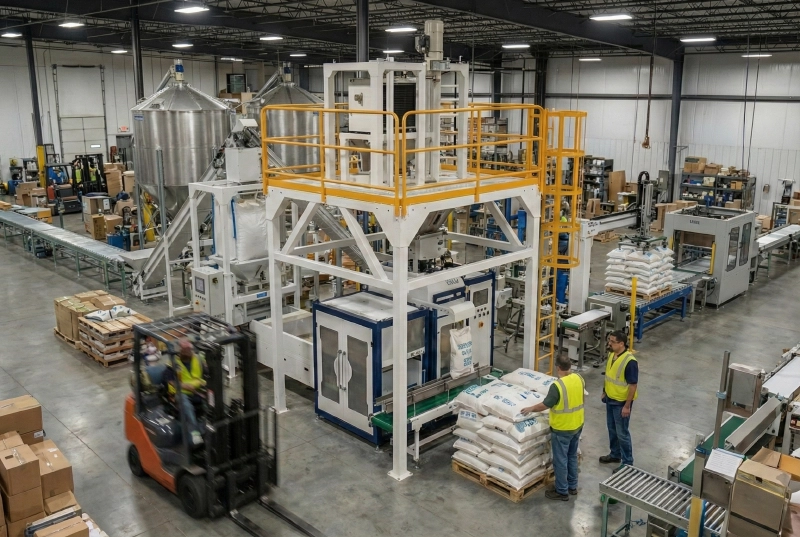
What was going wrong at the handoff point
In a grain warehouse, the trouble is usually not the fill itself. The trouble starts when a filled woven sack leaves the bagging head and has to travel across the next few meters of floor, platform, or conveyor. If the discharge height, operator working zone, and pallet staging lane are not aligned, the bag starts to twist, drag, or lean. Every correction adds labor, slows the rhythm, and makes the final stack less uniform.
The factory photo supports that problem clearly: once the line is running, the work is not only about the machine. It is also about how forklifts, operators, and outbound sacks share the same production space. That is why a stable bagging layout has to solve both machine flow and plant flow at the same time.
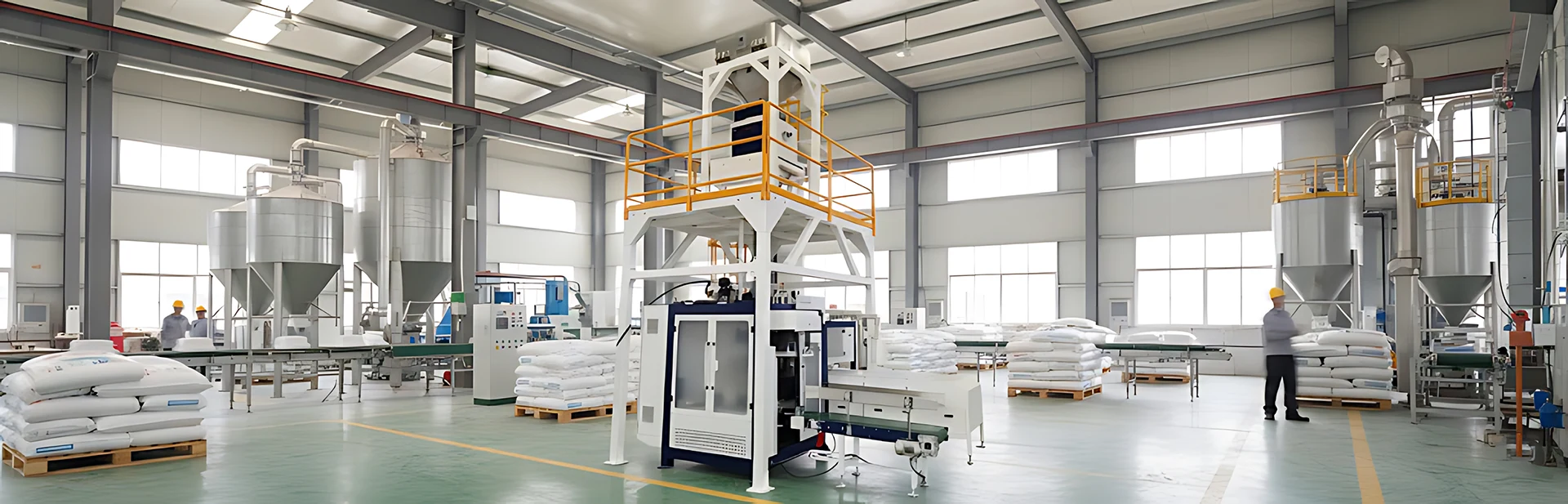
When a woven sack lands off-center or changes direction too often, the crew has to square it by hand before sewing or palletizing. That means extra touches, more cover wear, and more chance of a crooked pallet edge. On a busy grain line, those small corrections accumulate into real throughput loss.
Why ppline fits the job better than a loose transfer setup
The ppline layout shown in the product images is built around an elevated steel structure, direct conveyor routing, and a controlled work zone under the platform. The machine body is enclosed, the platform is lifted above floor traffic, and the discharge path is kept visually and physically straight. That matters because sack stability depends on geometry first, not speed first.
The same visual evidence also shows why the line is practical for a warehouse environment: the upper platform keeps the process equipment out of the forklift lane, while the lower zone stays open for bag handling, pallet staging, and outbound movement. In other words, the line does not just bag product; it helps the whole room move more cleanly.
bpmpack Engineering Insight: A steady sack handoff is usually a layout problem disguised as a machinery problem. If the bag exit point, conveyor centerline, and pallet position are too far apart, the woven sack must be corrected by hand. When those points are aligned, the same crew can keep a cleaner rhythm with less rework and less fatigue.
What the photos confirm about the structure and result
The images confirm three important things. First, the bagging line is not a bare machine on the floor; it is a platform-based system with a defined working elevation. Second, the downstream material flow is organized around conveyors and pallet handling rather than random hand carrying. Third, the plant can keep people, forklift traffic, and stacked sacks in the same area without turning the transfer point into a bottleneck.
That is the result a grain warehouse usually wants: not just higher output on paper, but a steadier handoff from filling to sewing and palletizing in real production. With the ppline layout, the line is easier to supervise, the sack path is easier to predict, and the finishing area is easier to keep consistent from shift to shift.
| Layout signal | What the image shows | Why it matters to the customer |
|---|---|---|
| Elevated frame | Steel platform with the bagging equipment lifted above floor traffic | Separates process flow from forklift movement and keeps the handoff zone calmer |
| Direct transfer path | Conveyors and outbound handling arranged in a straight visual line | Reduces bag swing, re-squaring, and crooked pallet edges |
| Enclosed main body | Compact machine housing and controlled working zone | Improves operator focus and makes the line easier to supervise |
| Plant-ready spacing | Open space for sacks, pallets, and forklift logistics | Supports a cleaner warehouse rhythm without crowding the transfer point |
Need a cleaner sack handoff plan?
If your warehouse needs to move from filling to sewing and palletizing with less manual correction, send us your sack size, target output, and workshop layout. We will match the ppline arrangement to your transfer height, conveyor direction, and packing rhythm.
Request a layout check English
 Русский