
BIBPU для автоматизации вторичной упаковки соли: как стабилизировать поток до сшивки
When secondary packaging drifts out of rhythm, the problem is usually not the filler. On this Russian salt line, the stop-start losses appeared after the product had already been packed: bags arrived at the next station slightly twisted, the bag mouth wandered, and the sewing area had to absorb the variation. BIBPU was selected to rebuild that last-meter flow into one stable sequence from transfer to sewing.
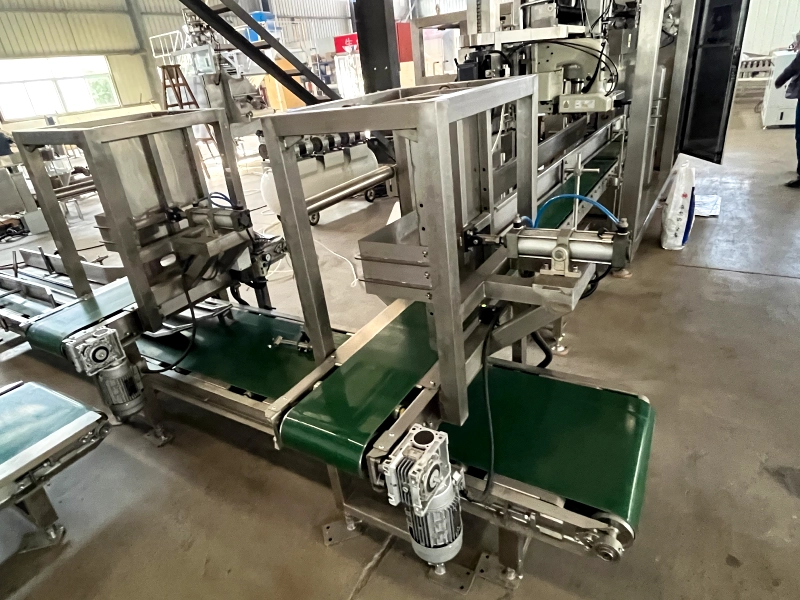
The old scheme: filling was stable, but the handoff was not
The plant did not need a bigger filler. It needed fewer micro-delays between packed bags, alignment, compression, and feeding into the sewing station. Salt products are unforgiving here: if the bag is too soft, the pouch deforms; if the transfer is too loose, the mouth opens unevenly; if the film or woven sack is not guided, the next station spends its time correcting the previous one.
That is why the line concept had to shift from isolated machines to a connected secondary-packaging sequence. The transfer section, the grouping section, the forming section, and the bag-feeding section had to work as one rhythm instead of four separate moments.
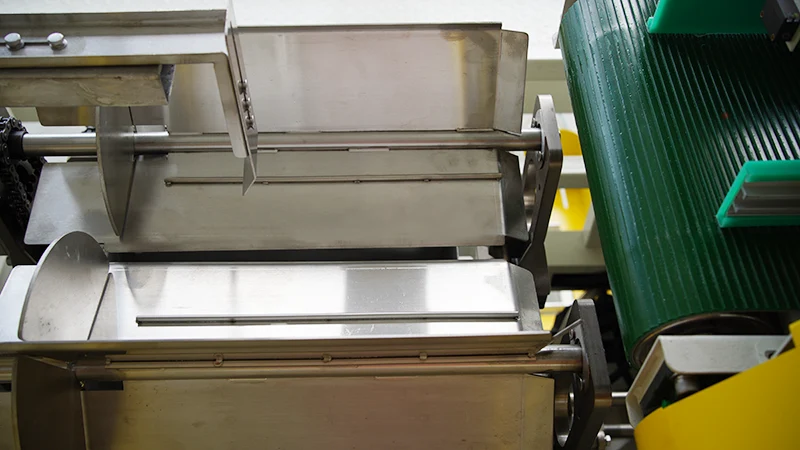
Why BIBPU fit this application
BIBPU is built for this exact job: take bags that have already been filled and make the downstream handling predictable. The compact transfer conveyor with pneumatic push action keeps the bag stream moving. The rotary grouping pocket loader organizes the flow before the next step sees it. In practice, that means less wandering, less manual correction, and a smoother feed to the sewing area.
For a salt producer, this matters even more because moisture, dust, and product weight all show up as mechanical instability. The product-contact side of the system uses corrosion-resistant stainless steel in the critical areas, while the line framing and transfer assemblies are designed to stay rigid under continuous operation.
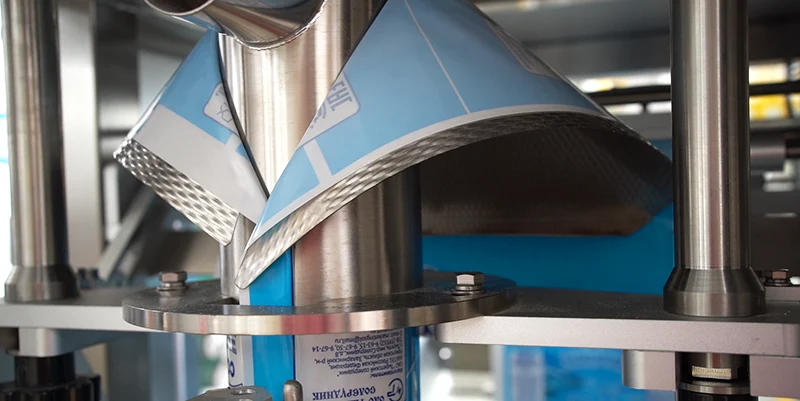
Structure evidence: the line is built to control the bag, not just move it
The forming shoulder is a good example. Its dimpled stainless surface is not cosmetic; it helps reduce sticking and keeps the bag or film path more stable in humid conditions. That is important when the product is salt, because the environment naturally pushes the line toward drag, adhesion, and irregular flow.
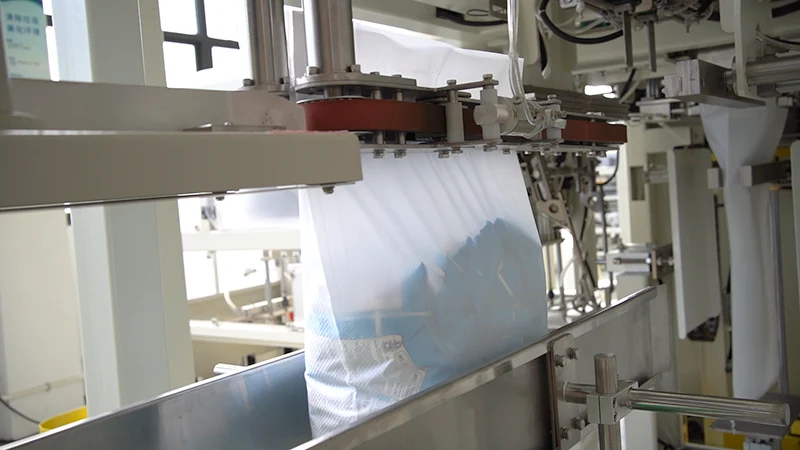
Farther downstream, the side compression stage fixes another common issue: once the bag is loaded, it still needs to be squared up before the seam is made. The pneumatic side clamping plates compress and settle the bag body so the downstream closer does not fight a swollen or crooked load.
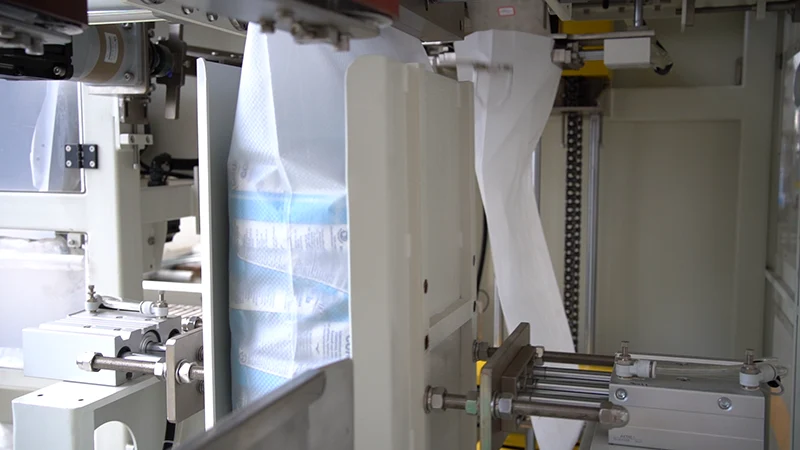
What changed after the upgrade
Once the transfer, grouping, compression, and feeding steps were treated as one line, the operator stopped spending attention on rescue moves. Bags entered the sewing zone in a more repeatable position. The mouth alignment was easier to maintain. The compression step removed the excess body shape before the final close. The sewing head received a cleaner, more predictable presentation every time.
For production, that means the line becomes easier to schedule and easier to trust. For maintenance, it means less time spent compensating for unstable bag geometry. For the plant, it means the secondary packaging section behaves like a process, not a sequence of repairs.
Result
The customer moved from a loose, correction-heavy handoff to a stable secondary-packaging flow. BIBPU gave the salt line a controlled transfer point, cleaner bag alignment, better pre-sewing compression, and a more reliable feed into the closing station. That is the practical gain: fewer interruptions at the last meter, and a line that can keep pace with the upstream filler instead of slowing it down.
Need a consultation on packaging equipment?
CONTACT US → English
 Русский