
Powder packaging line · Belarus · 25 kg bags
The Last-Meter Fix for Powder Bag Feed on a Belarusian Packaging Line
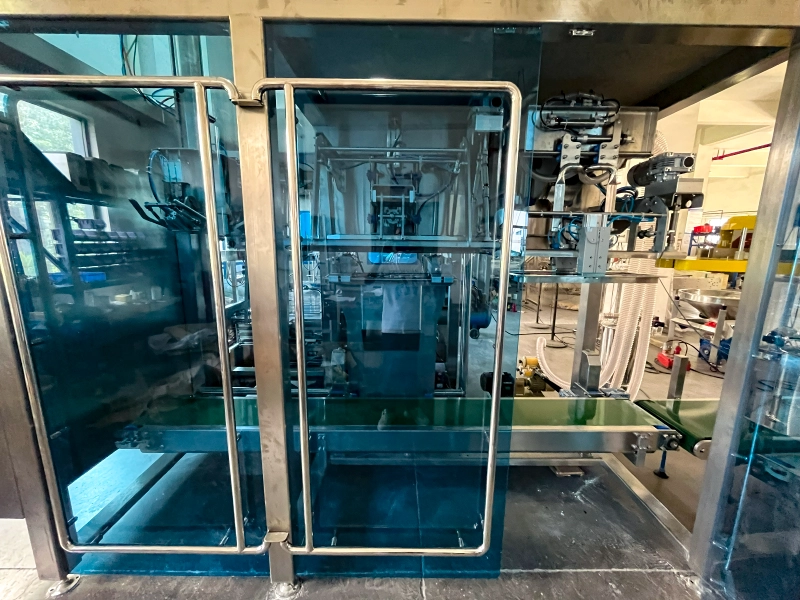
A Belarusian dairy producer needed a cleaner, steadier way to feed powder bags into its line. The real issue was not the filler. It was the transfer section, the bag clamp, and the handoff between modules.
What was going wrong
On paper, the line looked complete. In production, bag feed was the weak point. Empty bags arrived unevenly, the clamp area had to absorb the shock, and the transfer conveyor created short pauses whenever the bag came in slightly twisted. Those pauses were small, but on a powder line they stacked up fast.
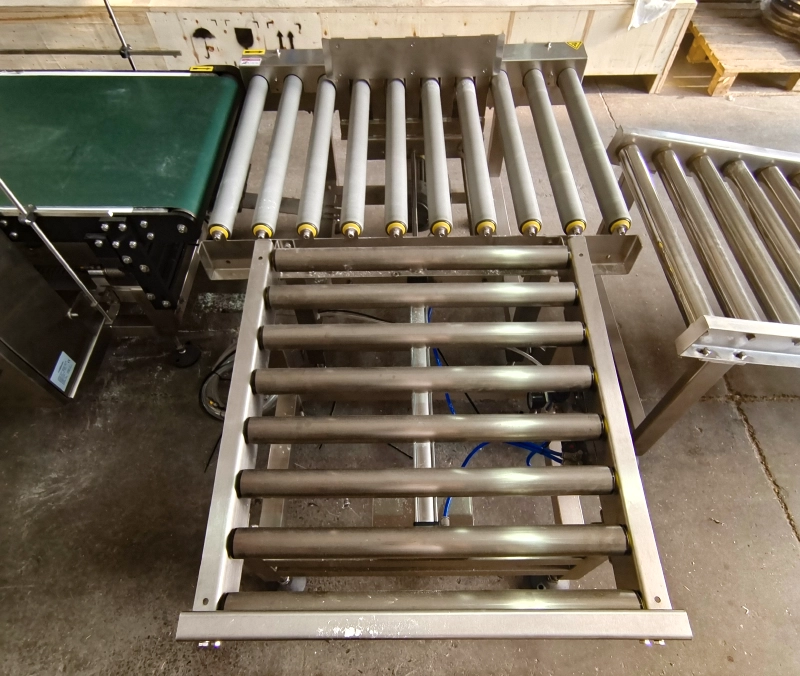
For a 25 kg powder application, the line must keep the bag flat, controlled, and aligned before the next station takes over. If the bag flips, rides up, or drags on the frame, the whole rhythm of the packaging line changes.
Why Mipline fit this job
Mipline solved the problem by treating the front end as a controlled transfer system, not just a bag loader. The enclosed guarding keeps the working area stable, the conveyor path stays predictable, and the mechanical handoff is easier to tune for powder bags, milk powder bags, and other free-flowing products.
That matters because powder packaging lines do not fail at one dramatic point. They lose efficiency in small, repeated interruptions. A stable feed section keeps the next modules—filling, sealing, inspection, and palletizing—working at the rate they were designed for.
Evidence from the structure
What the line had to do better
| Production pain point | Why it hurt output | Mipline response |
|---|---|---|
| Uneven bag arrival | Short stops before the clamp station | Stable infeed path and controlled transfer geometry |
| Bag twist during handoff | Misalignment at the next station | Enclosed bagging station with guided conveyor movement |
| Frequent micro-pauses | Lower line speed over the full shift | Consistent module-to-module flow for powder bags |
Final result
Once the transfer section was stabilized, the line became easier to run and easier to supervise. The operator no longer had to fight the bag path. The powder line held its rhythm, the bag feed stayed predictable, and the downstream stations received a cleaner handoff.
For a Belarusian dairy producer, that is the real value: fewer interruptions, less manual correction, and a packaging line that behaves like an engineered system instead of a chain of isolated machines.
 English
 Русский