
How a Salt Plant Stabilized Secondary Packaging Handoffs Before Sewing with Bibpu
When a salt producer moves from small primary pouches into woven-sack secondary packaging, the trouble usually starts at the handoff. Bags arrive unevenly, corners catch, excess air remains inside, and sewing gets blamed for a problem that actually begins upstream. This Bibpu line is built to keep that transfer steady, control the bag shape, and feed a cleaner opening into the sewing station.
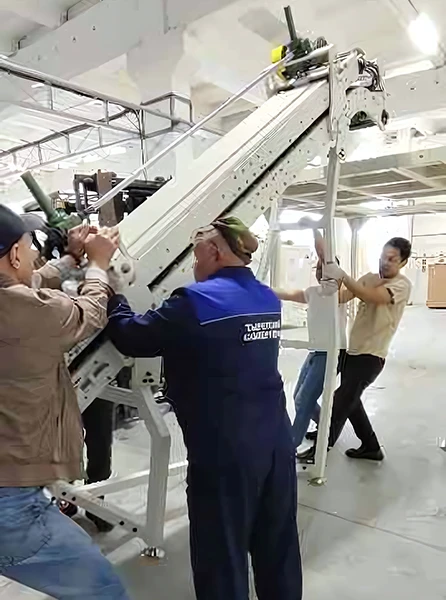
Why secondary packaging becomes unstable in real salt plants
In a salt line, the primary bag is often already finished well enough. The real issue appears when several small bags must be collected, guided, compressed, and placed into a woven sack before sewing. If the transfer path is too open, the bags collide, the sack mouth drifts out of square, and the operator has to straighten the load by hand. That manual correction adds labor and creates inconsistent bag geometry.
Bibpu solves that by treating secondary packaging as a controlled mechanical process, not a loose material handling problem. The line uses guided conveying, stable support, and controlled compression so the sack arrives at sewing in a repeatable position. That is why the workshop layout, electrical control, and transfer modules matter as much as the sewing head itself.
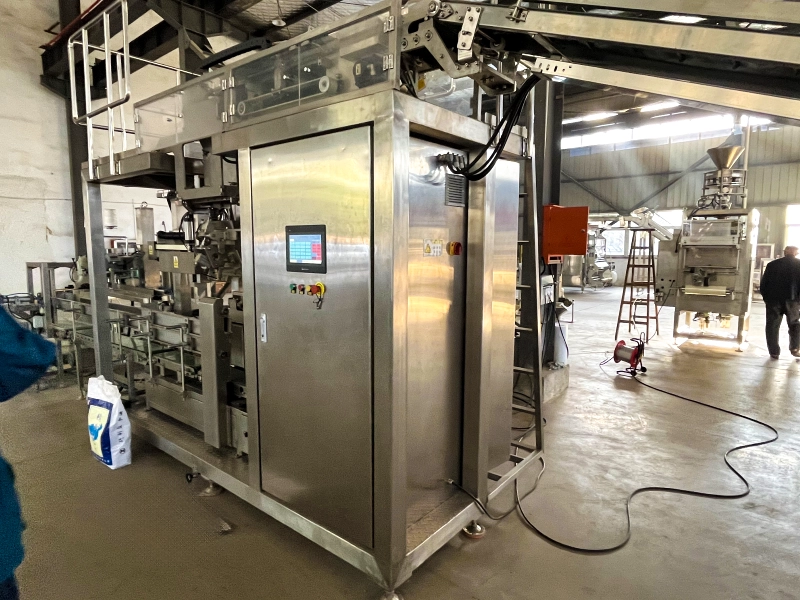
Loose transfer, bag deformation, excess air, and sewing instability often come from poor upstream guidance rather than from the sealer itself.
What makes the Bibpu structure fit this job
The line is organized around stable movement and predictable bag shape. The forming and transfer sections keep the bags centered. The guided secondary bag fill stage supports the woven sack while the pouches drop in. After that, the compression and de-aeration sections flatten the load so the sewing head can close a cleaner mouth with less stress on the material.
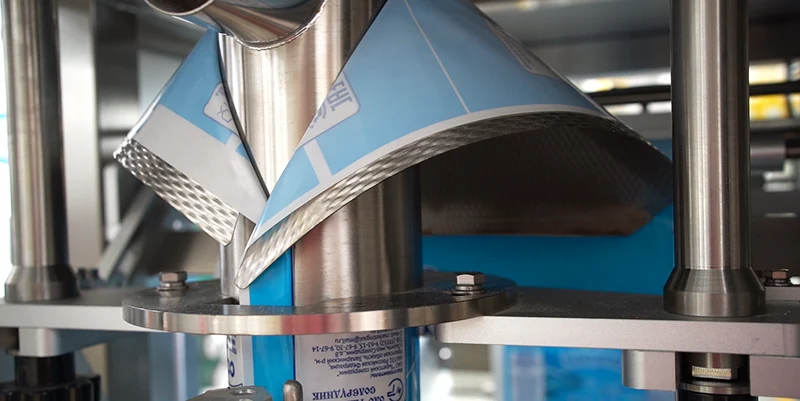
The forming shoulder shown in the line is not just a cover part. Its dimpled stainless surface reduces film sticking and resistance, which helps the packaging flow stay smoother in humid conditions. That matters in salt environments because moisture and residual fines can easily turn a normal transfer point into a drag point. By the time the bag reaches the sewing area, the geometry is already under control.
Practical insight: when the sack shape is stabilized before sewing, the downstream machine no longer has to compensate for a bad upstream transfer. The result is better seam consistency and less rework.
How the line turns handoff problems into measurable output
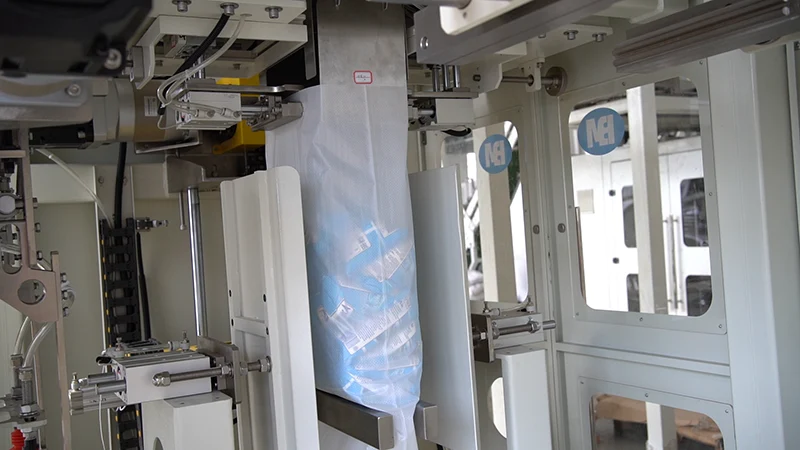
Once the primary pouches are collected, the secondary sack is held open by pneumatic clamps, filled in a controlled way, and then compressed so the internal voids are reduced before sewing. This is what prevents the bag from bulging at the mouth or wandering on the conveyor. The result is a cleaner feed into the bag closer and a more reliable final closure.
The sewing head then works on a load that is already squared and de-aerated. That changes the whole process. Instead of forcing the operator to rescue every third bag, the line keeps the mouth aligned and the stitch path steady. For a salt plant, that means fewer interruptions, less manual correction, and more consistent output per shift.
| Observed issue | Bibpu response | Result |
|---|---|---|
| Uneven bag arrival before sewing | Guided transfer and stable line layout | Cleaner handoff into the sewing station |
| Bulging woven sack and trapped air | Pneumatic holding plus compression/de-aeration | Flatter bag shape and better stack behavior |
| Inconsistent seam quality | Controlled upstream geometry before closure | More repeatable sewing performance |
Why the final sewing stage becomes more reliable
The sewing station is often judged as the bottleneck, but in many lines it is only exposing the weakness of the previous steps. Bibpu improves the whole chain by keeping the sack mouth flat, the fill level steady, and the bag body compact. That is especially important for woven sacks used in salt handling, where the load has to travel, stack, and remain neat after closure.
With the feed path stabilized and the bag geometry already corrected, the final sewing head can do one job well: close the bag cleanly and consistently. That gives the plant a more predictable end-of-line result, stronger throughput stability, and less dependence on manual bag straightening.
Need a steadier secondary packaging handoff?
If your salt line still depends on operators to straighten bags before sewing, Bibpu can help move that correction into the machine. The right combination of guided transfer, compression, de-aeration, and sewing control makes the handoff repeatable and the final result easier to manage.
Talk to BPM Pack English
 Русский