
How BIBPU Stabilizes the Handoff Between VFFS Packing and Bag Sewing
BIBPU / salt secondary packaging
Stabilizing the handoff between VFFS packing and bag sewing
In salt packaging, the trouble is often not the filling station itself. The trouble starts at the last meter: bags arrive too full, film drifts, the opening is hard to hold flat, and the sewing head receives a bag that is difficult to align. BIBPU is built to remove those failure points with a compact chain of dosing, forming, tracking, deaeration, and controlled bag feed.
What the old setup usually gets wrong
On a typical salt line, the first pain point is inconsistency. One shift runs smoothly, the next shift sees bridging in the feed, the bag opening becomes unstable, and the line operator has to compensate by hand. The second pain point is bag quality. If the pouch is overfilled or holds too much air, the downstream sewing or stacking station pays for it: the bag bulges, the top edge twists, and the bag does not present squarely to the next process.
The third pain point is film behavior. Humid salt environments are rough on packaging film. If the collar sticks, if tracking is loose, or if sealing temperature drifts, the result is not just a bad seam. It is a bad seam that slows the whole line. That is why the packaging machine has to solve both material handling and bag forming at the same time.
Why BIBPU fits this scene
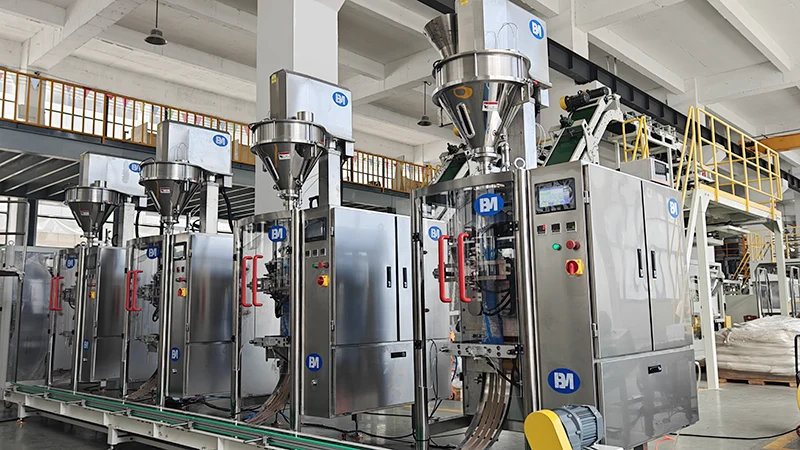
Image 2 (2) shows the core answer: four VFFS stations arranged in parallel with stainless hoppers. That layout matters when the plant needs throughput without turning the line into a single bottleneck. Instead of forcing one machine to absorb every fluctuation, the array spreads the work and keeps the output steadier.
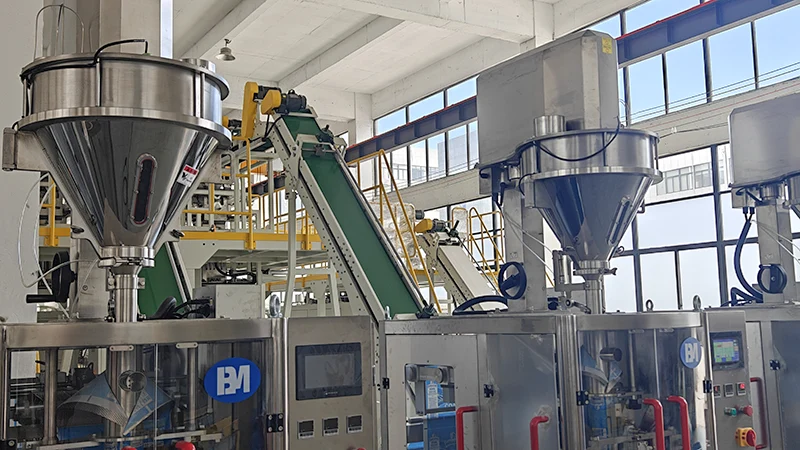
Image 2 (8) shows the feed side. The elevated conveyor keeps the hoppers supplied, which helps prevent empty-pocket interruptions and reduces the operator’s manual load. In other words, the upstream material flow is not an afterthought; it is part of the packaging stability.
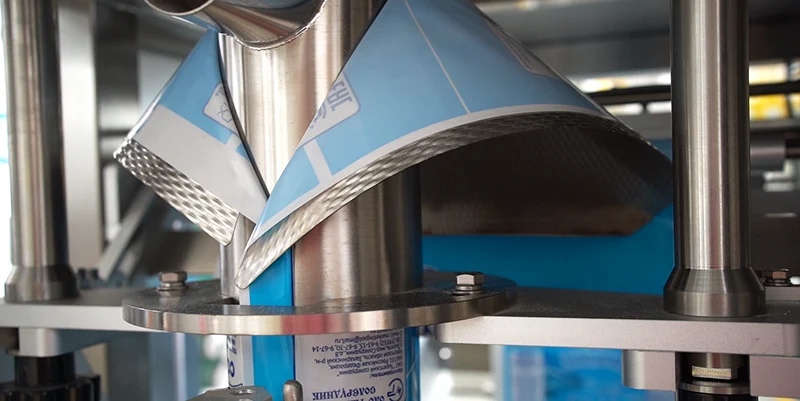
Image 2 (18) is the forming shoulder detail. The dimpled surface is there for a reason: salt lines are often humid, and ordinary collars can create drag or sticking. By reducing film contact friction, the machine helps the web move cleanly through the forming zone.
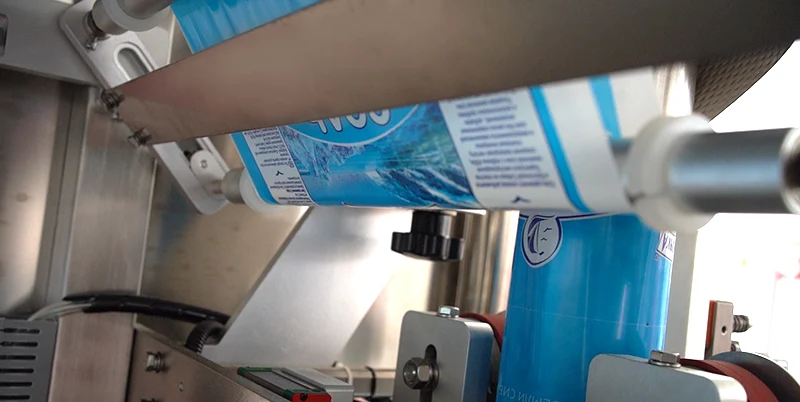
Image 2 (19) shows the film tracking rollers and alignment controls. This is the part that keeps the web centered when the roll is changing, when tension changes, or when the film behaves differently under load. Stable tracking is what makes downstream sealing repeatable.
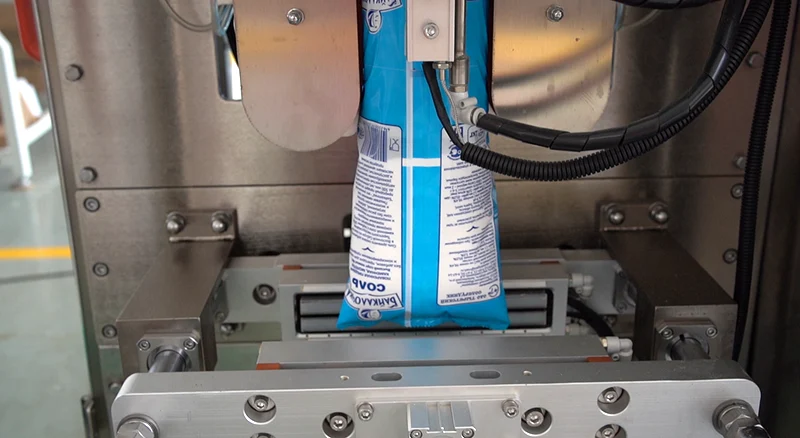
Image 2 (15) closes the loop at the hot-seal station. The heated cross-seal jaw, combined with PID temperature control, is what turns a packed pouch into a bag that can survive handling, stacking, and sewing. If the seal is unstable, every other improvement gets diluted. If the seal is stable, the line can move on.
Structure and parameters that matter on a salt line
| Machine element | What it solves | Evidence from the photos |
|---|---|---|
| Parallel VFFS stations with stainless hoppers | Raises throughput and reduces a single-point bottleneck | Four machines in one row, each with a top hopper |
| Elevated feed conveyor | Keeps the line supplied and reduces feed interruptions | Inclined infeed visible behind the dosing hoppers |
| Dimpled forming shoulder | Reduces film sticking in a humid salt environment | Textured shoulder surface shown in close-up |
| Film tracking and centering rollers | Maintains web position during roll changes and tension shifts | Alignment collar and guide rollers shown clearly |
| Heated cross-seal jaw with PID control | Produces a stable seal for handling and downstream sewing | Hot sealing jaw in closed working position |
Photo evidence from the machine
Result on the line
With the handoff stabilized, the plant gets fewer deformed bags, less film sticking, more repeatable seals, and a sewing or downstream handling station that receives flatter, cleaner pouches. That means less rework, fewer stops, and a better run from pack-out to finished sack. For a salt producer, that is the real gain: not just more automation, but a line that stays predictable when the material, the film, and the shift change.
Request a BIBPU line review English
 Русский