
Dry-Bulk Bagging for Cleaner Sack Handoff in a Southern Russian Grain Plant
When a plant moves dry bulk products from filling to sewing and palletizing, the real risk is not only speed. It is bag stability, cleaner transfer, and whether the line keeps sacks aligned enough for the next manual or automatic step. This installation shows how a ppline bagging line supports that handoff with a steel platform, enclosed machine sections, conveyor transfer, and a layout built for factory logistics.
Why the old transfer point became the bottleneck
In many dry-bulk plants, the filling station is not the hard part. The problem starts after discharge, when sacks are still warm, slightly deformable, or not perfectly squared. If the handoff to sewing or palletizing is inconsistent, operators spend time re-straightening bags, clearing jams, and correcting load edges before the pallet pattern is acceptable.
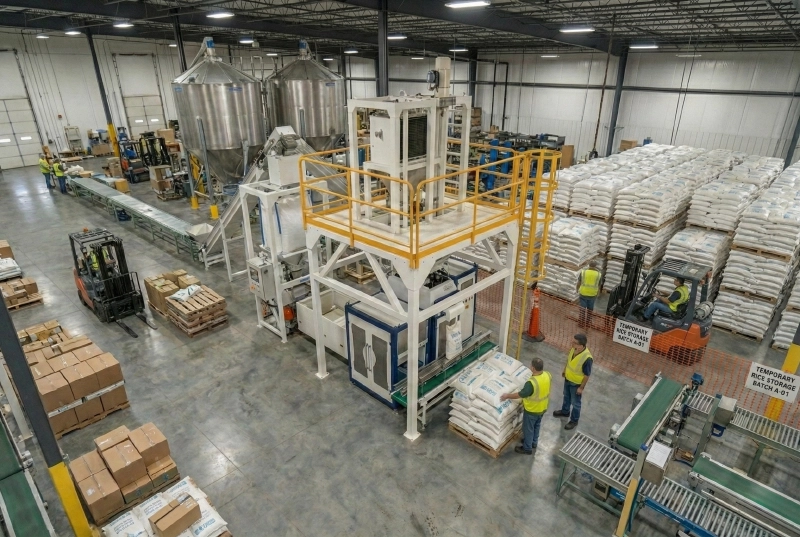
This is exactly where the pictured ppline setup helps. The elevated structure, controlled outfeed, and visible conveyor routing keep the bag path predictable. The factory scene also shows a real logistics environment, with forklifts, pallet zones, and storage silos working around the line instead of forcing the line to fight the plant layout.
Dry-bulk products often leave the filling point with air trapped in the bag, uneven corners, or a loose mouth section. That creates crooked sewing, weak stacking, and unnecessary rework before the pallet is finished.
Why this ppline line is a better fit
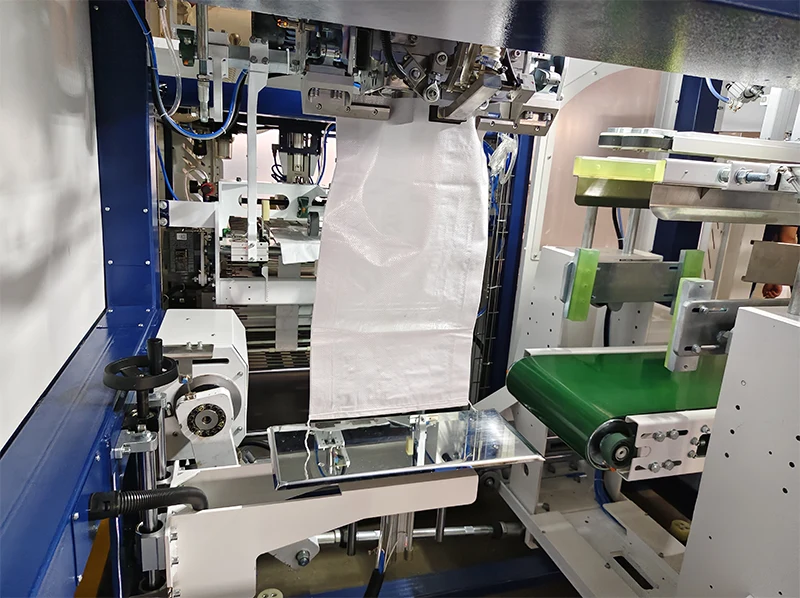
The support image makes the adaptation clear. The internal bagging unit uses vacuum suction cups, a robotic placing arm, and a green conveyor to guide the sack through a controlled path. Instead of letting the bag fall or twist freely, the line maintains contact and alignment during transfer, which is the key requirement before sewing or palletizing.
The overall machine layout also matters. The steel frame, enclosed cabinet sections, maintenance-friendly access, and elevated platform are not cosmetic features. They reduce operator interference, help keep the production zone organized, and make the line easier to run in a plant where dry bulk packaging must stay consistent across long shifts.
bpmpack Engineering Insight: For dry-bulk products, the value is not only throughput. A stable outfeed path protects the bag shape, and stable bag shape protects every downstream step. When the filling, conveyance, and transfer geometry stay fixed, the plant gets cleaner sewing, more square pallets, and fewer manual corrections at the end of the line.
What the line solves in real production terms
For the Southern Russian grain plant in this example, the target is not a generic packaging upgrade. The target is a cleaner transition from filled sack to finished pallet, with less dependency on operator skill and less sensitivity to minor changes in product flow. The visible silos, conveyors, and forklift-ready floor space show that the line is designed to work inside a real warehouse and not just in a showroom render.
That is why the ppline format is suited to dry-bulk products: it creates a controlled bridge between upstream filling and downstream handling. Once the bag path is stable, the plant can keep the sewing station cleaner, maintain a tighter pallet face, and reduce the hidden losses that come from hand-correcting every sack.
| Production issue | What the ppline setup provides | Operational result |
|---|---|---|
| Bag shape drifts after filling | Vacuum suction cups and guided transfer | Cleaner sack alignment before sewing |
| Operators spend time re-straightening sacks | Controlled conveyor route and stable frame | Less manual correction at the transfer point |
| Pallet face becomes uneven | Predictable outfeed into the logistics zone | Straighter stacks and better pallet quality |
| Plant layout creates flow conflicts | Elevated platform and integrated line footprint | Better fit for forklifts, silos, and warehouse movement |
Need a dry-bulk bagging line that keeps sacks cleaner before sewing?
If your plant needs a better handoff from filling to palletizing, ppline can be matched to the bag type, transfer distance, and warehouse flow you actually run. The right layout will not just fill faster. It will keep the sack path stable enough for the rest of the line to work properly.
Request a packaging layout review English
 Русский