
How an FFS Automatic Line for Bulk Products Keeps 25-50 kg Bagging Steadier in a Powder Warehouse
When a factory needs cleaner bag handoff, steadier net weight, and fewer people on the packing floor, an automatic FFS line for bulk products is usually chosen for one reason: it turns feeding, forming, filling, sealing, and outfeed into one continuous flow.
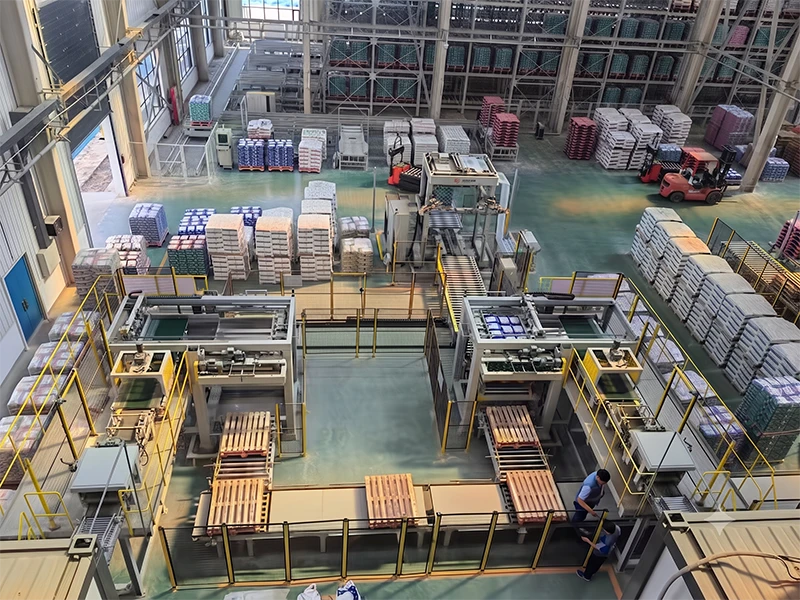
Why a bulk-product warehouse outgrows sewing bags and manual handoff
Bulk materials such as granules, powder blends, grain, feed additives, fertilizer, and salt create the same operational pressure: the bag has to stay stable, the fill has to stay accurate, and the dispatch area cannot keep absorbing rework. In a warehouse that still depends on open-mouth bags, stitching, and repeated manual handling, the weak points are easy to see: more dust, more bag damage, slower output, and a bigger gap between packing and palletizing.
An FFS automatic line for bulk products is built for that exact transition. Instead of treating filling and sealing as separate jobs, the line pulls the film, forms the bag, doses the product, seals it, and sends the finished bag out in one controlled sequence. That is why the package flow becomes steadier even when the warehouse is running mixed SKUs, shift changes, or high daily dispatch volume.
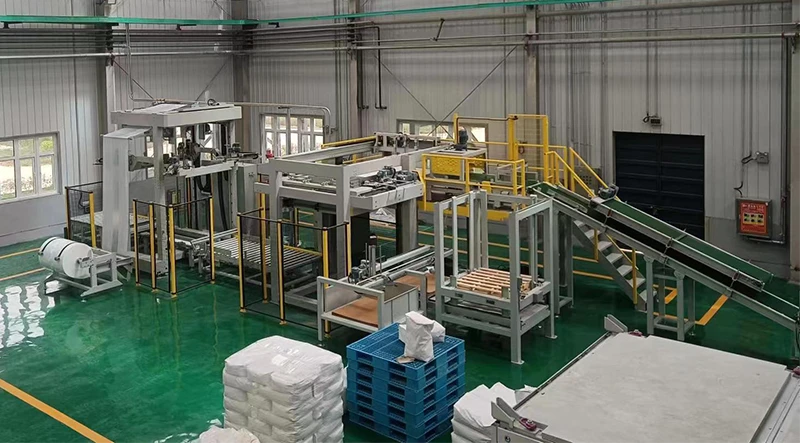
When a line is still based on sewing bags or loose manual packing, the cost is not only labor. The warehouse also pays for dust control, bag rework, inconsistent weight, and longer transfer time before palletizing.
What makes the FFS line a better fit for this job
The value is in the structure. A heavy-duty FFS line typically combines a feeding section, a stable forming area, a dosing unit, a heat-sealing or stitching-compatible output section, and a conveyor path that keeps the bag moving without random drops or twisting. For bulk products, that matters because the bag geometry and sealing quality directly affect storage, transport, and downstream palletizing.
The line also supports the warehouse logic behind 25 kg and 50 kg dispatch. A steady bagging rhythm helps the pack area match the forklift lane, the pallet staging area, and the finished-goods stack without creating congestion. In practical terms, the machine is not just filling bags; it is synchronizing the end of packaging with the rest of the plant.
Process note: The imported FFS layout image supports the core point here: elevated platforms, enclosed cabinets, and connected conveyors are used to keep the filling zone, outfeed zone, and pallet handling zone in one compact line.
Structural evidence that supports steadier output
The production layout shown in the images makes the operating logic easy to read. The elevated platform gives the operator and service crew better access. The enclosed cabinet helps keep the control area protected. The long conveyor path reduces chaotic bag movement after sealing. And the pallet zone at the line end shows that the machine is designed for real dispatch, not just for a test run on a short floor layout.
That structure is why the line fits facilities that need more than one product family. Granules, powders, and other bulk materials can all move through the same bagging concept when the dosing, film handling, and discharge path are matched to the product behavior. If the warehouse wants cleaner packaging and steadier throughput, the line does not need to be reinvented; it needs to be matched correctly.
| Warehouse issue | FFS line response |
|---|---|
| Manual bag sewing slows dispatch | Inline forming, filling, and sealing reduce hand transfers |
| Dust and product loss at the pack station | Controlled enclosed flow keeps the bag path cleaner |
| Unstable bag output before palletizing | Connected conveyors and a defined outfeed improve transfer stability |
| High labor load in bulk-product dispatch | Automation reduces repeated manual handling across the line |
Need a bagging line that keeps bulk-product dispatch steadier?
For a warehouse or production plant handling bulk products, the right FFS line is the one that matches your product flow, bag size, and downstream palletizing path. That is how you turn an unstable packing area into a controlled dispatch process.
Contact BPM for line selection English
 Русский