
Granule Packing Machine for Seed and Grain Lines: Stable Bagging Before Sewing
When a granule line has to move from dosing to sealing and palletizing without bag drift, the packaging structure matters as much as speed. This QZK-1200-style layout shows how a controlled frame, guarded access, and direct outfeed keep filled sacks stable through the last meter before sewing.
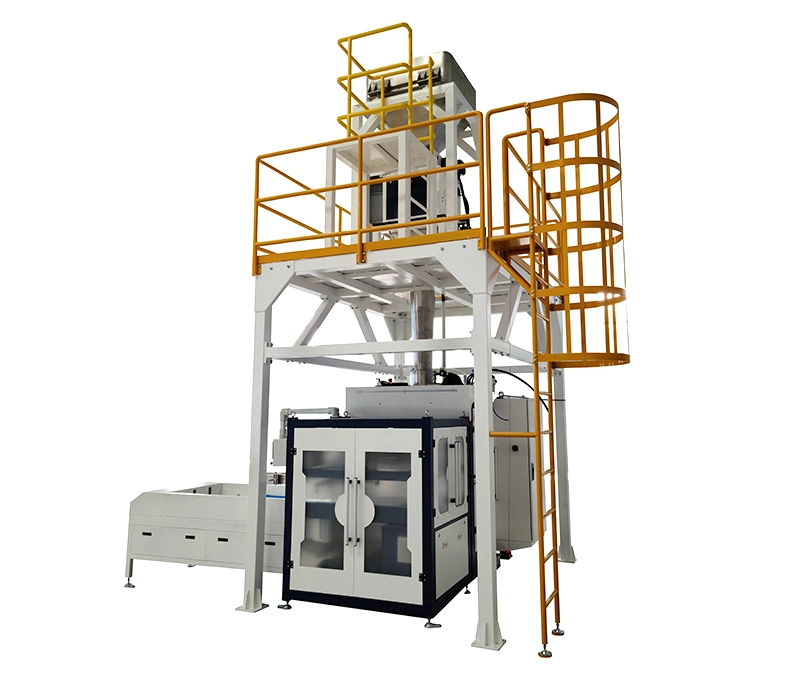
Why bulk granule lines lose stability at the bag transfer point
In many seed, grain, and pellet packing rooms, the first problem is not filling accuracy. The real problem starts after the bag is full. If the transfer path is open, the sack can swing, twist, or drop unevenly before the next operator touches it. That is when seams miss alignment, product spills at the mouth, and the pallet line starts to fight the packaging line instead of following it.
The structure in the photo solves that handoff problem by giving the bag a clear path out of the machine. The elevated steel framework holds the process at a controlled height, the enclosed cabinet protects the working zone, and the safety cage ladder shows that the line is built for repeated industrial access rather than improvised manual correction.
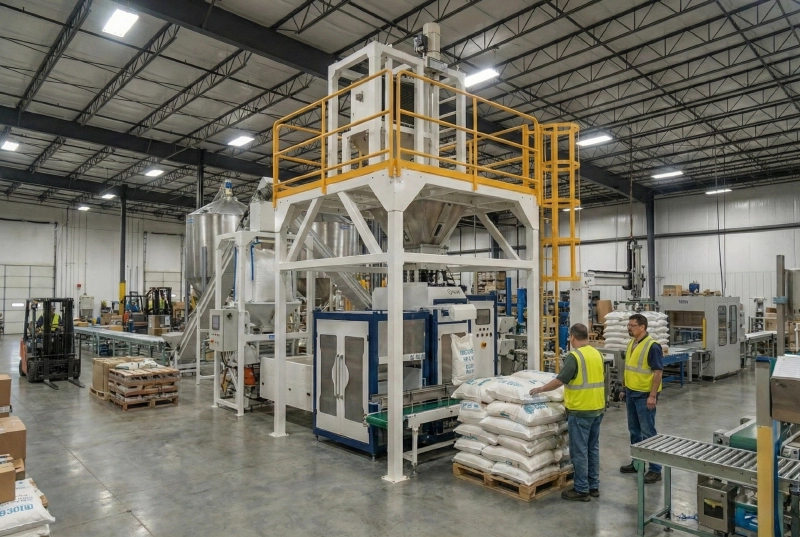
When the bag leaves the filling station without support, operators spend energy rescuing the process: guiding the sack, re-centering the mouth, lifting the bag by hand, or clearing product from the floor. That creates inconsistent cycle time, more manual contact, and a higher chance that the next sewing or stacking step starts from a bad position.
Why this granule packing machine layout fits the line
The QZK-1200-class layout is a better fit because it separates the jobs that should be mechanical from the jobs that should remain human. The machine frame keeps the filling and outfeed at a fixed elevation, while the conveyor path moves the filled sack toward the next station in a predictable direction. That means the operator is not forced to re-carry the product flow; the line itself carries the load.
For a granule packing machine, this matters when the plant handles seed, grain, or other free-flowing material that must stay clean and intact. A guarded platform, enclosed body, and direct discharge path reduce random bag motion, keep the working zone organized, and make the line easier to supervise during long runs.
bpmpack Engineering Insight: Stable packaging is not only about dosing accuracy. It is also about controlled handoff. The elevated frame, guarded access ladder, and direct conveyor outfeed keep the filled sack aligned until the next process step, which is what protects downstream sewing and stacking.
What the photos prove about structure, flow, and final result
The first photo proves the structural side: a tall steel frame, an enclosed cabinet, and a safe maintenance route all point to a machine designed for continuous industrial use rather than one-off trial packing. The second photo proves the working side: the machine is operating, the discharge conveyor is active, and operators are stacking sacks at the end of the line without losing control of the bag path.
That combination is the practical result buyers want from a granule packing machine. The plant gets fewer manual corrections, the line stays cleaner around the transfer point, and the final pallet build becomes easier to standardize. Instead of asking operators to rescue unstable bags, the machine creates a repeatable path from fill to finish.
| Visual evidence | What it means | Operational result |
|---|---|---|
| Elevated steel framework and enclosed cabinet | The machine keeps the packing zone organized and fixed at working height | Less random bag motion and more stable transfer before sewing |
| Conveyor discharge and live operating scene | The filled sack moves in a controlled direction after filling | Cleaner handoff, fewer manual corrections, faster line rhythm |
| Operators stacking sacks at the line end | The downstream work is receiving a predictable output | More consistent palletizing and easier final workflow control |
Need a granule packing machine layout that stays stable at the sewing point?
Share your target bag weight, material behavior, and daily output. We can map the right packaging structure, transfer path, and platform layout before the line is built, so the bag stays controlled from fill to finish.
Request a layout review English
 Русский