
Polyethylene Granule Bagging Line: Clean 25 kg PE Output
A 25 kg polyethylene granule bagging line replaces manual weighing and free-fall filling with a controlled sequence from bag pickup to sealed PE resin sacks ready for palletizing.
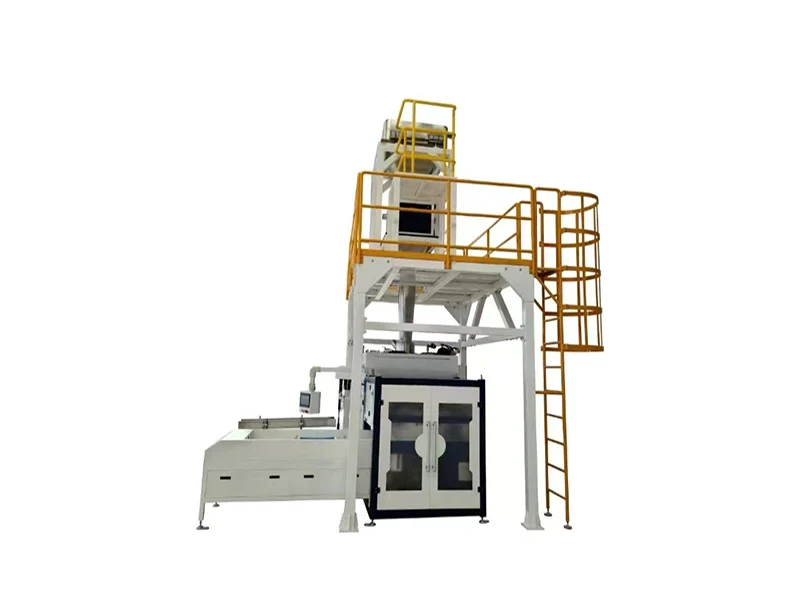
Where a 25 kg PE bagging bench falls behind
On a manual polyethylene granule bagging line, an open-mouth woven bag is clamped by hand against a free-fall spout, walked to a separate stitching bay, then set on a pallet. A North American LDPE and LLDPE resin producer running that sequence found it workable for one shift, then impossible at three shifts. Operators held the bag against the fill stream, watched a mechanical scale trip, then carried the sack across the floor to a sewing head.
That workflow looks fine on a sales sketch. On a real PE resin floor it means giveaway weight on every bag, micro-dust drift around the fill point, and a stitching reject rate that climbs the moment a 25 kg sack tilts more than 10 degrees before the needle drops. The compounding line behind the bench was rated for 8 t/h, but the bagging cell kept capping the whole plant at 6 t/h, and the missing tonnage showed up every month as overtime, not throughput.
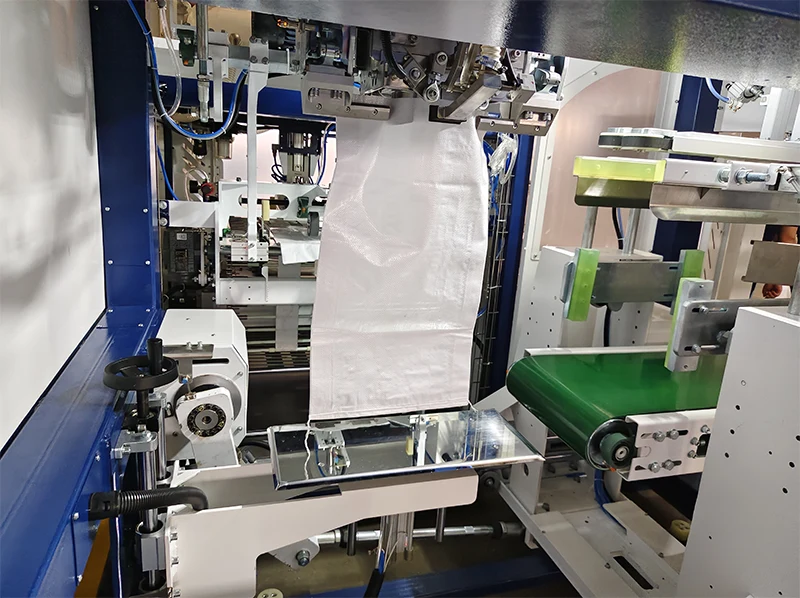
A free-fall spout on PE resin sends fines into the air, every kilogram on a 25 kg sack turns into giveaway, and a tilted sack at the sewing head becomes a rejected pallet later in the warehouse. A controlled polyethylene granule bagging line has to fix all three at once.
Why a QZK-1200 polyethylene granule bagging line fits a PE resin floor
The QZK-1200 polyethylene granule bagging line is built around three stations the manual bench never had. A vacuum suction cup arm picks a woven bag from the magazine and seats it on the filling spout without an operator’s hand. A double-station servo weigher drops the 25 kg PE dose in two stages to keep dust inside the cabinet. An outfeed conveyor with a stainless steel bed then carries the sealed sack to the sewing or heat-seal head before any human touches it.
That sequence is what removes the giveaway weight and the manual straightening that defines a free-fall PE bagging cell. The enclosed filling cabinet pulls dust down at the fill point instead of letting it escape onto the floor. The double-station servo weigher holds 25 kg PE dose accuracy to ±50 g, which keeps the underweight-reject line quiet through a full shift and protects the bagging cell from being the bottleneck on the whole polyethylene granule bagging line.
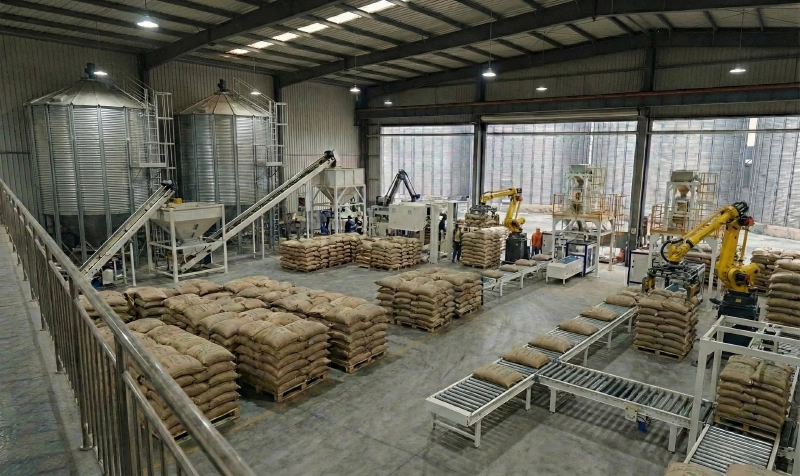
Field insight: For polyethylene resin, the bagging bench is rarely the bottleneck — the floor between the bench and the sewing head is. A polyethylene granule bagging line with guided transfer and a swing-arm HMI removes that floor from the equation and lets operators supervise three cells instead of holding one bag at a time.
Specifying a polyethylene granule bagging line for 25 kg PE resin
Before quoting a polyethylene granule bagging line, BPMpack’s engineers lock down four project inputs that decide the rest of the layout. The first is bag format — open-mouth woven PP, paper-PE laminate, or PE valve — because the bag magazine, suction cup count, and sealing station all change with it. The second is throughput — a QZK-1200 frame is sized for 400–600 sacks/h on 25 kg PE, and a parallel twin-tower layout doubles that on the same floor footprint.
The third is the closure method: heat seal, fold-and-sew, or ultrasonic for paper-PE laminates that cannot tolerate a needle hole. The fourth is downstream handling — manual palletizing, a six-axis robotic palletizer, or stretch-hood wrapping for outdoor stacks. With those four inputs, the polyethylene granule bagging line drawing lands on the right cabinet width, the right conveyor length, and the right palletizer cell on the first revision instead of the third, which is where most PE resin projects lose weeks of installation time.
| Parameter | Specification |
|---|---|
| Bag format | Open-mouth woven PP / paper-PE laminate / PE valve |
| Bag weight range | 10–50 kg (25 kg PE nominal) |
| Throughput | 400–600 sacks/h single tower; 800–1,200 sacks/h twin tower |
| Weighing accuracy | ±50 g at 25 kg |
| Filling station | Enclosed cabinet with dust extraction at fill point |
| Bag pickup | Vacuum suction cup arm from bag magazine |
| Sealing | Heat seal, fold-and-sew, or ultrasonic |
| Frame | Welded steel with safety cage ladder and yellow rails |
| Control | Swing-arm HMI with recipe storage |
| Palletizing | Manual, robotic arm, or stretch-hood wrapper |
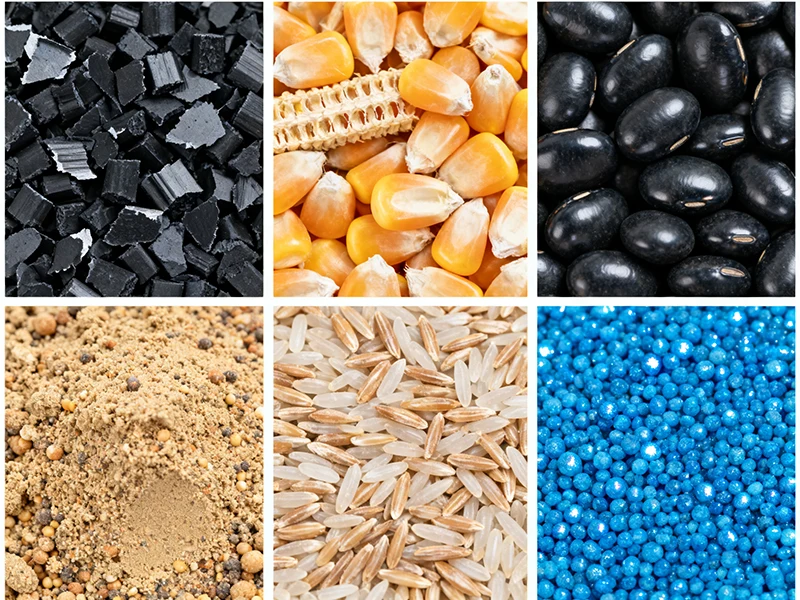
Send your PE resin bag format and target output
BPMpack sizes a polyethylene granule bagging line around your 25 kg woven bag, dust budget, and downstream palletizer. Send the project inputs above and our engineers return a stamped layout with cabinet width, conveyor length, and palletizer cell sized to your real floor — not a generic quote sheet.
Request a project review English
 Русский