
Why Bag Clamping Matters Before Sewing on a Bulk-Products Line
A southern regional bulk-materials plant needed a cleaner handoff from dosing to sewing. The problem was not only speed. It was bag stability, operator correction, and the way each woven sack reached the next station. ppline fits that gap with a rigid steel frame, controlled bag handling, and a compact conveyor path that keeps the transfer point consistent.
What the Plant Was Dealing With
On the old line, bags arrived from dosing with small position errors. Operators had to square the mouth by hand, hold the sack steady, and keep the transfer moving at the same time. That kind of correction is manageable for a short run, but it becomes costly when the line is expected to run all day and the product is granular, dusty, or awkward to settle.
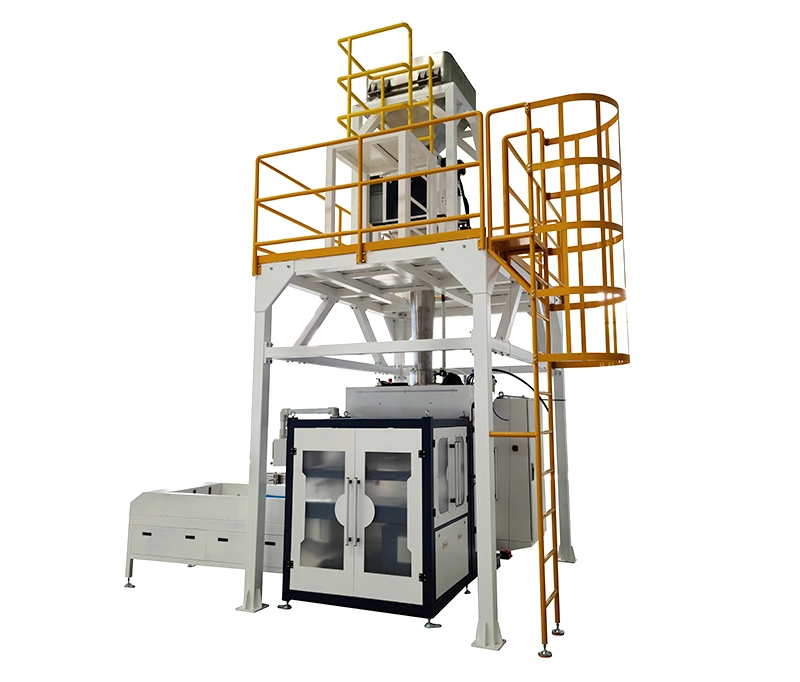
ppline matches this kind of job because the machine is built around a tall steel structure, a protected access ladder, enclosed service cabinets, and a direct outfeed path. The frame is not decorative. It is what keeps the handling point stable so the bag does not wander before the seam station takes over.
The line was losing consistency at the handoff point. Bags needed correction after dosing, the mouth area was not always centered, and the sewing station had to compensate for upstream movement. That creates rework, operator fatigue, and uneven pallet appearance.
Why ppline Fits the Job
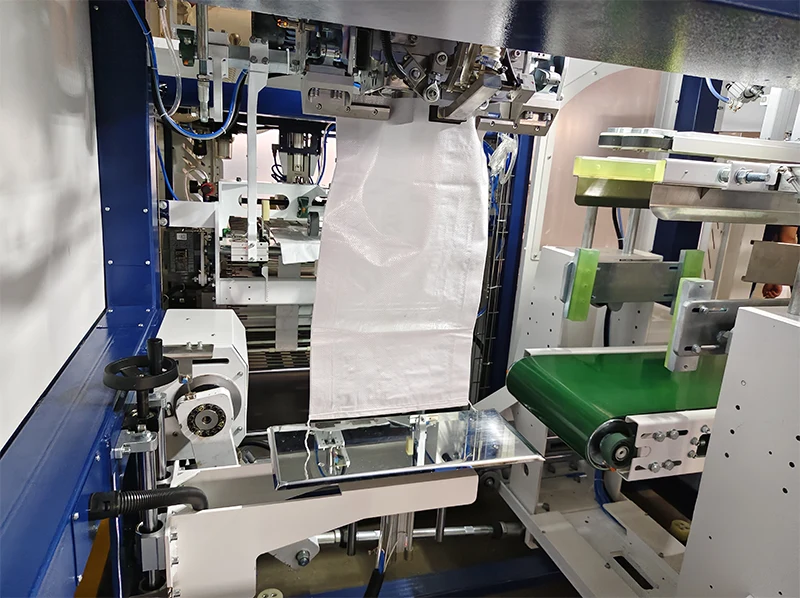
The close-up image shows the part that matters most: vacuum suction cups, a robotic placing arm, a green conveyor, and a woven bag that is held in a controlled path instead of being pushed around by the product flow. That means the bag is guided, not guessed. The machine keeps the transfer aligned long enough for the next station to finish the job cleanly.
The second structure visible in the machine set is the clamping and bottom support assembly. Pneumatic cylinders, servo adjustment, and a solid positioning frame do the boring work that prevents expensive errors. When the bag mouth stays where it should, sewing becomes a finishing step instead of a rescue step.
bpmpack Engineering Insight: if the bag is unstable before sewing, the rest of the line has to absorb the mistake with labor. A rigid frame, guided clamping, and a controlled conveyor route solve the problem upstream, where it is cheaper to fix.
Structure, Evidence, and Result
The photos give the evidence. One image shows the full elevated machine body, safety access, and enclosed cabinet layout. The other image shows the internal handling point with suction cups, positioning hardware, and the conveyor path. Together they show why the line is suitable for bulk products that need a steadier transition from dosing to sewing.
For the plant, the final result is simple: fewer manual corrections, a cleaner bag mouth before stitching, more even bags on the outfeed belt, and a smoother path into stacking or palletizing. That is what a good bulk-products line should deliver. Not just throughput, but a stable handoff that protects the whole downstream process.
| Stage | What the line needs | What ppline shows in the photos |
|---|---|---|
| Before sewing | Bag mouth must stay centered and calm | Vacuum suction cups and controlled placing hardware hold position |
| During transfer | Product flow should not force the bag off line | Rigid frame, guided conveyor, and enclosed structure keep movement consistent |
| After transfer | Seam and stack quality should improve, not recover from errors | Stable handoff supports cleaner stitching and more even pallet appearance |
Need a steadier handoff on your bulk-products line?
If your bags still need manual correction before sewing or palletizing, ppline is built for that exact gap. Use the machine structure, bag-clamp control, and conveyor alignment to keep the line stable where it matters most.
Request a line review English
 Русский