
PPLINE for Bulk Products: Stable Bag Alignment Before Sewing
Bulk products | bag transfer before sewing
Stable bag alignment from hopper feed to the final stitch head
For a bulk-products plant, the real problem was not filling the bag. It was keeping the bag straight, calm, and predictable in the last meters before sewing. PPLINE is built for that exact handoff.
The line concept combines controlled feed, guided transfer, clamping support, and a clean discharge path so the operator does not have to rescue every second bag by hand. That matters when the product is dense, the pack weight is high, and the stitching area must stay in position.
What usually goes wrong in the old setup
On older lines, the bag often leaves the filling zone slightly twisted, then drifts again on the short transfer before sewing. The result is familiar: crooked mouths, manual straightening, slower cycles, and a stitch head that works harder than it should.
In bulk-product packaging, that small instability creates a bigger business cost. The operator slows the line to protect the seam, the transfer conveyor accumulates bags, and the plant loses the smooth rhythm needed for steady output.
- Bag mouth not centered before the stitch head
- Product weight and bag inertia pulling the package off line
- Extra manual correction between filling and sewing
- Uneven output when the feed path is not buffered
Why PPLINE fits this job
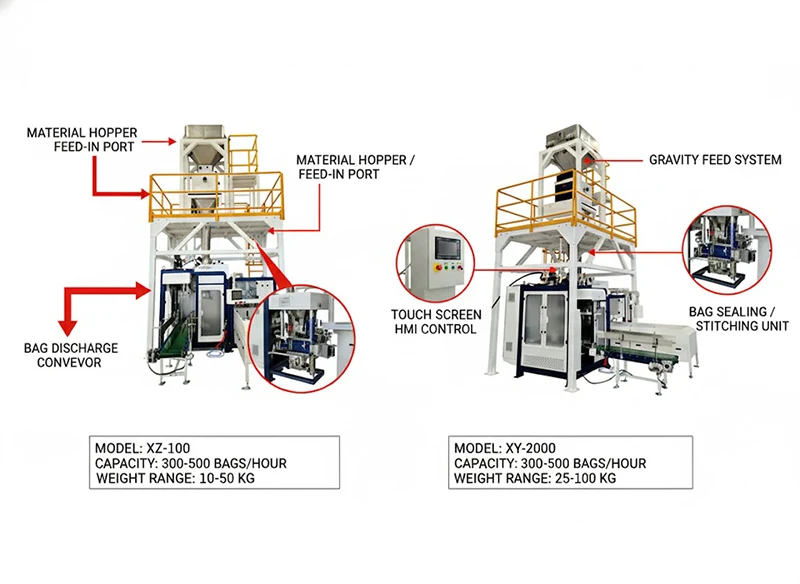
PPLINE is a good match when the main requirement is not just packaging, but stable transfer. The indexed equipment set shows a controlled hopper feed, a gravity dosing / filling concept, a guided discharge conveyor, and a bag-handling zone designed to keep the bag position predictable.
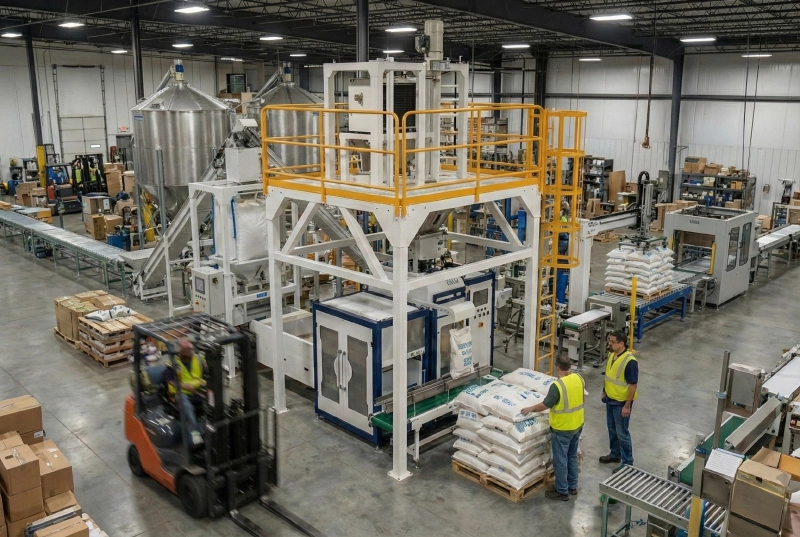
The 1 (10) image is especially useful here: it shows a machine family rated at 300-500 bags per hour and designed for 10-50 kg or 25-100 kg packs. That is exactly the kind of range where bag handling becomes a mechanical problem, not a simple filling problem. The line has to hold the bag mouth, keep the bag body level, and hand it off without introducing twist.
That is why the structure matters. A stable hopper feed keeps the upstream flow consistent. The transfer zone reduces shock. The clamp and support zone takes the load off the seam area. Together, these features reduce rework and let the plant keep its target cadence.
Structure, parameters, and image evidence
| Image | What it proves | Why it matters for the line |
|---|---|---|
| 1 (10).webp | Hopper feed, HMI control, dosing, and sewing-ready discharge | Shows the full bagging concept and the operating range of 300-500 bags/h |
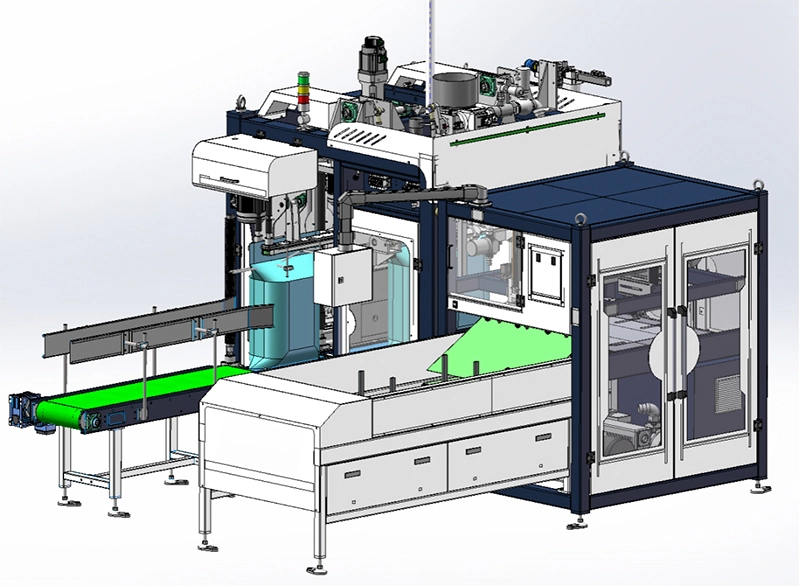
| 2 (11).webp | Secondary bagging layout with accumulation belt and discharge conveyor | Provides a buffering zone so the bag stays aligned before the next transfer |
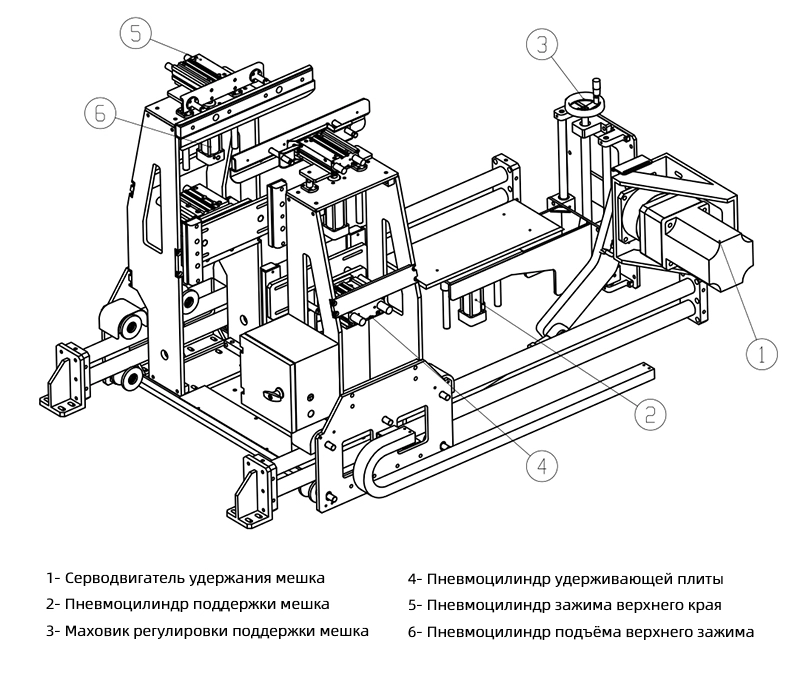
| 2 (12).webp | Bag clamp, bottom support, pneumatic cylinders, and height adjustment | Keeps the bag body and mouth stable during the final positioning stage |
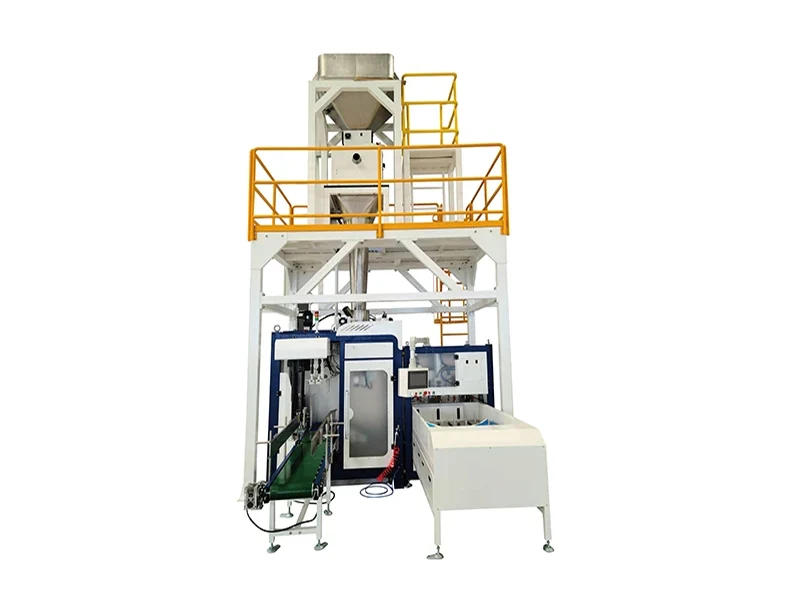
| 1 (7).webp | Elevated platform, hopper, and inclined conveyor integration | Explains the cleaner feed path and the practical maintenance access |
| 2 (17).webp | Running line with conveyor transport, operators, and palletized sacks | Shows the final plant result: steady output and less manual rescue work |
Result: a cleaner final handoff and a steadier shift
When the plant stops fighting bag twist at the end of the line, sewing becomes more consistent, the operator intervenes less, and the conveyor can run at a more stable pace. That is the practical value of PPLINE for bulk products: not just moving product, but protecting the last handoff before the seam.
The indexed running-line photo confirms the result in real plant conditions: bags move, pallets accumulate, and the flow stays organized without turning every package into a manual correction task.
Request a PPLINE layout review
 English
 Русский