
How a southern grain warehouse made woven-sack handoffs cleaner before sewing with ppline
When filled woven sacks leave the bagging point uneven, the sewing station has to fight for alignment. This ppline line was selected for a southern grain warehouse because the handoff path stays controlled: the bag is guided, held, and discharged in a way that makes the next sewing step easier.
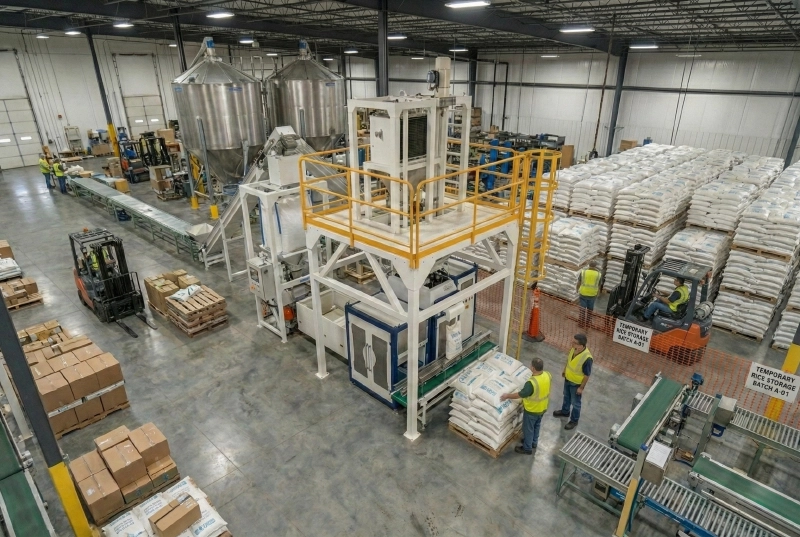
Why the warehouse needed a steadier bag transfer path
The customer environment is a grain warehouse with constant bag movement, pallet loading, and a downstream sewing step. In that kind of line, the problem is usually not the fill itself. The real loss happens when a woven sack arrives twisted, off-center, or too loose for the next operator or machine to catch quickly.
That is where the older setup tends to slow down. If the bag drops too hard or the discharge point is not guided well enough, workers have to straighten it by hand. That adds small delays on every cycle, creates rework at the sewing station, and makes the line feel less stable during peak hours.
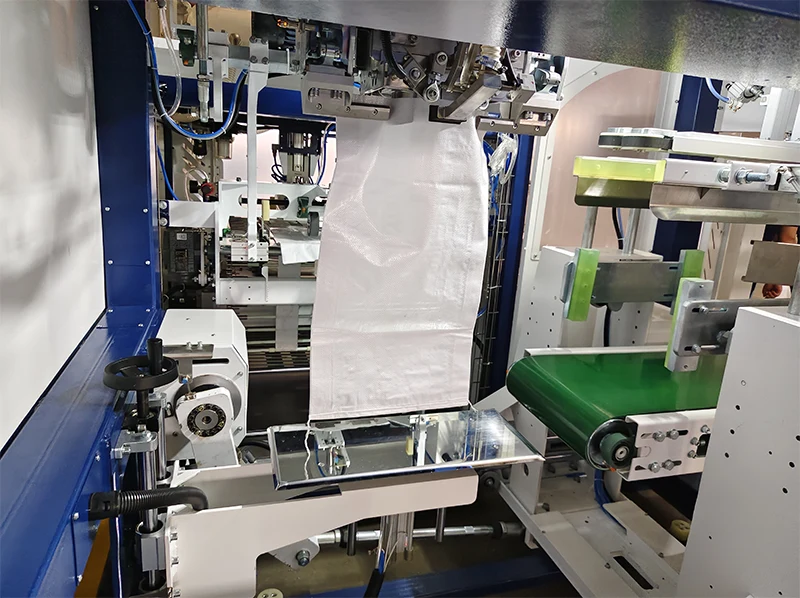
Uneven sack handoff, manual straightening, inconsistent discharge position, and extra effort before sewing were the main pain points. The warehouse needed a layout that kept the bag centered and supported while it moved from filling to transfer.
Why ppline fit this job
ppline fits this type of application because the machine is built around a controlled bagging path, not just a fill point. The internal handoff structure visible in the close-up photo shows vacuum suction cups, a pneumatic clamp, and a green conveyor working together to keep the woven sack aligned instead of letting it drift.
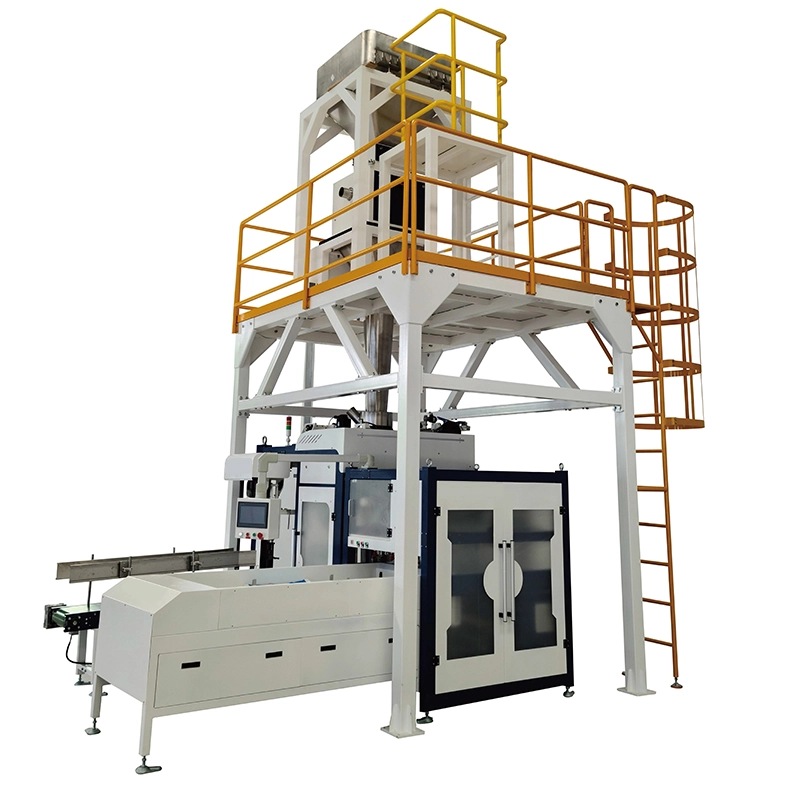
The swing-arm HMI and elevated steel platform also matter in daily use. Operators can reach the controls, monitor the process, and keep the bagging station organized without crowding the transfer area. That helps when the warehouse needs steady work across long shifts rather than short demo runs.
Why this matters: a better bagging line is not only about output. It is about making the next step easier. If the sack is already positioned cleanly when it leaves the machine, sewing, stacking, and pallet movement all become simpler.
Structure and image evidence from the line
The visual evidence matches the use case. The high-angle plant photo shows twin stainless steel storage silos, conveyors, and finished sacks moving through the warehouse flow. The internal close-up shows the working bag clamp and alignment zone. The isometric product view shows the operator interface and outfeed belt. Together, these images explain how the machine keeps the path controlled from top to bottom.
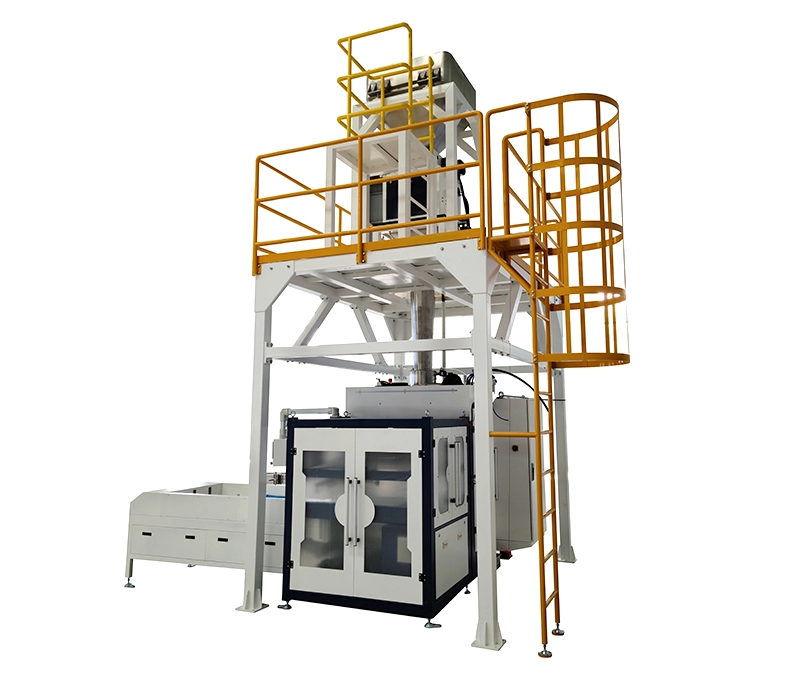
The white-background product shot adds one more proof point: the elevated steel framework, safety cage ladder, and enclosed cabinet are all arranged as a serious industrial package, not a loose collection of modules. For a warehouse that depends on repeatable handoffs, that matters as much as the fill point itself.
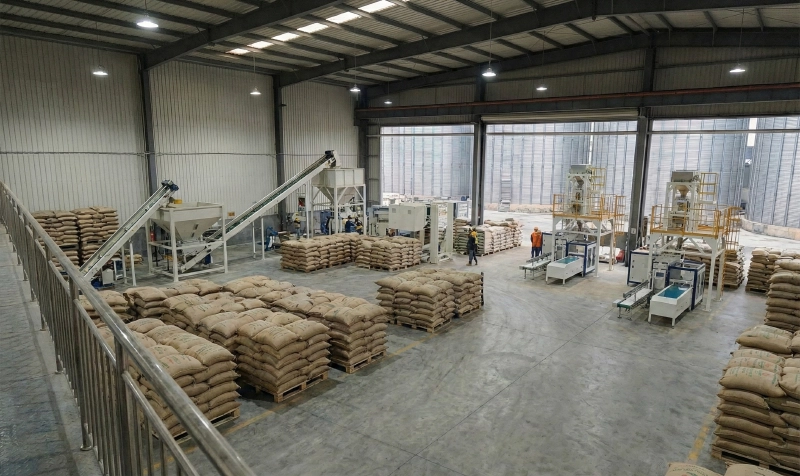
| What the warehouse needed | What ppline provided |
|---|---|
| Cleaner transfer into the next sewing step | Guided bag clamp, suction-assisted handoff, and controlled outfeed path |
| Less manual straightening | Stable alignment zone visible in the internal machine photo |
| Safer and more organized operation | Elevated steel platform, safety cage ladder, and enclosed cabinet |
| Better daily consistency | HMI control and a layout designed for repeatable warehouse use |
Need a cleaner woven-sack handoff in your grain line?
If your current bagging station still needs manual straightening before sewing, ppline can be configured as a more controlled transfer point for warehouse operations that need steadier daily flow.
Request a bagging line discussion English
 Русский