
How a ppline Packaging Line Stabilizes Hopper Feed, Bag Alignment, and Transfer Flow
For bulk-product teams that need steadier bagging, cleaner handoff, and fewer stops at the transfer point, the ppline line is built around controlled feed, clear operator access, and a compact bagging-to-discharge layout. The result is a packaging line that stays easier to run when the warehouse is busy and the bags must move without extra rework.
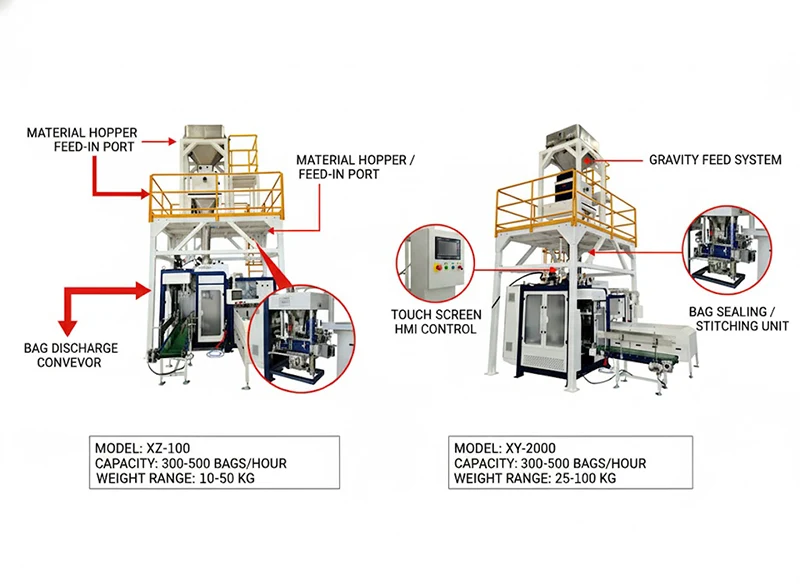
Why the old setup starts to slip when feed and handoff are not stable
Many plant teams know the pattern: the hopper feeds unevenly, the bag mouth needs too much correction, and discharge slows down once the shift gets busy. Small problems stack up fast. Operators spend more time keeping the line alive than keeping output steady, and the whole packaging area starts to depend on manual intervention.
The ppline concept addresses that weak point with a more organized line layout. The machine body, feed section, and transfer path are arranged to keep the bagging work visible and controllable, so the operator can correct issues earlier instead of reacting after a jam or spill.
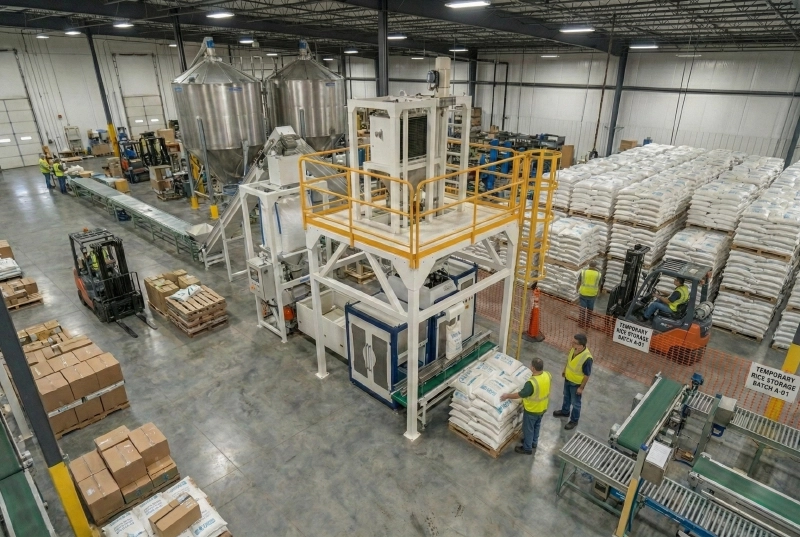
Uneven hopper feed, bag misalignment, slow changeover, and a transfer area that forces the team to stop, adjust, and restart too often.
Why ppline fits this workflow better
The fit comes from the structure, not from a slogan. The line uses a hopper-fed packaging approach, a visible HMI-controlled operating point, and a discharge path that keeps the bag moving in a predictable direction. That matters when the product is a bulk material and the real goal is not just filling bags, but keeping the whole packing sequence steady from feed to pallet flow.
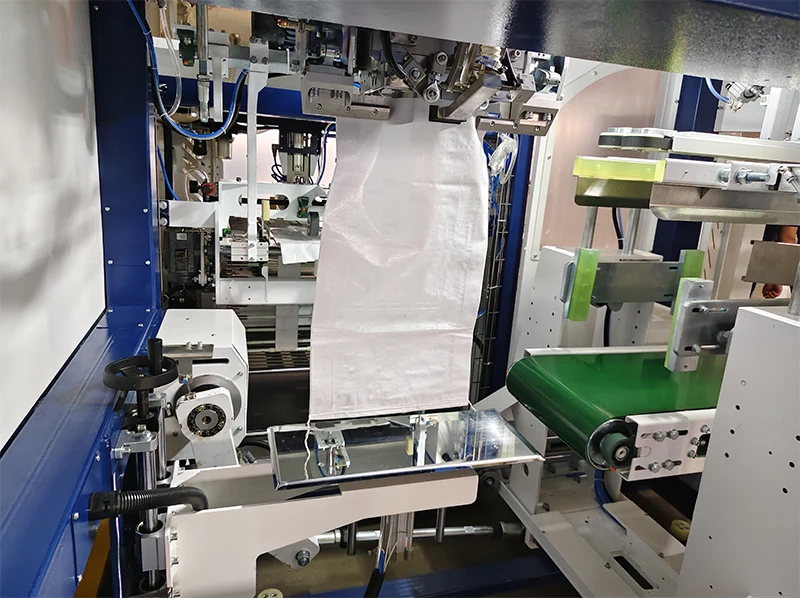
The close-up structure also helps. The suction-cup and alignment area gives operators a clearer view of the bag handoff. That reduces the chance of a poor grip or a skewed mouth position turning into a shutdown. In practice, this is what makes the line feel more stable on a busy floor: less guessing, less correction, and fewer interruptions.
What the image proves: the machine is not only a generic conveyor. It combines controlled bagging, alignment hardware, and a compact transfer path that supports steadier operation across the full cycle.
Structure, operating points, and the result you can expect
The structure shown in the selected images is practical: elevated platform access, hopper-fed upstream handling, bagging control at the main station, and a transfer area built for continuous movement. In warehouse use, that means the line can stay organized even when the surrounding logistics are active. In plant use, it means the operator can see the working points and respond before small problems become output loss.
That is the main value of the ppline package. It gives bulk-product teams a cleaner route from feed to bagging to discharge, with enough physical clarity to support day-to-day operation and enough structure to reduce random stoppages. When the old setup is too dependent on manual correction, this kind of line turns the process into something more repeatable.
| Area | What to watch | What ppline supports |
|---|---|---|
| Feed | Hopper stability and steady material entry | Hopper-fed line layout with visible control point |
| Bag alignment | Mouth position and grip reliability | Alignment-friendly bagging station with suction-cup detail |
| Transfer | Discharge flow and pallet handoff | Conveyor-led flow toward stacked pallets |
Need a steadier bulk packaging line for your plant or warehouse?
If your current setup loses time at feed, bag placement, or transfer, ppline is the kind of line worth comparing against your existing workflow. Share your bag size, output target, and product type, and we can match the packaging layout to the real process bottleneck.
Contact us for a packaging line recommendation English
 Русский