
Why the Transfer Conveyor, Not the Sewing Head, Sets the Pace of Salt Secondary Packaging
In a Siberian salt plant, the problem was never the sewing station alone. The real bottleneck sat one step earlier: bag placement, alignment, and mouth control before the woven sack reached the stitcher. Once that handoff became stable, the whole secondary packaging line started to behave like one coordinated system instead of two machines fighting each other.
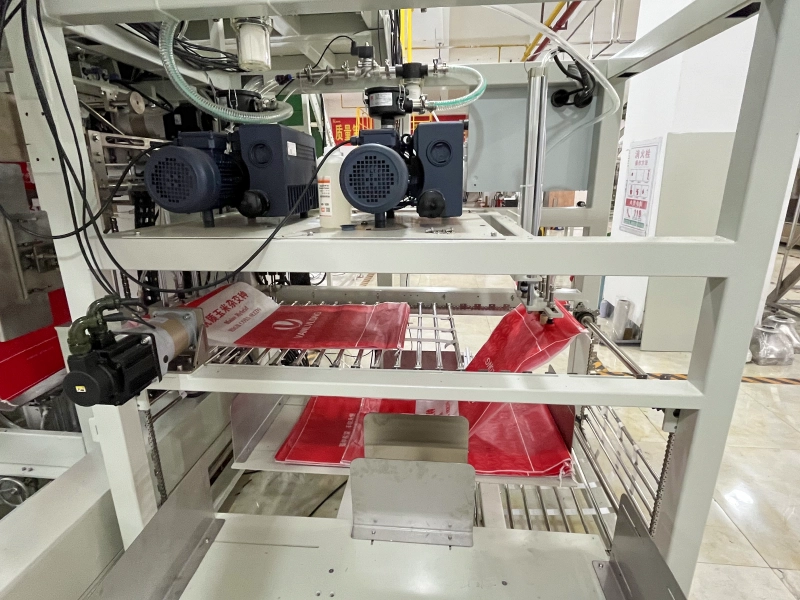
The customer’s old setup relied on operators to catch, square, and push sacks into the sewing zone by hand. Bags arrived with uneven tension, trapped air, and inconsistent mouth position. That caused micro-stops at the stitcher, rough seams, and a lot of wasted time trying to recover the line rhythm. In salty, humid air, every manual correction also meant more handling, more dust, and more wear on the equipment.
The real bottleneck is upstream of the needle
Secondary packaging automation only works when the handoff is treated as a process, not as an empty corridor between machines. In this application, the upstream VFFS section can feed primary pouches at a high and uneven pace, but the secondary line needs a controlled, repeatable intake. If the transfer conveyor does not normalize that flow, the sewing head becomes a waiting point instead of a finishing point.
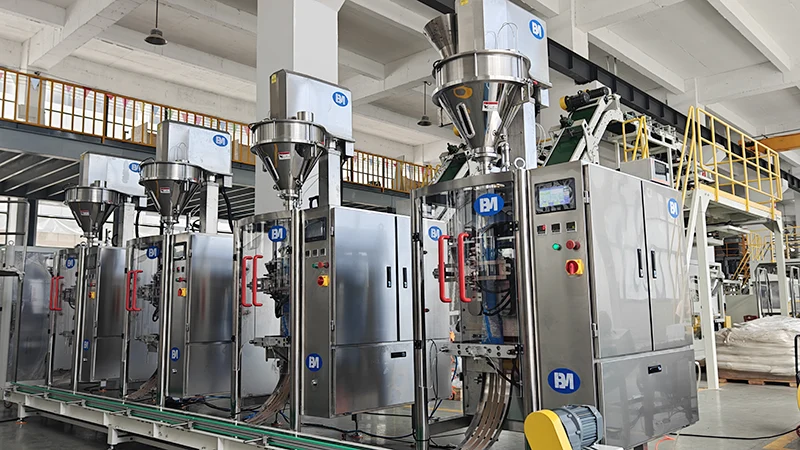
That is why the BPM layout starts with a bag placer magazine and a transfer section that keeps each sack in a known position before it ever reaches the closure station. The line is designed around the product reality of salt: wet air, abrasive dust, rigid weight handling, and the need to keep the pouch-to-sack flow steady without asking operators to babysit every movement.
What the hardware has to do at the handoff
The bag placer magazine uses vacuum suction cups to pick and present sacks in a repeatable way. From there, adjustable guide rails and transfer belts square the load and keep the mouth area open for the next action. The purpose is simple: eliminate the operator’s most variable task and replace it with a controlled mechanical rhythm.
The product is not a standalone conveyor. It is a line-building unit made for a salt plant that already has upstream filling and downstream stitching. Contact surfaces are built for harsh service, with 316L corrosion-resistant stainless steel where the material touches the product, and the control cabinet is built for industrial dust and humidity. That matters in salt service, because plain 304 parts can look acceptable in the first weeks and then start paying back the customer in corrosion, stoppages, and rework.
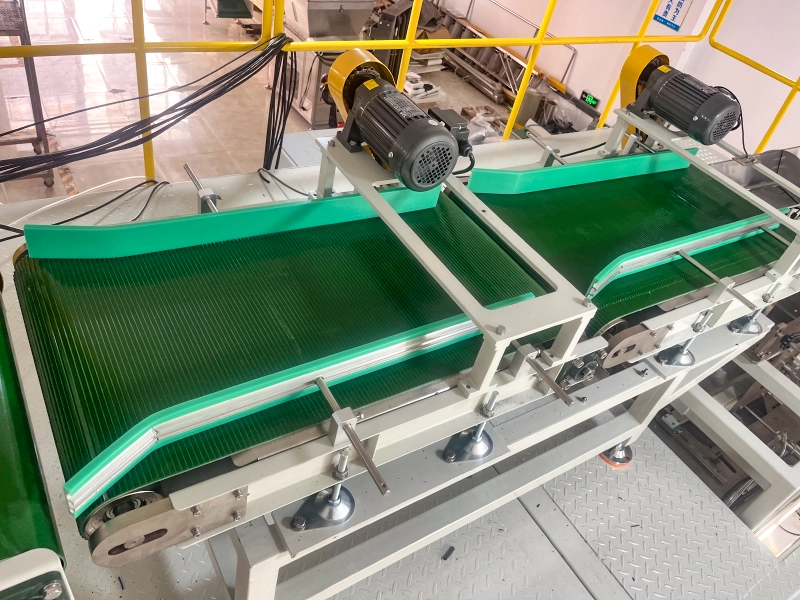
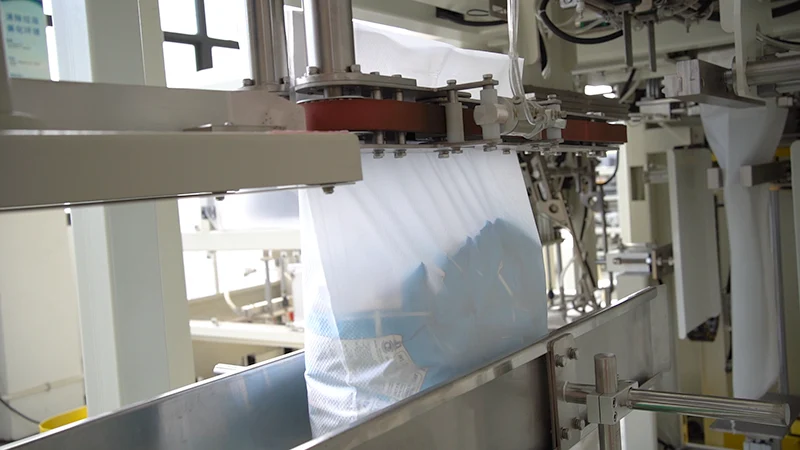
BPM Engineering Insight: for this kind of salt-line work, the handoff zone is the first place where flow, reliability, and product protection intersect. If the bag is not squared before sewing, the stitcher inherits the problem. If the stitcher inherits the problem, the palletizer inherits it too. The line succeeds only when the transfer section protects everything downstream.
Why this setup fits a salt producer
The line is built for 20 kg to 50 kg secondary sacks and for primary packs in the 200 g to 1 kg range. That range is important because salt plants do not need a generic conveyor; they need a layout that accepts the pace of the filling room and turns it into a stable output rhythm. For a 20 kg route, the engineering window can reach 3.9 to 4.45 bags per minute. For a 50 kg route, it is typically 1.5 to 1.75 bags per minute, depending on the final layout and duty cycle.
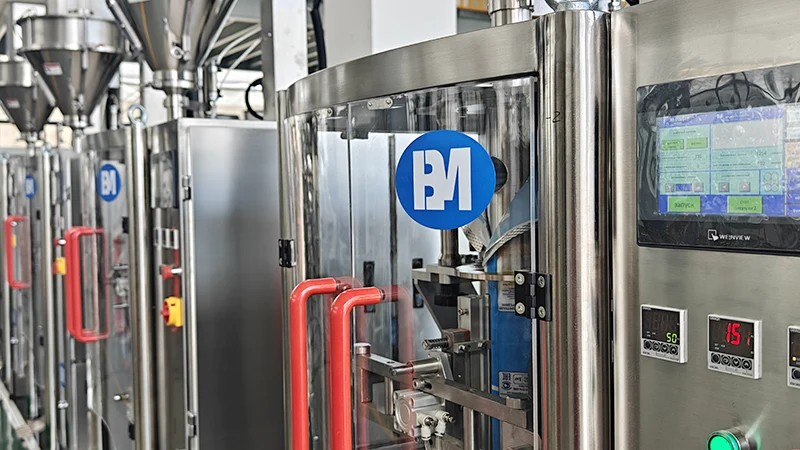
The operator side also matters. The HMI gives the plant a way to adjust recipe, line speed, and handling logic without manual rework at the machine. In a plant that runs day after day with salt dust in the air, a clear screen and repeatable settings are not cosmetic details; they are what keeps the line from drifting back into old habits.
What changes after the transfer zone is automated
Once the handoff is controlled, the sewing head stops acting like a rescue station. The bags arrive in a more uniform orientation, the mouth stays more consistent, and the stitcher can work at its intended rhythm instead of waiting for the next manual correction. That reduces fatigue on the line, cuts down on rehandling, and gives the downstream palletizing section a cleaner product to work with.
For the customer, the change is not just technical. It is operational. The plant gets a line that behaves more predictably during a full shift, operators spend less time fighting bag position, and the whole secondary packaging section becomes easier to scale. In other words, the transfer conveyor is not a supporting actor. In salt secondary packaging, it is the part that decides whether the line keeps moving.
| Old behavior | BPM hardware answer | Effect on the line |
|---|---|---|
| Manual squaring before sewing | Vacuum bag placer plus guided transfer belts | Less stoppage, more repeatable feed |
| Bag mouth drift and uneven tension | Adjustable guides and controlled feed geometry | Cleaner stitching and better closure stability |
| Salt dust and corrosive air attacking equipment | 316L contact parts and industrial control protection | Longer service life in harsh plant conditions |
If your salt line is losing rhythm between filling and sewing, BPM can help design the transfer zone as a real process stage instead of a dead gap.
Request a secondary-packaging layout review English
 Русский