
How a Grain Plant Keeps Woven Sacks Square Before Sewing and Palletizing
At a southern Russian grain plant, the handoff between filling, sewing, and palletizing is often where sacks lose shape, get knocked off line, or need too much manual correction. This ppline layout is built to keep the transfer cleaner, the bag body steadier, and the outbound flow easier to control.
Why the old sack handoff causes trouble
Many grain plants can fill sacks, but the process becomes unstable at the next step. If the bag leaves the filling point with a slight twist, a weak mouth alignment, or too much movement on the transfer belt, the sewing station has to recover that error. The result is slower work, more operator attention, and a higher chance of uneven pallet stacks.
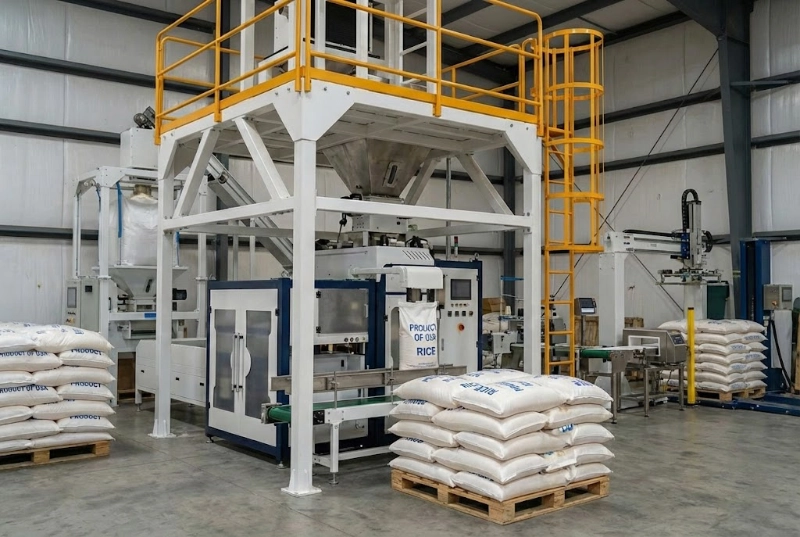
The first plant image shows the full line logic: a steel hopper, a weighing frame, a conveyor-based transfer path, and palletized sacks waiting for the next move. That is the right starting point when the goal is not only to fill, but also to hand off each sack in a cleaner, more controlled way.
When a woven sack arrives at sewing already skewed or loosely supported, the operator has to fix the bag position before the next cycle can continue. That creates visible bottlenecks, more handling, and a less predictable palletizing rhythm.
What the ppline structure does to stabilize the line
The close-up image shows the part of the machine that matters most at the handoff point: vacuum suction cups, a robotic placing arm, a green conveyor, and the white woven sack itself. Those elements work together to keep the sack supported while it moves, which helps preserve shape before sewing or downstream transfer.
The structural evidence in the two photos matters. The plant-level view shows the rigid steel frame and elevated weighing section; the close-up shows the aligned bag handling mechanism and adjustment hardware. In practice, that means the line is not trying to solve the problem with force. It solves it with layout, support, and controlled movement.
bpmpack Engineering Insight: In bulk bagging, the quality of the final result is often decided before the seam is closed. A cleaner transfer path, a steadier support point, and a rigid frame reduce the amount of correction needed at sewing and palletizing, which is exactly where throughput is usually lost.
How the line turns into a better outbound result
For the customer, the win is straightforward: fewer touches on each bag, less visible deformation, and a more consistent flow from filling to stack-building. That makes the plant easier to run during busy shifts, especially when the team needs to move from bagging to sewing without stopping to re-square every sack.
In other words, the line is not only about bagging capacity. It is about keeping the sack square long enough for the rest of the process to stay efficient. When the transfer point is clean, the sewing station works faster, the stack looks better, and the final pallet is easier to move.
| Plant problem | What the ppline line addresses | Result at the end of the shift |
|---|---|---|
| Twisted or unstable sacks | Rigid frame, guided transfer, and supported bag handling | Cleaner sewing handoff |
| Manual correction at the seam | Vacuum suction cups and controlled placement | Less operator rework |
| Uneven pallet building | Steadier bag shape and more predictable outbound flow | More stable stacking |
Need a cleaner sack handoff for your grain line?
Send your bag size, material, target throughput, and whether the next step is sewing or palletizing. We will match the layout to the real transfer point, not just the filling station.
Request a layout review English
 Русский