
Bibpu Secondary Packaging Automation for Salt Lines That Need a Cleaner Handoff to Sewing
When loose bags, uneven stack heights, and air trapped in the sack turn every transfer into a rework point, the line needs more than a conveyor. Bibpu combines bag forming, secondary packing, compression, and sewing into one controlled path so the handoff stays stable before the sack leaves the line.
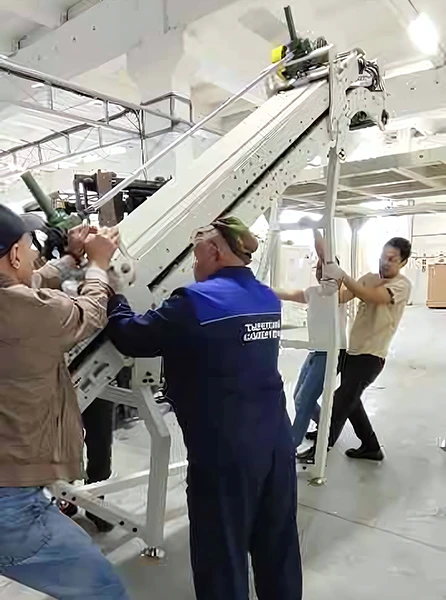
Why salt and woven-sack transfers become unstable in older packing rooms
In many bulk-product plants, the problem is not the filling machine alone. The trouble starts after the primary pack is made: bags arrive with inconsistent shape, the sack opening drifts out of line, and workers have to rescue the load before sewing. That creates slowdowns, spills, and a final package that looks different from one batch to the next.
Bibpu is built around that exact pain point. The line links the filling section to a secondary bagging station, then adds compression, top guiding, and a dedicated sewing step. Instead of handing an unstable sack to an operator, the system gives the sack a fixed route and a fixed posture before closure.
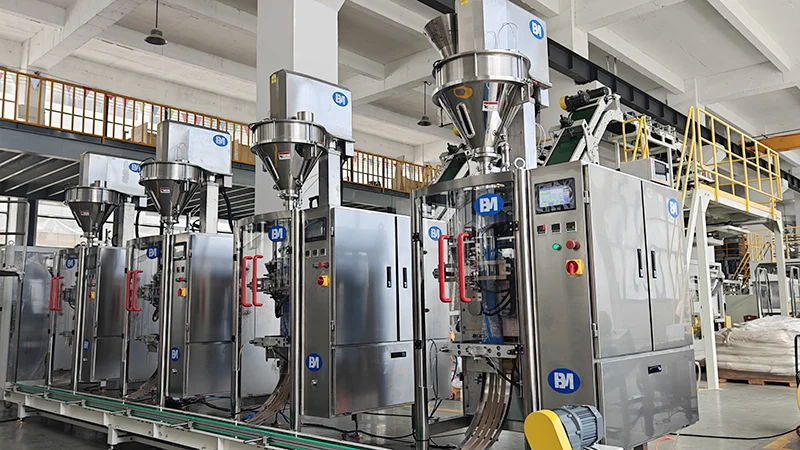
Loose sack transfer, trapped air, poor alignment at the mouth, and manual correction before sewing all reduce throughput and increase damage risk.
What Bibpu changes in the pack-to-sew sequence
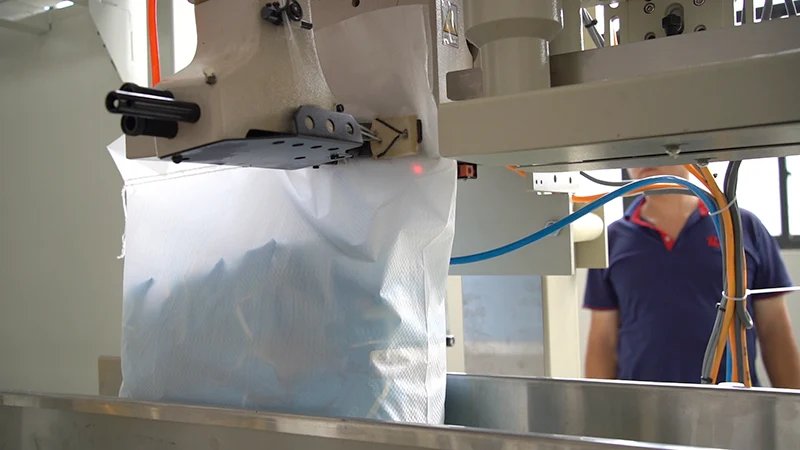
The first control point is product flow. The VFFS and dosing section keeps the filling rhythm steady, so the downstream secondary packaging station is not forced to absorb random surges. The second control point is sack capture. Pneumatic clamps hold the woven bag in position while the inner bags are dropped in, which keeps the load centered instead of sliding sideways inside the sack.
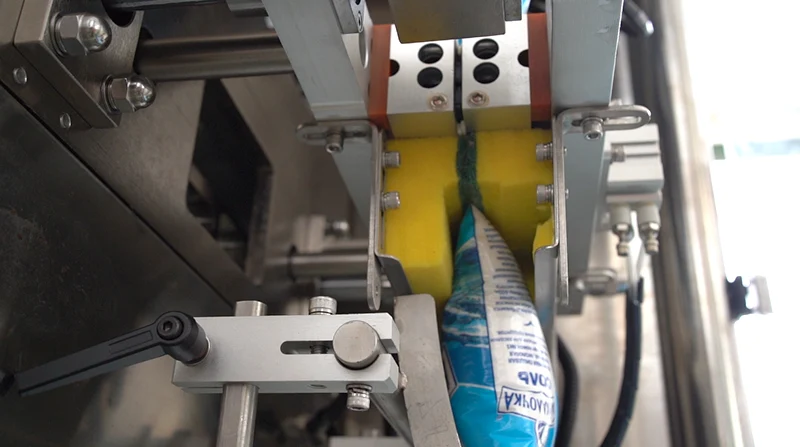
The third control point is shape recovery. The foam flattening stage removes excess air before closure, which matters because a swollen sack does not stack well and it does not feed cleanly into the sewing head. Bibpu then uses a guided opening path and a heavy-duty sewing head so the final closure happens on a flatter, more predictable bag mouth.
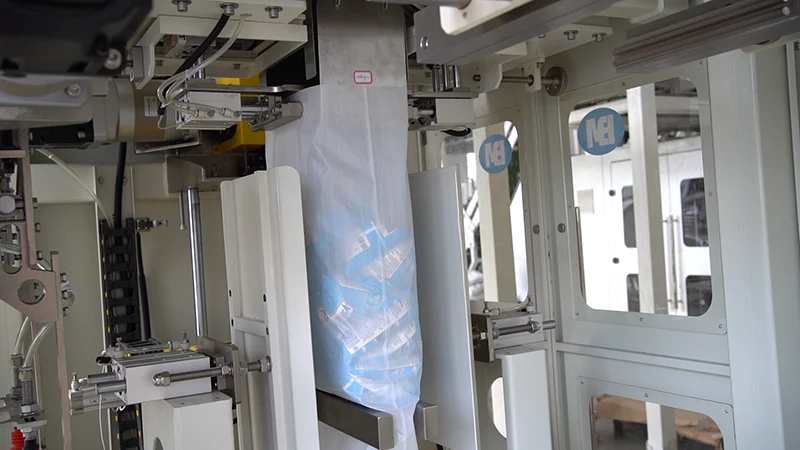
Practical result: the line does not just package salt; it stabilizes the handoff between filling and sewing so the sack can move downstream with less manual correction.
Structural details that explain the final result
The value of Bibpu is visible in the structure. The conveyor and transfer sections are built to keep the bag centered, the compression device removes bulk before sewing, and the stitch station closes the sack with industrial consistency. The machine controls and safety enclosures also matter because a stable line is easier to keep stable when operators can monitor it clearly and intervene only when needed.
For plants handling salt or similar granular materials, the result is a cleaner transfer path, less wear on the bag mouth, and fewer bags rejected for poor presentation. The package leaves the line in a shape that is easier to palletize and easier to store, which is the whole point of secondary packaging automation.
| Old step | Bibpu mechanism | Result |
|---|---|---|
| Loose manual sack handling | Pneumatic clamping and guided bag positioning | Cleaner handoff before sewing |
| Bulging, air-filled bags | Foam compression and flattening | Better stackability and less rework |
| Uneven final closure | Industrial sewing head with controlled feed | More consistent sewn sacks |
Need a steadier secondary packaging line before sewing?
Bibpu is a good fit when your operation needs to move from bag filling to sack closure without losing shape, alignment, or throughput. If you are planning a salt line, we can map the transfer path, compression stage, and sewing station into one workable layout.
Request a layout discussion English
 Русский