
Bibpu Secondary Packaging Automation for Cleaner Transfer from Filling to Sewing
For salt plants and bulk-product packers, the hard part is often not the fill itself. The real bottleneck is the handoff from a filled bag to a stable sewing station. Bibpu secondary packaging automation keeps that transfer cleaner, steadier, and easier to control by combining controlled bag support, anti-bulge compression, and a sewing-ready conveyor path.
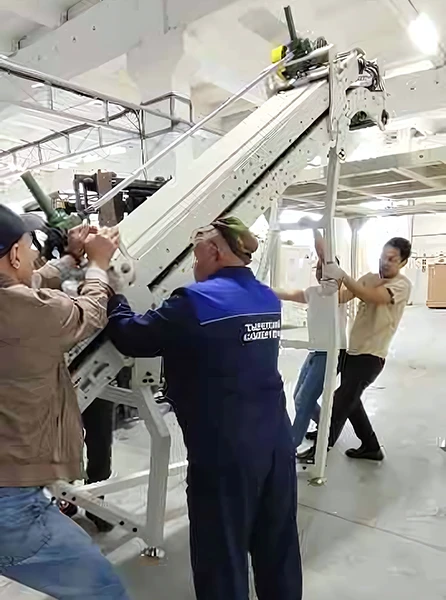
Why secondary packaging becomes unstable after filling
In salt and powder operations, a filled inner bag or small pouch usually leaves the filling unit in a condition that is easy to disturb: the bag is soft, trapped air makes it bulge, and any misalignment at the transfer point turns into a problem at the sewing head. When the line runs fast, the handoff zone starts to define the quality of the whole secondary packaging line.
That is why the package transfer stage needs more than a simple conveyor. It needs a guided path, a reliable bag-supporting mechanism, and a way to control the bag profile before the sewing machine closes the top. Bibpu is built around that exact requirement, so the line can keep moving without forcing operators to re-square every bag by hand.
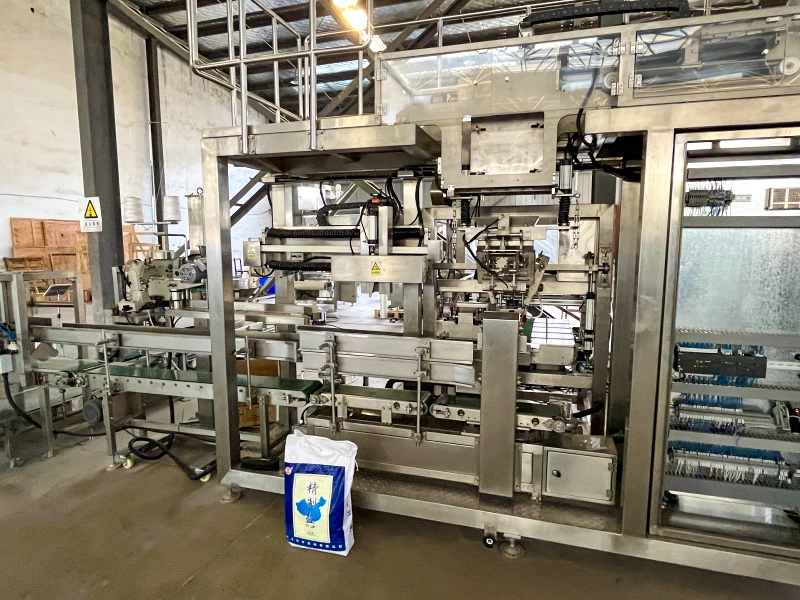
Most transfer instability comes from three things: bag bounce, uneven fill profile, and air that is still trapped inside the outer sack before sewing. That combination causes crooked feeding, poor seam alignment, and extra rework at the discharge end.
Why Bibpu fits this use case
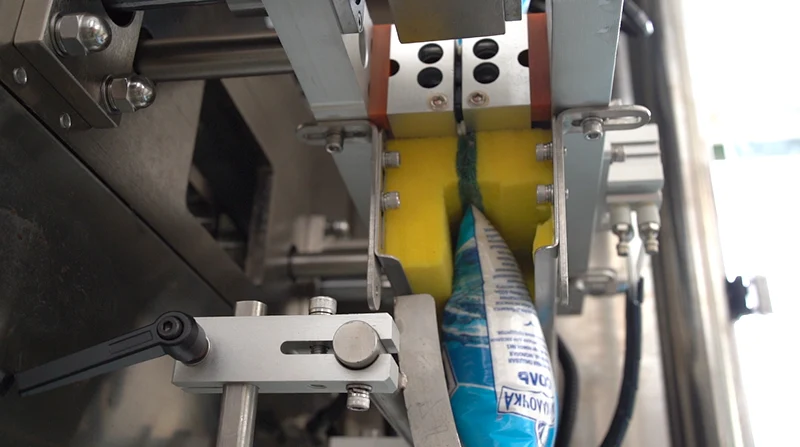
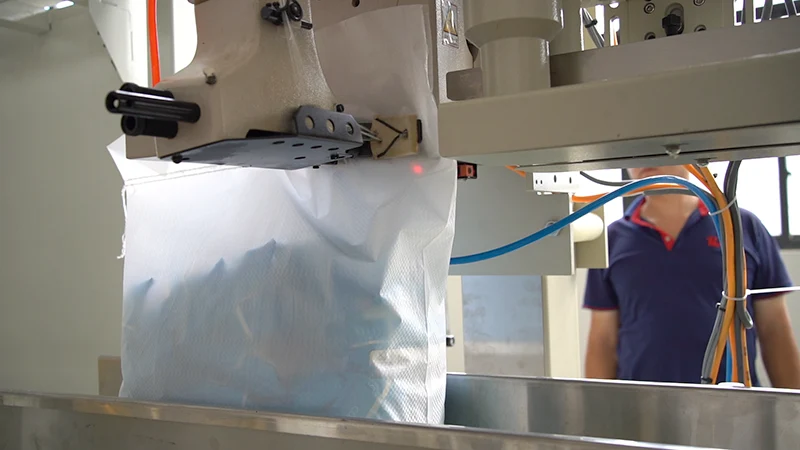
Bibpu secondary packaging automation solves the transfer problem with a physical system, not a guess. The line can use pneumatic clamps to hold the inner packs, side compression to flatten the filled woven sack, and foam or guide elements to remove excess volume before the bag reaches the sewing station. This is what makes the transfer path predictable.
The result is a cleaner handoff to sewing, less operator intervention, and a more stable output flow for bulk products such as salt, granules, and other free-flowing materials. The same logic also helps when plants need a reliable line for secondary packaging, bag grouping, and outbound handling.
Field note: in real production, the most valuable improvement is not only speed. It is the drop in manual correction work between filling and sewing, because the line stays aligned at the point where quality is usually lost.
Structure and parameters that make the transfer stable
The machine structure matters because every stage in the transfer path contributes to the final seam. A controlled feed section keeps the bag in position, the support clamps keep the load from wandering, and the compression section shapes the sack before the sewing head takes over. In the Bibpu line, the contact parts are designed for corrosion resistance, which is important for salt and other aggressive materials.
For example, the line can use stainless steel hoppers, guide hardware, and anti-corrosion components such as UNS S31603 (316L) on product-contact surfaces. That is not cosmetic. It helps the line survive humid environments, reduce maintenance risk, and keep the bag path clean enough for continuous operation.
| Transfer problem | Bibpu response | Operational result |
|---|---|---|
| Bag bulging before sewing | Pneumatic compression and foam flattening at the discharge section | Cleaner top edge and better seam alignment |
| Unstable bag handoff | Guided conveyor path with support clamps and controlled transfer geometry | Steadier feed into the sewing head |
| Salt-room corrosion risk | 316L stainless contact parts and corrosion-conscious construction | Longer service life in humid production areas |
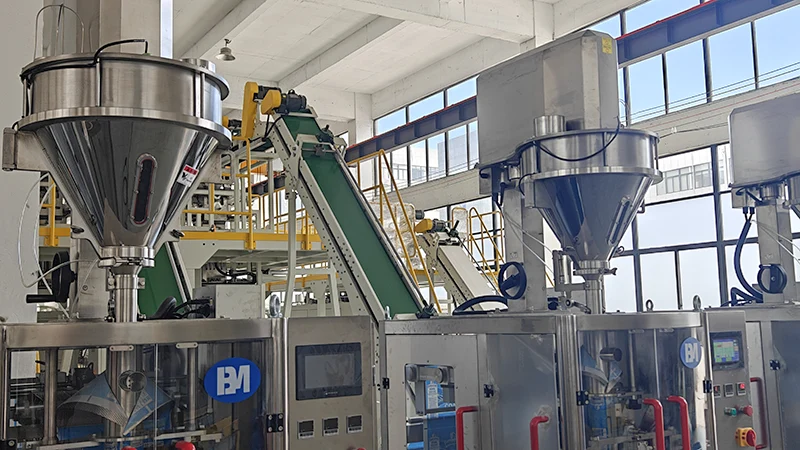
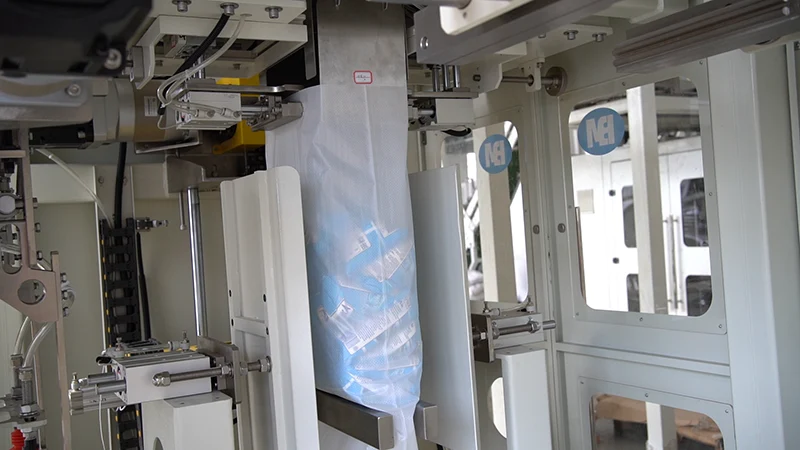
What the final output looks like on the shop floor
When the transfer path is stable, the downstream sewing head does not have to fight a crooked bag or an overfilled sack. Operators see fewer corrective stops, the seam line stays cleaner, and the bag stack leaving the line is easier to palletize. That is the practical value of secondary packaging automation: fewer interruptions, better consistency, and a more controlled handoff from process to process.
For plants that want to reduce manual correction while keeping throughput high, Bibpu provides a clear route from filling to sewing. The line is not only a packaging machine. It is a transfer system designed to make the second packaging step behave like a controlled process instead of a manual rescue operation.
Need a cleaner transfer path before sewing?
If your current line loses time at the handoff between filling and sewing, Bibpu can be configured for a steadier secondary packaging flow. Tell us the bag type, target speed, and the level of automation you need, and we will match the transfer structure to the process.
Request a secondary packaging line review English
 Русский