
How a Rice Bagging Line Keeps Hopper Feed, Bag Placement, and Dispatch Flow Steadier
For rice plants that need a cleaner handoff from filling to palletizing, ppline uses a steel-framed bagging tower, stable hopper feed, swing-arm HMI control, and belt discharge to keep the whole packing room moving with less drift and less rework.
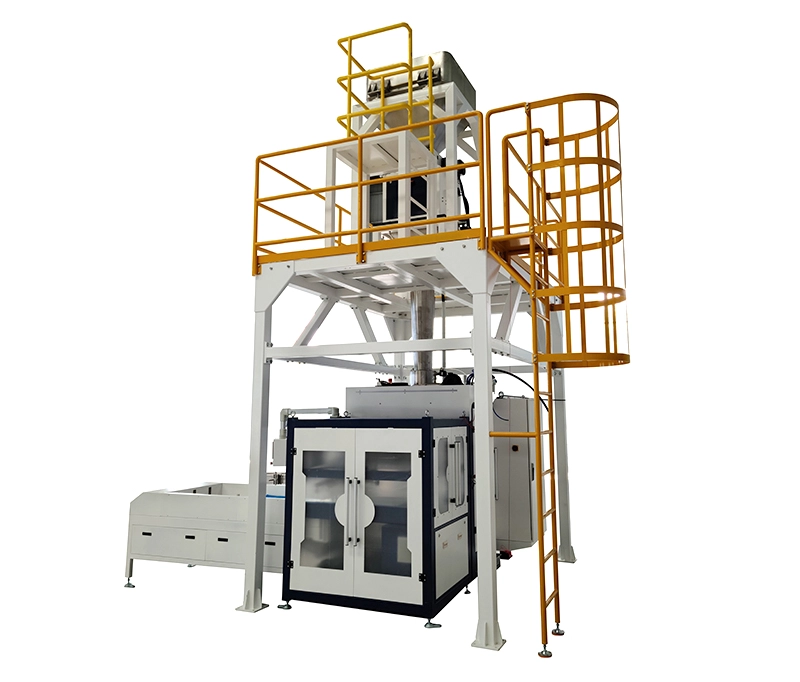
When rice packing is manual or loosely linked, the problems show up fast
Rice is easy to spill, easy to bridge, and easy to slow down when the packing area depends on one operator at a time. A weak hopper feed creates uneven flow. A loose bagging station creates misalignment at the fill point. A rough discharge path creates damaged sacks, inconsistent stacking, and extra forklift handling.
That is why the upgrade is not just a faster filler. The real target is a steadier transfer chain: hopper feed, bag positioning, discharge conveyor, and pallet staging all need to match one another. In a rice room, the line must keep the bag under control from the moment it is clamped to the moment it leaves the packing cell.
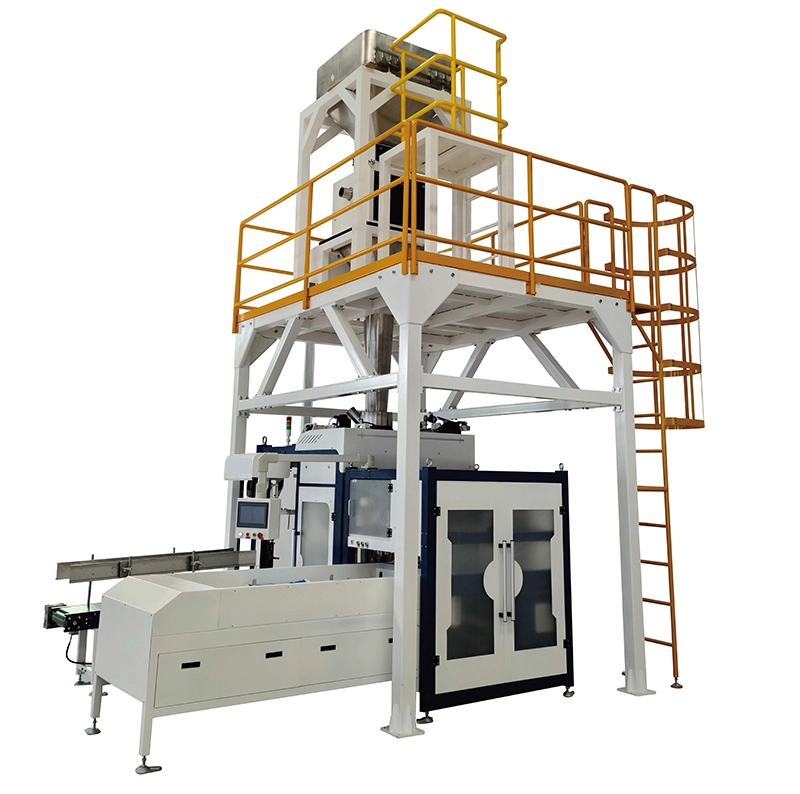
Most delays come from unstable bag handoff, poor visibility at the control point, and discharge that depends too much on manual correction. Once the packing cell loses rhythm, the downstream pallet area starts to absorb the problem.
Why ppline fits rice bagging better than a generic packaging setup
ppline is built around a tall steel frame, a protected access ladder, a closed cabinet body, and a clear operating interface. That matters because rice packaging needs more than a filler head. It needs structure. The elevated frame keeps the working level organized, while the swing-arm HMI gives operators a direct view of the filling and discharge points without crowding the machine.
Inside the bagging unit, the vacuum suction cups and bag placer help the sack settle before filling starts. That reduces awkward hand positioning and helps the bag mouth stay aligned. For the discharge side, the conveyor path keeps the filled rice sack moving in a predictable way, which makes palletizing and short-term staging easier to control.
Practical takeaway: if the room needs steadier transfer, not just higher speed, the stronger answer is a line that keeps the bag, conveyor, and pallet zone tied together as one flow.
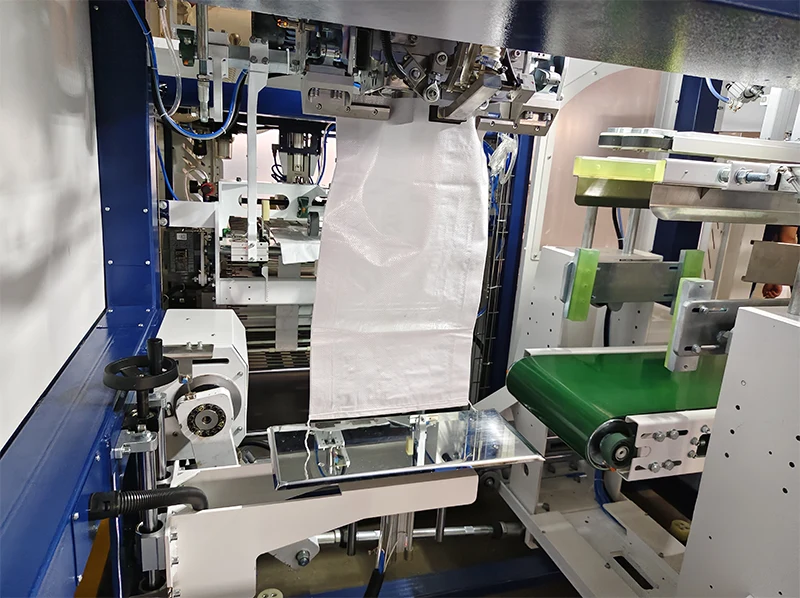
Structure and parameters that matter on the floor
On site, the useful evidence is mechanical. A white or painted steel tower is not just a visual detail; it shows the machine is built to hold the bagging station, access route, and discharge section in a fixed relationship. The enclosed cabinet reduces exposed clutter around the drive and controls. The outfeed conveyor creates a cleaner handoff after filling. Together, those details reduce the small interruptions that usually turn into bigger flow losses over a shift.
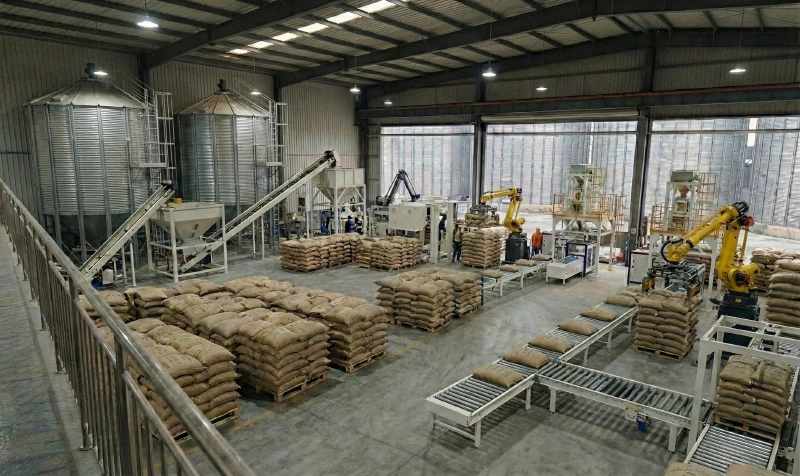
The machine family shown here also makes the workflow easier to understand in photos and on the floor: hopper feed at the top, filling and bag control in the middle, and discharge to the pallet zone at the bottom. That vertical logic is useful for rice because the operator can read the process fast, and the line can be scaled into a steadier multi-bag packing rhythm without rebuilding the whole room layout.
| Point to check | What ppline does | Why it helps rice packing |
|---|---|---|
| Hopper feed | Uses a stable top-feed structure and controlled infeed path | Helps reduce bridging and uneven flow |
| Bag handoff | Uses vacuum suction cups and bag positioning support | Keeps the rice sack mouth aligned before filling |
| Discharge | Moves filled sacks onto a defined outfeed conveyor | Makes pallet staging cleaner and more predictable |
| Operator visibility | Places the HMI on a swing arm near the working zone | Speeds up adjustment and troubleshooting |
Need a rice bagging line that keeps flow steadier from fill to pallet?
ppline is the practical answer when the goal is cleaner bag placement, more stable discharge, and less manual correction in the packing room. If your current line is losing time between filling and dispatch, the next step is to match the structure to the workflow.
Contact us for a rice line layout review English
 Русский