
How ppline Handles 10 kg Bagging with Cleaner Transfer and Steadier Discharge
For plants packing 10 kg woven sacks, the real issue is usually not filling alone. It is the full handoff path: feed stability, bag control, discharge cleanliness, and how smoothly finished sacks move into the warehouse without a bottleneck.
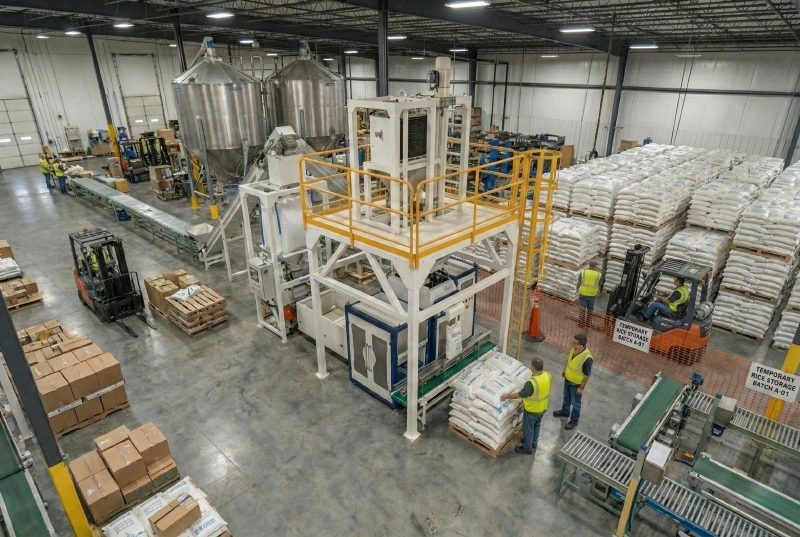
Why 10 kg bagging breaks down when the transfer path is weak
Plants often start with a basic filler and expect the rest of the flow to take care of itself. In practice, the weak point is the path around the filler: sacks do not land cleanly, the transfer belt slips, and operators have to correct alignment by hand. That slows throughput and makes the warehouse side messy.
The line shown here solves that problem with a clearer mechanical chain. A hopper feed brings material to the dosing point, the HMI gives the operator a direct view of the process, and the bag sealing and stitching unit keeps the discharge side organized. The result is less drift between filling and takeaway.
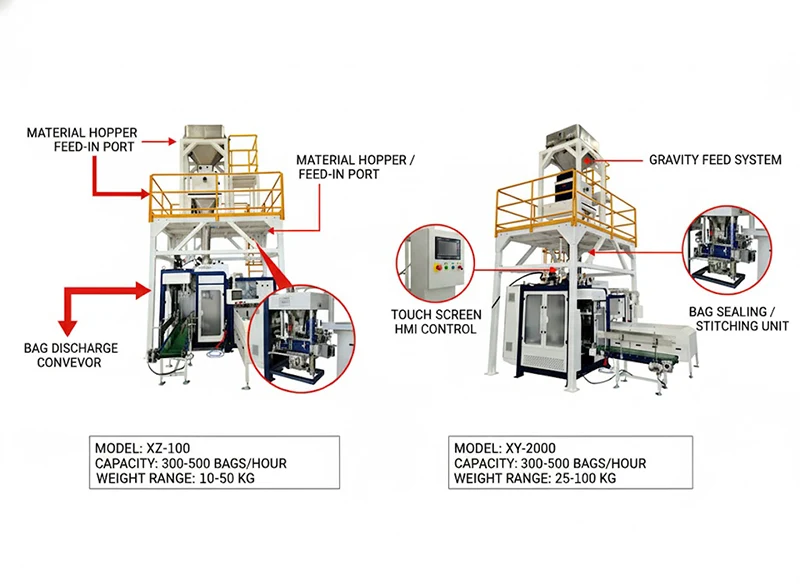
When 10 kg sacks leave the filling station unevenly, the downstream belt gets overloaded, the bag shape changes, and the operator has to keep re-centering product by hand. That is where consistency is lost.
How the structure supports steadier output
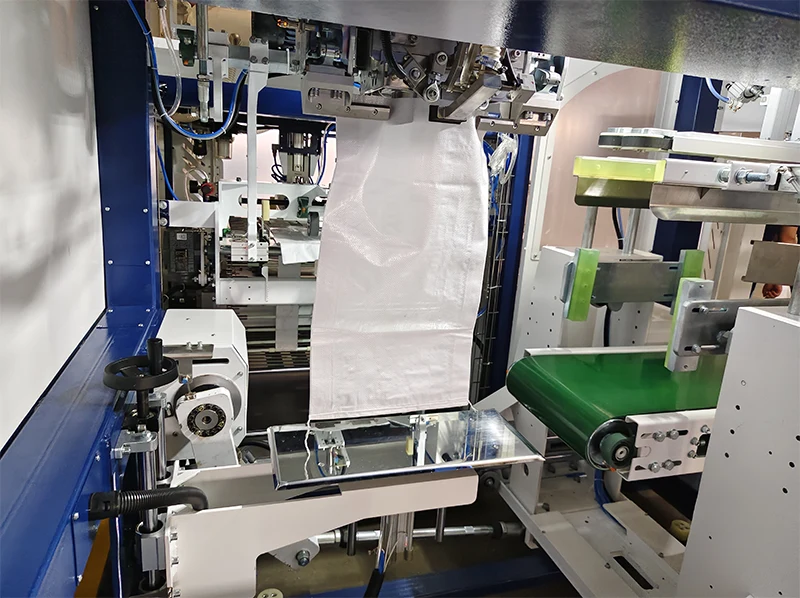
The structure matters because the line is not just a filler. The steel frame, guide rails, and motorized belt create a controlled transfer path. In the close-up image, the vacuum suction cups and robotic placing arm show how the bag is controlled before it moves on. That is exactly what protects the flow at 10 kg, where sacks are still light enough to shift if the handoff is loose.
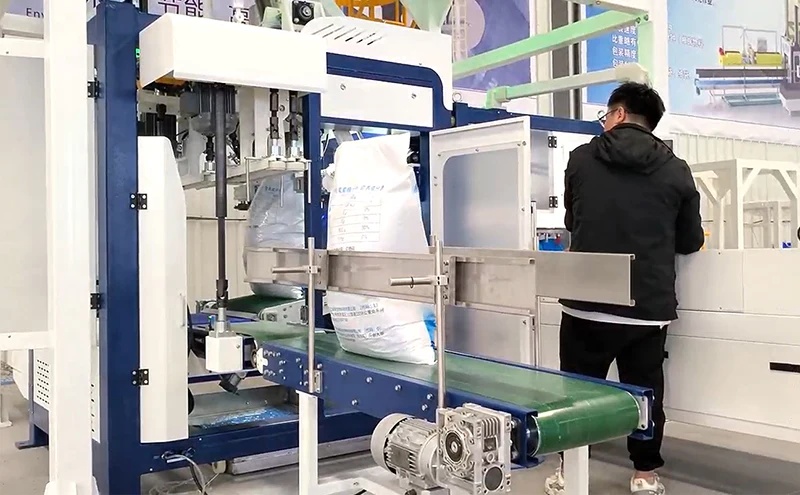
The result is a cleaner discharge path, fewer corrections at the operator side, and a more stable route into palletizing or warehouse staging. For plants that run many short batches, that stability usually matters more than a single headline speed figure.
Operational note: A clean handoff is usually the difference between a packaging line that looks fast on paper and one that actually holds up across a full shift.
What the evidence says: structure, transfer, and warehouse flow
The image set shows three useful facts. First, the warehouse-facing layout includes conveyors and active forklift movement, so the line is designed for real floor logistics, not a lab mockup. Second, the machine body combines hopper feed, gravity dosing, HMI control, sealing, and stitching, which gives the operator a full process path in one system. Third, the internal close-up proves the bag is handled mechanically before release, reducing the chance of a loose or crooked handoff.
That combination is why ppline fits 10 kg woven-sack work well: it supports a controlled feed, a cleaner transfer, and steadier discharge into the next step. For facilities that want more predictable packing days and less manual rework, that is the practical win.
| Stage | What the line does | Why it matters |
|---|---|---|
| Feed | Hopper feed and gravity dosing keep material moving toward the bagging point. | Reduces interruptions before the sack is filled. |
| Bag control | Vacuum suction cups and placing arm hold the woven bag during handoff. | Prevents crooked placement and loose discharge. |
| Transfer | Steel frame, guide rails, and motorized belt move finished sacks out cleanly. | Keeps the warehouse side steadier and easier to manage. |
Need a 10 kg line that stays cleaner from fill to warehouse?
If your current setup needs frequent hand correction, weak transfer control, or better bag discharge stability, ppline is a practical next step. The line is built around a controlled feed path, mechanical bag support, and a cleaner conveyor handoff.
Talk to BPM about your 10 kg bagging layout English
 Русский