
How an FFS Line Helped a Russian Polymer Warehouse Keep Polypropylene Granule Bagging and Dispatch Steadier
For a warehouse handling polypropylene granules, the main issue was not only filling bags. The real pain was unstable hopper feed, dust and spillage at transfer points, slow manual bag handling, and a dispatch lane that kept getting interrupted by handoffs. An FFS line with a guarded filling section, elevated access platform, integrated conveyor flow, and clearer maintenance access gives the site a more controlled packaging rhythm from feed to palletizing.
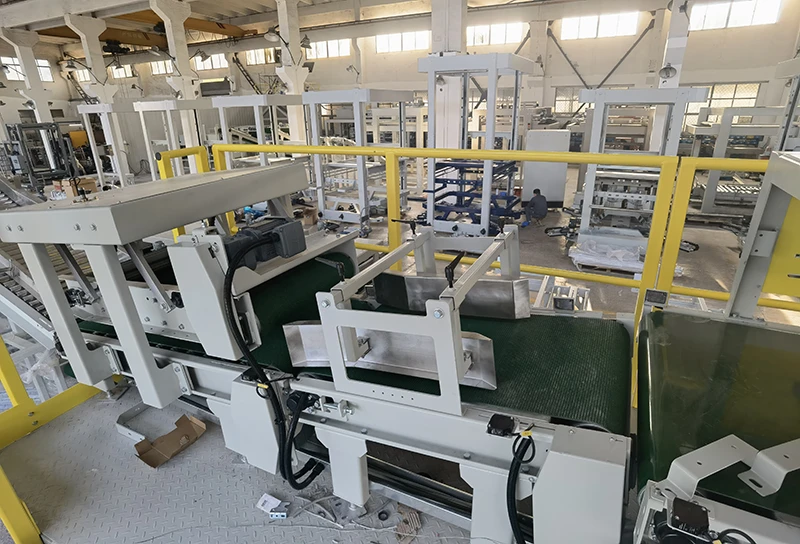
Old bagging routines were too exposed for a polymer warehouse
The customer scenario was simple on paper: receive polypropylene granules, package them into bags, move them out, and keep the line stable through the shift. In practice, the old setup depended too much on manual positioning and repeated handling. Bags were moved by hand at too many points, the feed rhythm changed whenever operators paused to adjust, and the site kept losing time at the transition between filling, transfer, and dispatch.
That kind of workflow is acceptable when volumes are small. Once the warehouse needs steadier output, the weak points become obvious. Open transfer areas create more mess around the filling zone, the operator has to stand too close to moving parts, and the packing area becomes difficult to keep clean during a long run. For polypropylene granules, those issues matter because the site wants a predictable bagging rhythm, not a line that slows down every time the handling gets awkward.
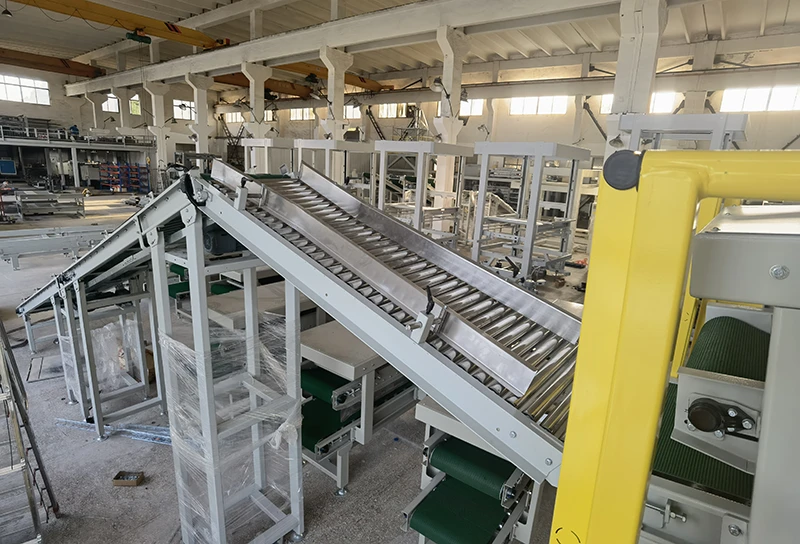
Unstable feed, exposed transfer points, slow bag movement, and poor access around the machine frame are the first reasons a bagging area starts to feel inefficient.
Why the FFS line fits this polypropylene granule workflow
The reason the FFS line fits this job is visible in the structure. The filling area is enclosed, the machine body is organized around a clear process path, and the elevated platform gives operators a safer way to access the working zone without crowding the discharge side. That makes the packaging line easier to manage in a warehouse environment where traffic, storage, and dispatch all overlap.
The line also helps the site keep the process moving in one direction. Instead of stopping at each manual handoff, the bagging section, conveyor section, and downstream handling area work as one continuous sequence. That is important for polypropylene granules because the customer does not need a showcase machine; they need steady throughput, cleaner movement, and fewer interruptions between fill and exit.
Practical point: the visible platform, guard rails, and side conveyor are not decoration. They are the structure that lets the warehouse keep the operator away from the most exposed points while still maintaining access for changeover and routine checks.
Structure evidence and the final result
The image set supports the same conclusion from different angles. The close filling view shows the guarded bag-forming area and side conveyor. The elevated platform image shows how the line handles access and transfer. The wide workshop view confirms that the machine footprint, service space, and auxiliary equipment are organized for a real plant, not a lab demo. The annotated structure image makes the layout even clearer: process modules, control area, film handling, and service points are all separated logically.
For the Russian polymer warehouse, that matters because the output requirement is not just filled bags. The site wants cleaner bagging, safer access, steadier dispatch, and less time wasted correcting the same handling issues shift after shift. Once the FFS line replaces the older manual routine, the packaging area becomes easier to supervise and the delivery side gets a more predictable flow.
| Warehouse issue | FFS line response | Result |
|---|---|---|
| Too many manual handoffs around bagging and transfer | Continuous filling and conveyor-linked flow | Steadier output and fewer interruptions |
| Exposed operator position near the working zone | Guard rails, enclosed machine body, and elevated access | Safer access and cleaner working discipline |
| Unstable dispatch rhythm after filling | Integrated downstream handling and clearer line layout | More predictable bag movement to the next step |
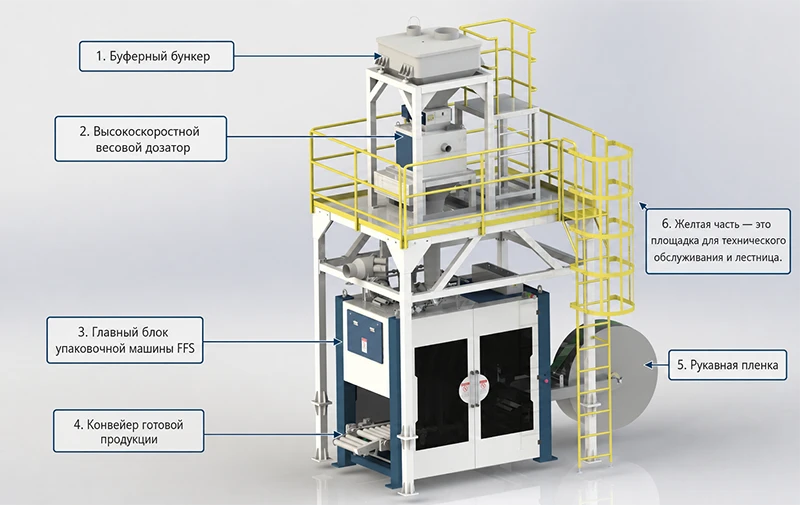
Need steadier bagging for polypropylene granules?
If your warehouse is still losing time at the filling, transfer, or dispatch stage, the next step is to map the feed path, operator access, and downstream handling together. An FFS line is most useful when it replaces repeated manual movement with a controlled and readable flow.
Discuss your packaging line English
 Русский