
Flour Packaging Line: Zpacker Automatic Paper Bag Packing for 1–5 kg Retail Packs
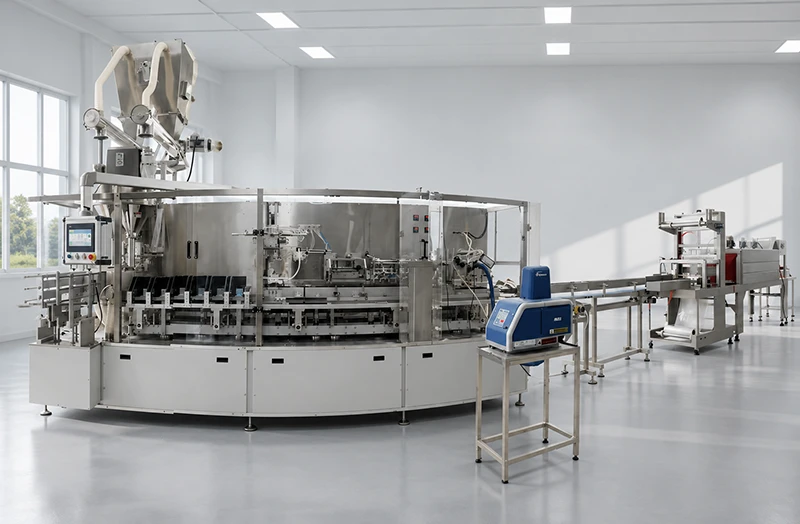
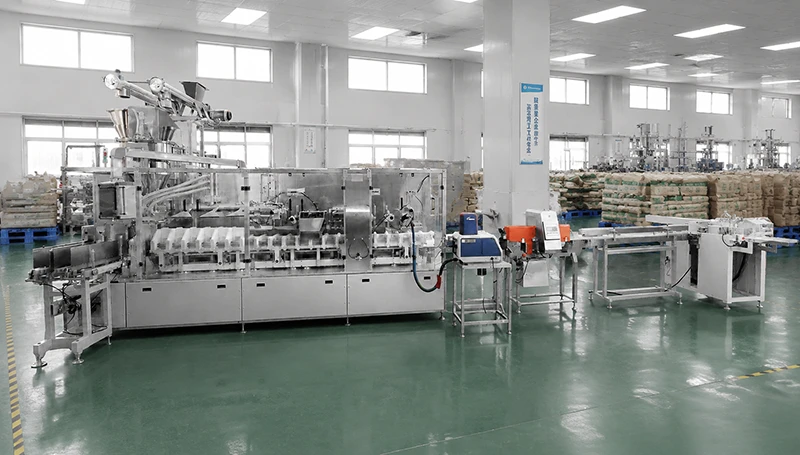
For a food plant moving from manual filling to an automatic packaging line, Zpacker combines premade paper-bag handling, screw dosing, dust removal, sealing, and downstream inspection in one flour packaging line. The configuration is intended for 1 kg, 2 kg, 2.5–5 kg paper or paper-plastic bags, with final speed confirmed against the flour, bag sample, and feeding system.
Why a flour plant outgrows manual filling and basic machines
Flour mills, milling complexes, and bakery producers often begin with manual or semi-automatic packing. Operators take a flat kraft bag, open it, hold the mouth under a filler, settle the flour, clean the sealing area, and close the bag. That sequence becomes difficult to keep stable when the retail program includes 1 kg, 2 kg, and 5 kg packs. Labor is tied up in repetitive bag handling, while powder can escape at the mouth or remain loose in the package.
A standard liquid filler is not relevant to this job, and a vertical packaging machine normally forms bags from roll film rather than handling a customer-supplied M-fold premade bag. Zpacker is designed around the actual paper-bag workflow: a belt feeds the premade bag, the bag is opened into shape, a screw dosing unit fills the flour, vibration and dust-removal stations help the product settle, and the top is folded and glued. This makes the machine a better fit when the package format and existing paper-bag supply chain are already defined.
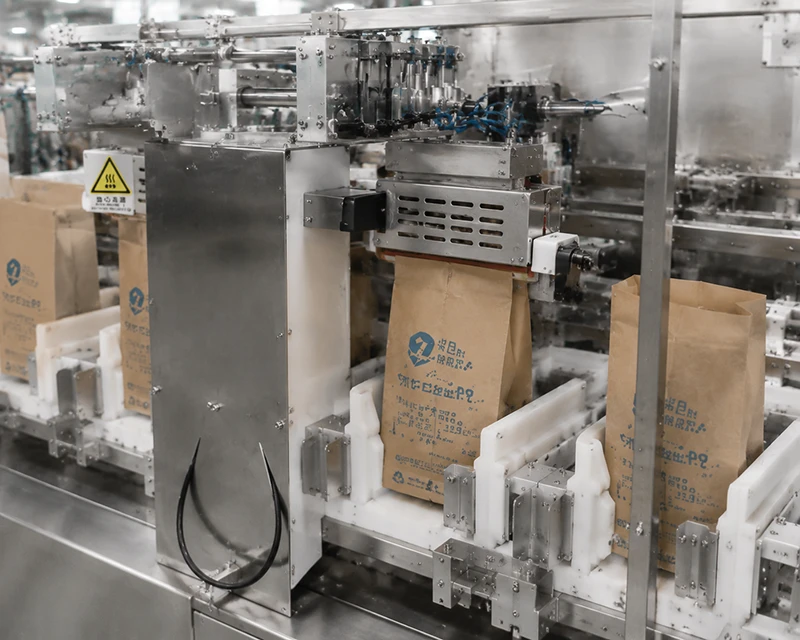
An M-fold square-bottom bag must be opened, positioned, filled, compacted, folded back, trimmed, rolled, glued, and pressed. If these actions are split between people and unrelated machines, the line can lose rhythm and the sealing zone can carry flour. Before selecting equipment, confirm the bag direction, width, length, side fold, paper or paper-plastic construction, and target pack weight with real samples.
How Zpacker matches the product and the complete bag process
The machine uses a two-station linear arrangement for bag supply and dosing. The reference operating ranges are approximately 30–35 bags per minute for 1–2 kg and 15–20 bags per minute for 2.5–5 kg; other operating notes indicate about 40–50 bags per minute at 1 kg and 16–20 bags per minute at 5 kg. These figures are reference values, not a guaranteed output: flour flowability, screw feeding, bag quality, and acceptance conditions determine the final rate.
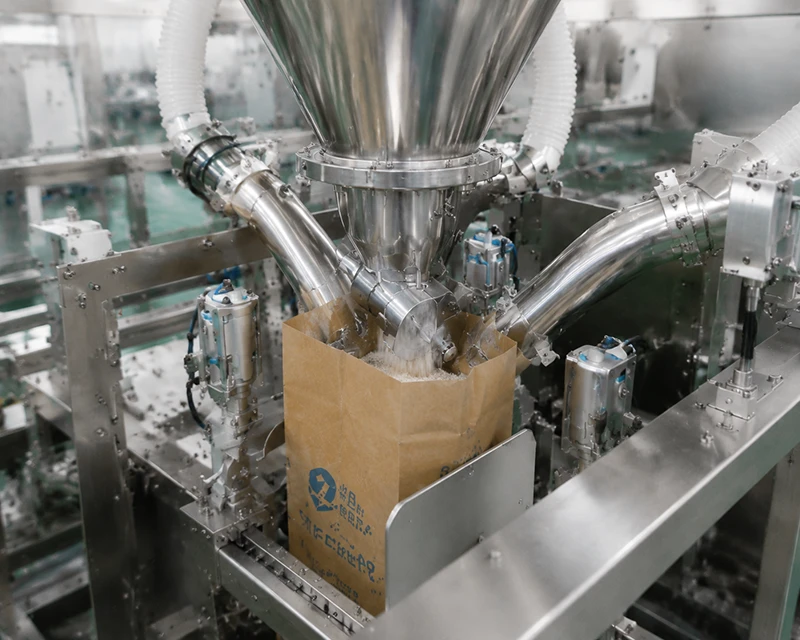
At the filling station, the conical hopper and screw dosing arrangement are directly above the open bag. The reference accuracy is approximately ±0.5% (5‰). After dosing, multiple vibration and dust-removal stages help release air and reduce powder carry-over around the mouth. The M edge is then formed again, with trimming, rolling, hot-melt dot or line glue, and top pressing. This is a paper-bag sealing process, not heat sealing. A 10.4-inch touchscreen, PLC controller, bag detection, air-pressure protection, and glue-temperature alarm support operator supervision; the exact bill of materials is confirmed in the final proposal.
Selection note: For an automatic flour packaging machine project, the useful question is not simply “how fast is the machine?” It is whether the screw dosing unit, bag geometry, dust-removal path, and sealing sequence have been tested together on the customer’s flour and bags. Ask for a bag trial and define the acceptance speed before comparing offers.
Reference configuration for 1–5 kg flour paper bags
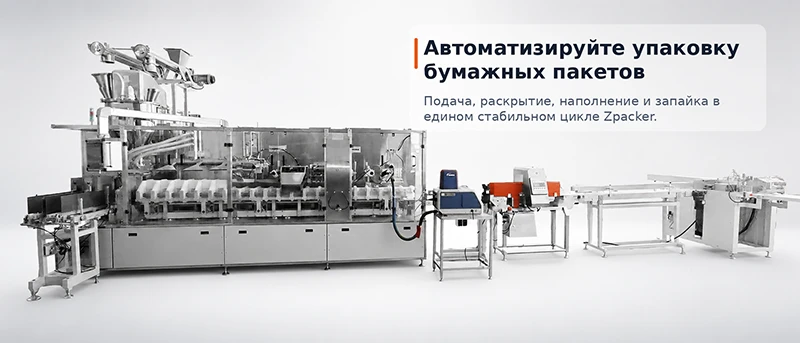
The packaging machine can be specified as part of a broader automatic packaging line. A typical process starts with a silo or buffer hopper, screw elevator and horizontal screw feeder, then reaches the twin screw dosing and bagging stations. The outfeed can be followed by a checkweigher, metal detector, date printer, bag arranger, and either group shrink wrapping or manual insertion into a larger transport bag. This approach removes isolated manual transfers rather than automating only the filler.
Use the following reference points to frame the technical discussion. The machine is listed at about 15.5 kW, around 3,000 kg, and 380 V ±10%, 50 Hz. Air demand is approximately 0.76 m³/min; supply pressure must be confirmed for the final configuration because source documents show different reference ranges. Product-contact and exposed relevant parts use 304 stainless steel, while the main frame is described as painted carbon steel with some anodized aluminium parts. A layout discussion of about 17 m by 3.6 m is only a planning reference, not a fixed footprint for every line.
| Project checkpoint | Reference for discussion | Why it matters |
|---|---|---|
| Retail pack | 1 kg, 2 kg, 2.5–5 kg | Determines dosing range, bag handling, and target rate |
| Bag format | M-fold square-bottom premade paper or paper-plastic bag | Controls opening, orientation, folding, and glue compatibility |
| Bag dimensions | W 80–140 mm; L 240–320 mm; side fold about 60–80 mm | Must be checked against real samples before approval |
| Line quality controls | Checkweigher, metal detector, and date printer | Supports weight compliance, foreign-body control, and traceability |
Define the bag and material before requesting a final line proposal
Send the flour specification, target weights, bag drawings or samples, bag direction, expected output, available feeding capacity, compressed-air conditions, and installation space. BPM can then match the zpacker equipment for flour filling, confirm the dust-removal and sealing sequence, and determine whether checkweighing, metal detection, coding, arranging, and secondary packaging should be included.
Discuss your flour packaging line English
 Русский