
Bulk Products Bagging Line: Keep the Sack Square Before Stitching
Bulk materials packaging line
PPLINE / Russian project context
When a bag leaves the filling point already skewed, the stitching head, conveyor transfer, and palletizing team all inherit the same problem. This article shows how a purpose-built bulk bagging line keeps the bag square from the hopper to the sewing station.
Why the old setup fails first
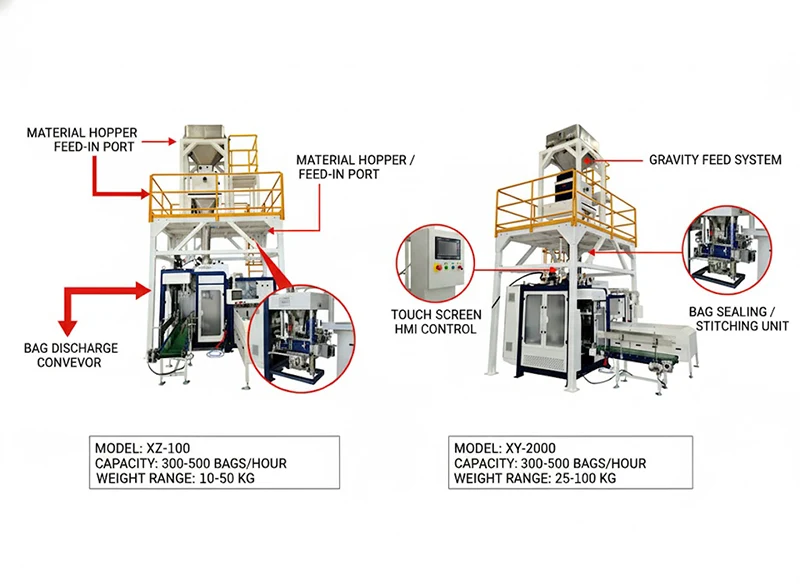
A typical bulk-products plant often starts with a simple hopper, a manual bag correction point, and a stitching operator standing too far downstream. The result is familiar: the bag mouth arrives twisted, the product settles unevenly, the bag drifts on the conveyor, and the sewing head has to compensate for a problem it did not create. That is not a stitching problem. It is a transfer problem.
On higher-output shifts, operators also spend time nudging sacks back into position, which slows the line and adds avoidable handling. For materials such as salt, grains, pellets, or powder blends, even a small misalignment can affect seam quality, presentation, and pallet stability.
Why PPLINE fits this scenario
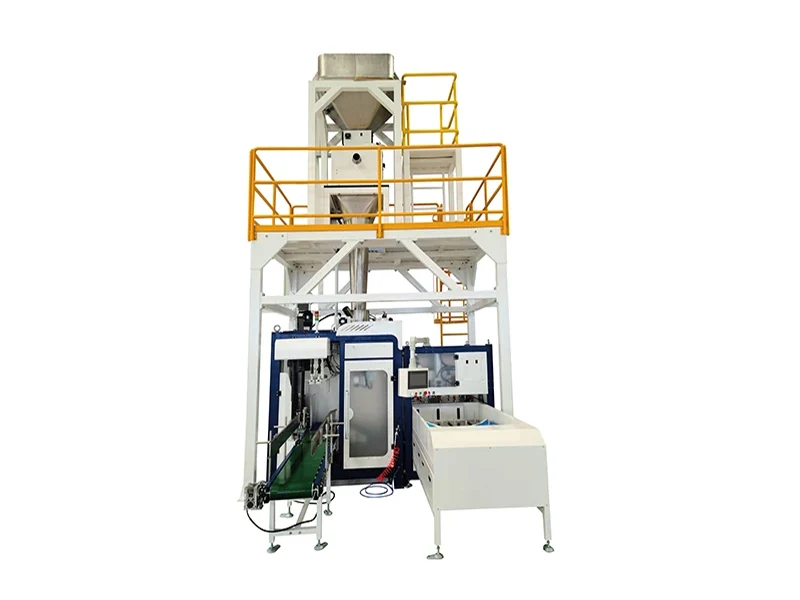
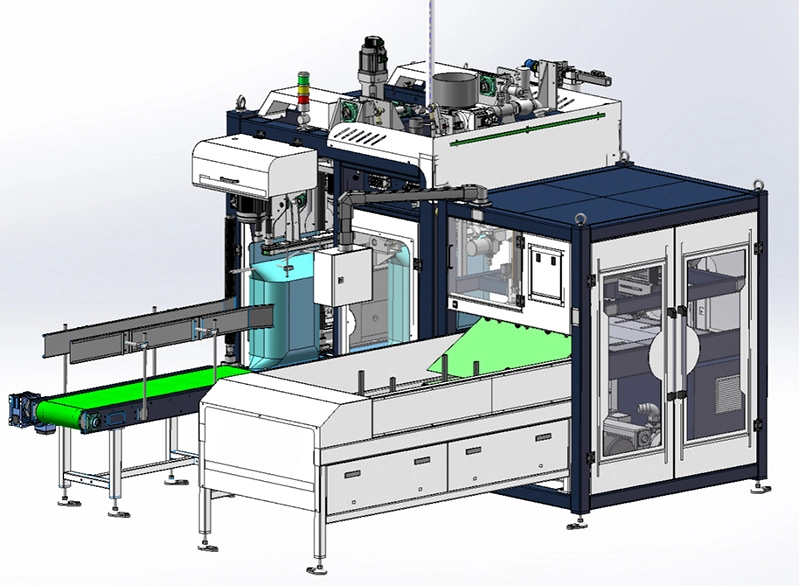
PPLINE is a better fit when the line must do more than simply fill a bag. The line needs to guide product from feed to discharge with enough control that the bag keeps its shape before sewing. The hopper-fed structure gives a stable starting point for dosing, while the elevated frame and conveyor routing help maintain a clean process line. The operator sees the process, but the machine does the alignment work.
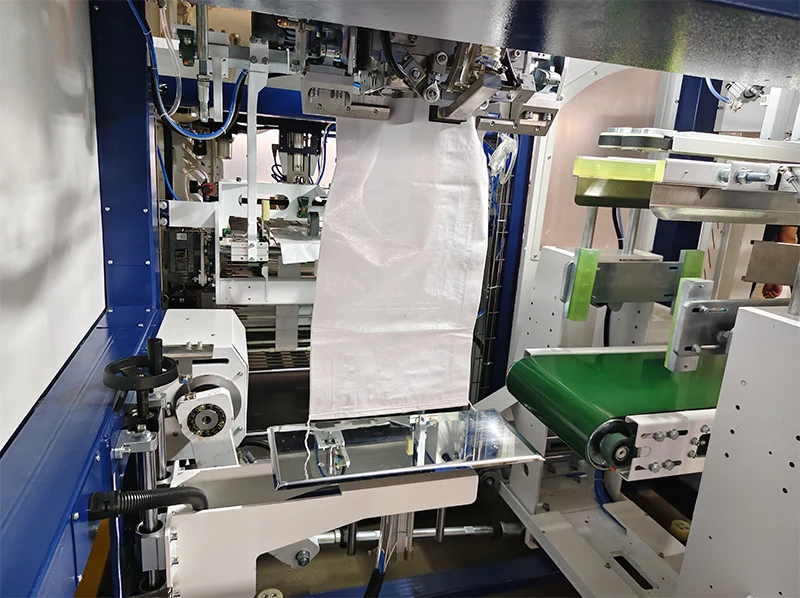
The image set matters here. The front-view bagging machine shows the hopper feed, the HMI touchscreen, the enclosed structure, and the optional sewing closure. The elevated platform image shows why service access, safe observation, and controlled material movement belong together. The internal close-up proves that the bag is not being guessed into position: vacuum suction cups, a pressing element, and a guided conveyor section are already working on the alignment before stitching begins.
Image evidence: what each unit is doing
Structure and parameters that solve the real issue
That last point is important. When the application is bulk products, the line is not just judged by how fast it fills. It is judged by whether the bag arrives to the next station square, stable, and easy to stack. PPLINE’s frame, conveyor direction, and bag-handling logic are built around that requirement.
Final result at the plant level
For a Russian bulk-products plant, the practical result is not a fancy headline. It is fewer manual corrections, less seam rework, better bag appearance, and a smoother handoff to palletizing. The line becomes easier to run because the bag is controlled earlier in the process. The sewing operator no longer carries the burden of correcting a bag that arrived crooked.
In other words: the hopper starts the process cleanly, the frame keeps the path controlled, the conveyor preserves alignment, and the sewing station receives a bag that is already in the right position. That is the difference between a line that merely packs and a line that actually finishes the job well.
If your bulk-products line is losing time at the transfer stage, the first fix is usually not the sewing head. It is the bag path before sewing.
PPLINE is built for that exact problem.
 English
 Русский